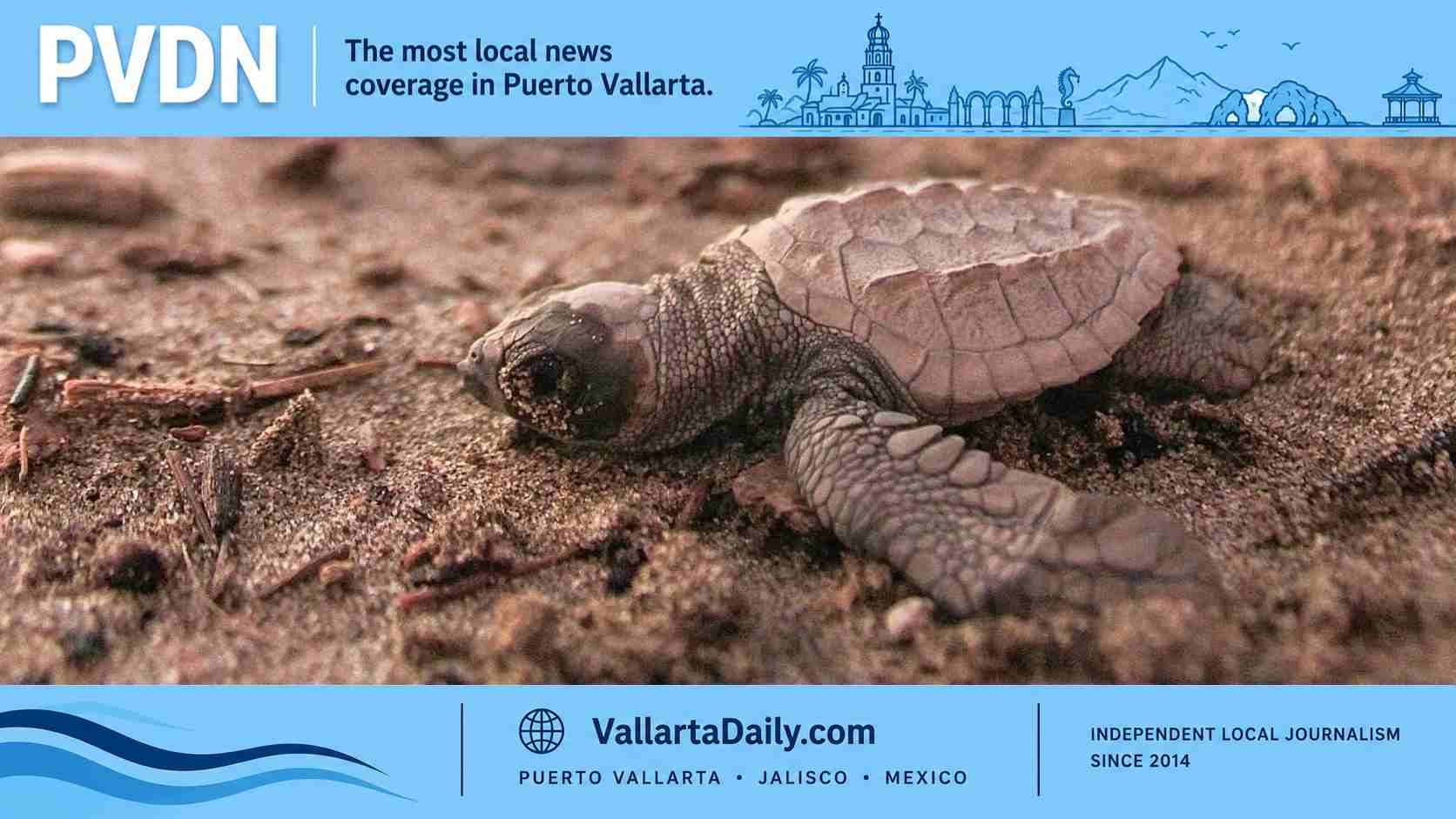
PUERTO VALLARTA, Jalisco, Sept. 10, 2026 — Sea turtle releases are underway across Puerto Vallarta, giving residents and visitors supervised opportunities to watch hatchlings enter Banderas Bay.
A local season announcement invited visitors to attend releases as hatchlings emerge from protected nests. Events generally occur near sunset, but schedules depend on when each nest hatches.
Puerto Vallarta’s official destination office lists programs from Marina Vallarta to the South Zone. Access rules vary by property, and some activities are limited to hotel guests.
What residents and visitors need to know
People should confirm a release before traveling to a beach. Hatchings do not follow a fixed daily schedule, and organizers may change the time or participation rules.
A destination guide updated Aug. 25 identifies programs at The Westin Playa Vallarta, Sunscape Puerto Vallarta, Hotel Rosita, Marriott Puerto Vallarta and Hyatt Ziva Puerto Vallarta.
Marriott’s Marina Vallarta program is expected to resume after its renovation concludes on Oct. 18, according to the guide. The Westin operates seasonal activities connected to a shared conservation camp in the same area.
Sunscape maintains a turtle camp at Playa del Holi in the Hotel Zone, along Avenida Francisco Medina Ascencio. Its program is supervised by a biologist responsible for monitoring protected eggs.
Hotel Rosita, located along Paseo Díaz Ordaz at the northern end of the Malecón, schedules releases between September and November. Its sister properties, Hotel El Pescador and Casa Carmen, also participate.
At Hyatt Ziva near Playa Las Estacas, south of Conchas Chinas, guests participate as observers. Releases there generally occur around 8 p.m., according to the destination office.
Boca de Tomates, north of Marina Vallarta and near the airport, is another established conservation site. Visitors should check the camp’s current notices before going because releases depend on hatchling activity.
Federal rules prohibit visitors from handling hatchlings
Some tourism descriptions use “release” to describe public participation. However, our review of Mexico’s federal sea turtle protection standard found that visitors may not touch or carry hatchlings.
NOM-162-SEMARNAT-2012 requires hatchlings to move across wet sand and enter the ocean without assistance. Authorized personnel must minimize handling and release the animals soon after they emerge and become active.
Observers must remain at least 2 meters behind the hatchlings. They may not block the route to the water, step among the animals, or use flash photography.
The same standard requires visitors to follow the authorized staff directing the activity. Handling turtles, eggs or nests independently is not permitted.
People attending a supervised event should arrive without sunscreen, lotion, insect repellent, or other chemicals on their hands if staff assign an authorized conservation task. Federal rules require personnel handling hatchlings to have clean hands and short fingernails.
Beach lighting and pets can interfere with nesting
The start of release season also affects residents, condominium managers, restaurants and hotels along the beachfront.
Federal regulations require lighting near nesting beaches to point downward and away from the sand. The standard recommends low-intensity yellow or red lighting rather than white light directed toward the beach.
Vehicles and animals that could disturb nesting females, nests or hatchlings must be kept away from nesting areas. Beach users should also remove chairs, equipment and movable objects that could obstruct a turtle’s path.
Mexico’s environmental protection agency identifies artificial lighting, habitat loss, pollution, egg theft and incidental capture in fisheries among the continuing threats to sea turtles. All sea turtle species found in Mexico are classified as endangered under the country’s wildlife protection system.
Puerto Vallarta’s local environmental guide advises beach users to keep lights low and maintain their distance during turtle season.
Conservation requires authorized supervision
Puerto Vallarta’s City Council authorized the municipal Sustainability Directorate in February to pursue federal permits for turtle camps and sea turtle management. The authorization covers nesting-season operations conducted in the municipality’s name.
Those permits matter because federal law requires people or organizations managing turtles, eggs, or nests to hold authorization from Mexico’s environmental authorities.
The public can participate by attending supervised events, following the conservation team’s directions, and keeping the route between the hatchlings and the ocean clear. Visitors who encounter an unprotected nest or turtle should not move it or organize an informal release.