The first report from the current Los Cabos administration put infrastructure and mobility at the center of the story. Presenting his results for Eje 4, the policy pillar that covers streets, connectivity, and public works, Mayor Christian Agúndez said the municipality executed more than 240 million pesos in public works during its first year in office. A large share of that total was aimed at shortening travel times and making streets safer.
According to the municipal breakdown, 38,750 square meters of streets were fully paved with hydraulic concrete. Those jobs did not stop at a new driving surface. The projects bundled in basic services that many neighborhoods had waited years to see: potable water connections, sanitary drainage, curbs, sidewalks, street lighting, and signage. Officials say roughly 182 million pesos went specifically into these integrated upgrades, targeting areas that had long been left with dirt roads and improvised access.
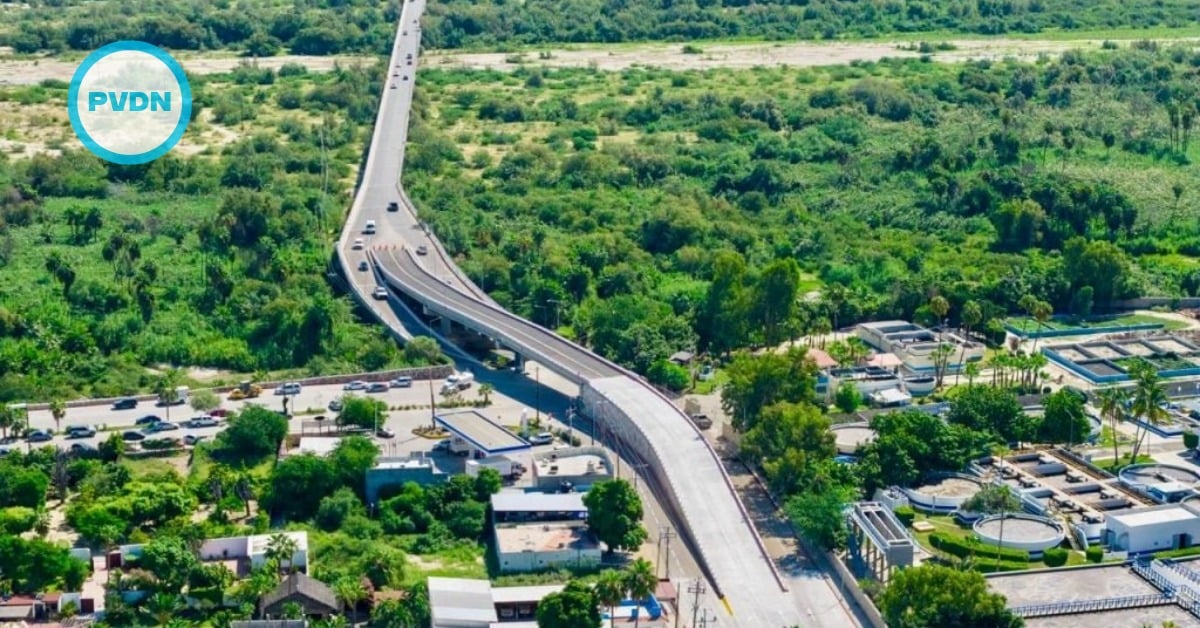
Beyond the larger paving contracts, the city leaned on more granular maintenance to keep cars moving. Through the “Caza Baches” pothole program, municipal crews report patching more than 3,500 potholes across the urban grid and repairing key access points such as the Bicentenario bridge, where 2,200 square meters of hydraulic concrete and 1,200 square meters of asphalt were laid with an investment of 4.2 million pesos. The work is intended to stabilize one of the gateways to coastal communities like La Playa, La Choya, and Ánimas Bajas, where residents depend on a single corridor to reach jobs and services.
The administration also points to its 2025 public works program as proof that the spending is not a one-off push. With a mix of local revenue and federal transfers, Los Cabos has already contracted more than 241 million pesos to intervene over 74,000 additional square meters of roadway in San José del Cabo, Cabo San Lucas, La Ribera, and Miraflores. City hall estimates that these projects could benefit around 141,000 residents once completed, particularly in neighborhoods that still transition from informal tracks to formal streets.
At the same time, municipal authorities have had to coordinate closely with federal engineers as major projects reshape the main tourist corridor. The city’s mobility roundtable, which brings together the local government, the business sector, and the federal Infrastructure, Communications, and Transport ministry, has worked on temporary routes, alternate lanes, and safety measures during construction of the new grade-separated interchange at the Fonatur roundabout in San José del Cabo. That federal project alone carries a price tag of about 469 million pesos and is designed to handle tens of thousands of vehicles a day moving between the airport, the toll road, and resort zones.
All of this unfolds in a destination where the pressure on streets is only growing. The Los Cabos Tourism Observatory reports that the local airport handled about 3.2 million passengers between January and October 2023, an increase of more than 11 percent compared with the same period a year earlier. More recent data show 329,500 passengers in January 2025 alone, while international tourist admissions reached about 1.59 million between January and August this year. Each new arrival, whether domestic or international, eventually ends up in the same queues on the limited road network that connects hotels, neighborhoods, and the airport.
Will residents feel the impact of Los Cabos mobility projects
For locals, the real measure of success is not pesos spent or square meters paved. It is whether a uniformed worker from the hotel zone can get home to Cabo San Lucas in less time, whether parents in La Ribera can drive their children to school without dodging cratered asphalt, and whether visitors can reach the airport without leaving hours of extra margin for traffic delays.
Tourism officials have acknowledged that mobility has become one of the main concerns for visitors. Exit surveys collected in recent years show that traffic conditions and the time it takes to move around the municipality weigh heavily on how travelers rate their stay. Those worries are not new. Los Cabos has faced repeated traffic-light failures on key boulevards, long backups near toll booths, and congestion around commercial hubs, prompting authorities to experiment with assigning traffic officers to major intersections and to promote long-requested overpasses on busy stretches.
Against that backdrop, the first-year report from the mayor functions as both a balance sheet and a promise. The administration argues that bundling pavement with water and drainage networks will prevent the rapid deterioration that often follows when streets are laid over weak or incomplete infrastructure. It also frames the “Adopta 1 Kilómetro” agreement, which invites hotels and businesses to maintain stretches of roadway and landscaping, as a way to keep strategic corridors clean and safe once construction crews leave.
Skepticism, however, is part of everyday conversation. Residents in high-growth neighborhoods have seen upgrades announced before, only to watch projects stall or maintenance fade after a ribbon-cutting. Others fear that as hotel rooms and luxury homes continue to multiply along the coast, every gain in capacity will quickly be swallowed by new traffic. Observers of past development plans in Baja California Sur warn that infrastructure often lags behind private investment, leaving local governments to play catch-up on basic services and transport links.
For now, Los Cabos is in the middle of that balancing act. Street by street, crews are pouring concrete, filling potholes, and adjusting traffic flows around one of the largest interchanges in the region. The full impact of the Los Cabos mobility projects will only become clear once those works are finished, the 2025 program is delivered, and the next tourism seasons test whether commutes feel shorter and safer. Until then, the mayor’s first-year figures serve as a starting point for residents who will be the first to say whether the city’s mobility story has truly changed.