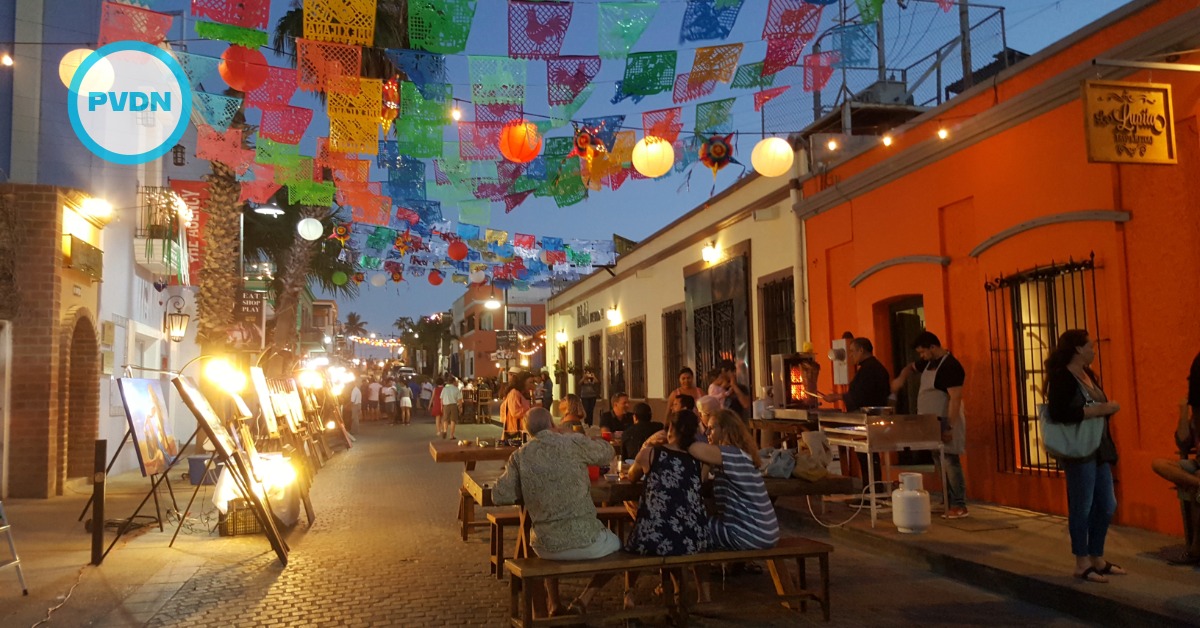
At least 20 restaurants have closed in Los Cabos amid weak sales, with business owners pointing to a concentrated downturn in the “zona centro” and other walkable commercial areas—especially in Cabo San Lucas, at the southern tip of Baja California Sur in Mexico. Local leaders describe a market where tourism still feels visible but unevenly distributed—leaving certain corridors with long stretches of quiet nights, fewer diners, and more shuttered storefronts than residents are used to.
A crucial caveat: the “20 closures” figure is not an official registry count. It comes from local business and industry voices in recent interviews, and it is often paired with a second claim—that the closures amount to roughly 16% of restaurants in the affected downtown zone. Taken together, the figures suggest a sharp contraction in a specific area, not necessarily across the entire municipality’s very large food-and-beverage ecosystem.
The closures are also arriving in a moment when headline tourism indicators can look “fine” at first glance. That tension—healthy top-line destination branding versus uneven on-the-ground consumer traffic—is the core of what restaurateurs are describing: fewer people leaving resorts to dine out, shorter or delayed “high season” spending bursts, and a downtown nightlife slowdown that makes it harder to cover rents and payroll in the off-peak hours when many restaurants traditionally make their money.
What local operators say is driving the closures
Restaurant operators and local business groups describe demand as softer than expected for early 2026. One recurring theme is timing: the high season did not arrive with its usual shape, and the spending “wave” that typically crests in December and rebounds later in January has felt delayed. That matters because fewer strong weeks mean less cushion for months when staffing, utilities, and supplier bills do not pause. In multiple reports, the sector’s own snapshot puts sales down around 30% versus the prior year’s early-season period, with hopes pinned on Spring Break and Semana Santa to stabilize revenue.
A second theme is the “where” of tourist spending. Local voices repeatedly point to a split between resort zones and downtown corridors. Travelers who stay in “todo incluido” properties have less reason to leave for dinner, and that choice is especially damaging at night, when downtown restaurants rely on foot traffic and spontaneous decisions. Some business leaders also describe a broader “nightlife slump” in the center—less movement after dark, fewer people walking between venues, and a perception problem that can become self-reinforcing: once an area feels empty, it becomes less attractive to explore.
The cost squeeze in a high-cost destination
Demand is only half the story. On the cost side, restaurateurs describe a high-fixed-cost environment getting tougher: rents, inputs, and compliance costs rising faster than many menus can bear—especially for mid-priced restaurants that serve a mix of tourists and local residents. In local industry commentary, food inputs have been cited as rising by roughly mid-single digits, with one figure reaching about 7% for raw materials in recent comparisons.
National inflation data adds context for why ingredient pressure can persist even when “headline inflation” looks moderate. In January 2026, annual inflation was reported at 3.79%, but parts of the consumer basket tied to processed foods and related categories showed higher annual increases than the overall index. That is not a direct measure of restaurant wholesale costs, but it does help explain why operators and households alike can feel squeezed at the same time—restaurants pay more for inputs, while customers become more price-sensitive about going out.
Labor is the other major pressure point. Mexico’s general minimum wage increased for 2026—widely summarized as a 13% rise, from MXN $278.80 to MXN $315.04 per day for most of the country—while the northern border zone rose at a different rate. In a service business where payroll is the highest controllable cost, even restaurants that already pay above minimum wage often face upward wage adjustments across roles to preserve internal pay ladders.
Separately, a national debate over reducing the standard workweek has become a near-term planning issue for employers. In February 2026, the Senate approved a constitutional reform to reduce the maximum weekly work time to 40 hours, with further legislative steps still required before full implementation. In Los Cabos, local business voices have framed this as a change that could require hiring more staff or restructuring shifts—costs unlikely to be offset by sales returning to pre-pandemic levels.
Tourism data suggests a mismatch between arrivals and local spending
Tourism is not “down” in a simple sense. Local destination reporting for 2025 describes record volumes—around 3.77 million visitors—while also emphasizing that growth has slowed to roughly flat to low single digits. In other words, Los Cabos is hosting many people, but it is not accelerating at the pace seen earlier in the destination’s expansion. Tourism leaders have also been explicit that the strategy is shifting from “more volume” to “higher value,” prioritizing longer stays and higher per-visitor spending rather than raw headcount.
That strategic shift can be good for public revenues and for luxury hospitality—but it does not automatically translate into full downtown restaurants, especially if higher-value visitors are consuming more within resorts, curated experiences, or private settings. Even in optimistic tourism summaries, the reported hotel picture is “steady but not booming”: average occupancy around 70% with premium daily rates. That combination signals a high-end destination that is holding pricing power overall, while still leaving certain street-level businesses exposed to local micro-cycles in foot traffic and nighttime activity.
Monthly tourism observatory data reinforces the “mixed” picture beneath the brand. For November 2025, overall hotel occupancy in Los Cabos was reported around the mid-70% range, with sub-destinations moving in different directions; average daily rate was reported lower year-over-year in some areas, including a decline in the overall ADR measure for that month. Room-night figures and “available rooms” measures also indicate that supply and demand are not static across sub-destinations and seasons. Meanwhile, tourist-habit indicators show notable shares of visitors arriving via travel packages and time shares—patterns that can correlate with more on-property consumption and fewer off-site dining decisions.
Downtown recovery efforts and what they might change
Local institutions are not ignoring the downtown downturn. Public-facing plans in early 2026 emphasize “regeneration” of central corridors—more walkable streets, better lighting, and a more inviting pedestrian experience—to encourage both residents and visitors to circulate beyond resort zones. One such initiative, “Camina Cabo,” was presented as a phased urban-improvement effort focused on the downtown core, including lighting and pedestrian upgrades, with a first-stage investment described at around MXN $40 million sourced from the tourism trust.
Separate reporting on a broader “downtown makeover” push describes larger investments funded through hotel-tax mechanisms connected to the tourism trust, with work expected to begin in early 2026 as part of a wider plan to improve mobility and the look-and-feel of historic centers. The logic is straightforward: if downtown looks better, feels safer, and is easier to walk, tourists are more likely to leave their properties—and restaurants have a better shot at capturing spending that currently stays “behind the gates.”
Safety perception is the hard edge of that strategy. According to Mexico’s ENSU survey results, the share of adults in the Los Cabos urban area who reported feeling unsafe rose sharply year-over-year, from 25.1% in December 2024 to 39.0% in December 2025 (this urban area includes Cabo San Lucas and San José del Cabo). That metric reflects resident perception, not tourist sentiment, but it aligns with the core complaint restaurateurs keep repeating: when people do not feel comfortable walking around at night, dinner traffic collapses—especially for establishments that rely on a late-evening rush.
Local government communications and local reporting show ongoing work on public lighting maintenance, including LED replacements in central streets and near-zone corridors. These fixes are practical and visible, but the economic payback depends on whether visitors experience the area as consistently bright, clean, and easy to navigate—night after night, not only during marquee events or peak weekends.