President Claudia Sheinbaum’s full-cabinet meeting looked routine on paper. The timing was not. Senior security officials arrived after talks in Culiacán, while Mexico was still weighing a U.S. case against Sinaloa’s governor on leave, Rubén Rocha Moya, and nine other officials. The meeting adds another layer to a dispute involving cartel accusations, extradition rules, sovereignty, and the federal government’s security role in one of Mexico’s most-watched states.
Sheinbaum Meets Cabinet as Sinaloa Case Deepens
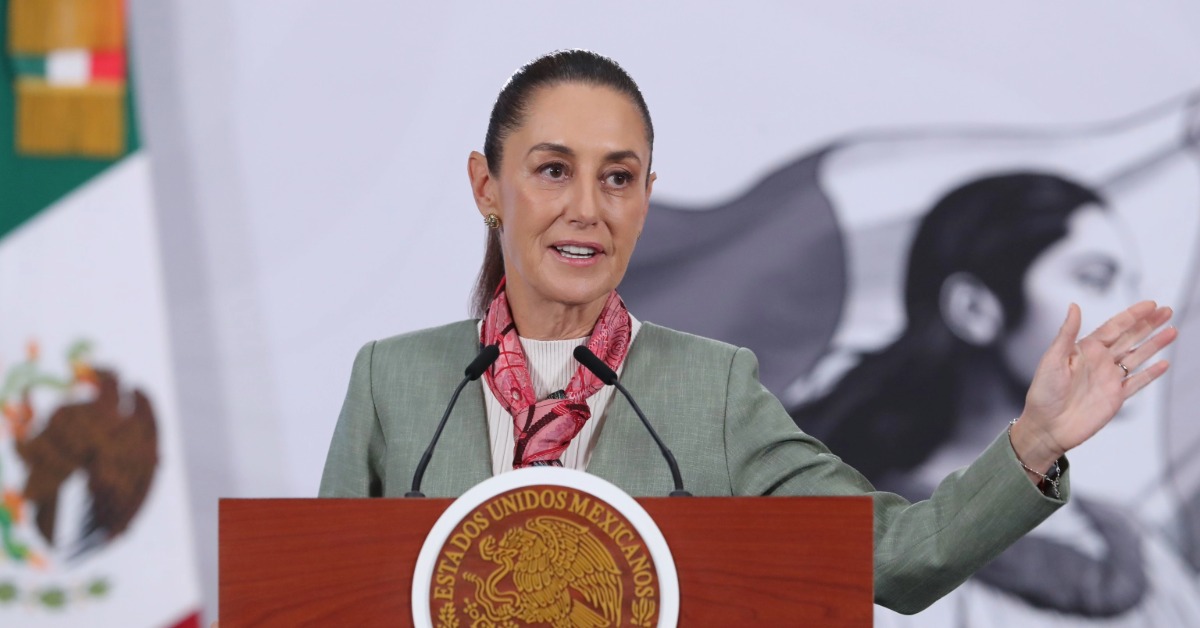
President Claudia Sheinbaum met on Monday with her legal and expanded cabinet at the National Palace, bringing together senior members of the federal government during a tense moment for Mexico’s security policy and its relationship with the United States.
The meeting came days after U.S. prosecutors moved against Rubén Rocha Moya, the governor of Sinaloa, now on leave, and nine other current or former Sinaloa officials. They are accused in a U.S. federal case of helping protect the Sinaloa Cartel, especially the faction known as Los Chapitos.
The timing drew attention because top security officials had just been in Culiacán, where they met with Sinaloa’s interim governor, Yeraldine Bonilla Valverde. Among those involved were Security Secretary Omar García Harfuch, Defense Secretary Ricardo Trevilla, and Navy Secretary Raymundo Pedro Morales.
Federal officials publicly described the cabinet meeting as a general review of government work. Still, the Sinaloa case has become too large to separate from the political setting around it.
A Cabinet Meeting With Wider Meaning
In Mexico, the legal cabinet refers to the main secretaries who lead federal ministries. The expanded cabinet includes other senior officials, agency heads, and directors of major public institutions.
That makes this type of meeting broader than a standard security session. It can touch many areas of government, from social programs and infrastructure to public security and political coordination.
For readers outside Mexico, the setting matters. A meeting at the National Palace is not just an administrative event. It often signals that the president wants the federal government aligned on message, priorities, and response.
In this case, the government is facing several questions at once. How will Mexico respond to a U.S. criminal case against a sitting political figure now on leave? How much evidence will Mexico require before taking action? And how will Sheinbaum avoid looking either too soft on corruption or too willing to bend to U.S. pressure?
What the U.S. Case Alleges
The U.S. case names Rocha Moya and nine other defendants from Sinaloa. The accusation says they were current or former officials, political figures, or law enforcement figures in the state.
U.S. prosecutors allege they helped the cartel move fentanyl, heroin, cocaine, and methamphetamine from Mexico into the United States. The indictment also claims the defendants protected cartel leaders, shared sensitive law enforcement information, and allowed cartel violence to continue without consequences.
The allegations center heavily on Los Chapitos, the faction linked to the sons of Joaquín “El Chapo” Guzmán. U.S. prosecutors allege Rocha’s political rise benefited from cartel support during the 2021 election in Sinaloa.
Those are allegations, not convictions. Rocha has denied wrongdoing. Mexican authorities have also stressed that the U.S. case must be supported by evidence that meets Mexican legal standards before any detention or extradition process can advance.
That distinction is important. A U.S. indictment does not automatically create an arrest in Mexico. Mexico has its own legal process, its own courts, and its own rules for extradition.
Mexico Says the Extradition Path Is Not Automatic
The Mexican government has described the U.S. move as a request for provisional detention for extradition purposes, not as a completed extradition request.
That difference matters. A provisional detention request is meant to hold someone while the formal extradition file is completed. Mexican officials say such a request must show urgency, such as a risk of flight or obstruction of justice.
The federal government has said U.S. authorities need to provide more information to the Fiscalía General de la República, Mexico’s federal prosecutor’s office. That office would then decide whether there are grounds to seek a judge’s order for detention or other measures.
Sheinbaum has framed the issue in terms of evidence, due process, and sovereignty. That position gives her room to demand proof without outright rejecting cooperation.
It also gives her a difficult political line to walk. If the United States provides stronger evidence, Mexico may face pressure to act. If Mexico does not act, critics may accuse the government of protecting political allies. If the evidence remains incomplete, Sheinbaum can argue that Mexico is defending the rule of law.
Sinaloa Remains Under Federal Security Pressure
The cabinet meeting also followed a federal security visit to Sinaloa. The state has been under heavy federal attention because of cartel violence and the broader conflict involving factions of the Sinaloa Cartel.
Federal security officials said the government will not withdraw from the state. They also said security coordination will continue with interim Governor Bonilla Valverde.
That message is aimed at two audiences. One is Sinaloa residents, who are living with the direct effects of violence and political uncertainty. The other is Washington, where officials are watching how Mexico handles cartel-linked cases involving political figures.
For foreigners living in Mexico, the case is also a reminder that security and diplomacy often overlap. A dispute involving Sinaloa can affect the tone of U.S.-Mexico relations, travel advisories, border policy, and public debate over cooperation with U.S. agencies.
The Political Risk for Sheinbaum
The case lands in a sensitive spot for Sheinbaum because Rocha is from Morena, the governing party. He has also been associated with the political movement built by former President Andrés Manuel López Obrador.
That creates a political risk beyond the courtroom. The president must show that her government will not shield officials accused of serious crimes. At the same time, she must avoid appearing to accept U.S. accusations without evidence tested under Mexican law.
The challenge is not only legal. It is also about public trust.
Mexico has a long history of public concern over narcopolitics, corruption, and impunity. When allegations reach a governor, the issue becomes national. It raises questions about elections, policing, state institutions, and the relationship between criminal groups and political power.
Sheinbaum’s cabinet meeting did not settle those questions. But it placed the federal government in a single room while one of the most serious political-security cases of her presidency continues to unfold.