Cancún’s new Nichupté Bridge is almost ready, and the timing matters. With peak winter traffic still squeezing Boulevard Kukulcán, the city is about to gain a second, faster way into the hotel zone. Officials say the bridge is already 92% complete and could open by the end of January. But the last stretch is the hardest part, and opening day won’t instantly erase congestion. Here’s what’s finished, what’s still missing, and how to plan your routes when the switch flips.
Nichupté Bridge completion
After years of “coming soon” updates, the Nichupté Bridge is now close enough that people are talking about opening week, not opening year. Authorities in Quintana Roo say the project has reached 92% completion and is tracking toward service by late January 2026.
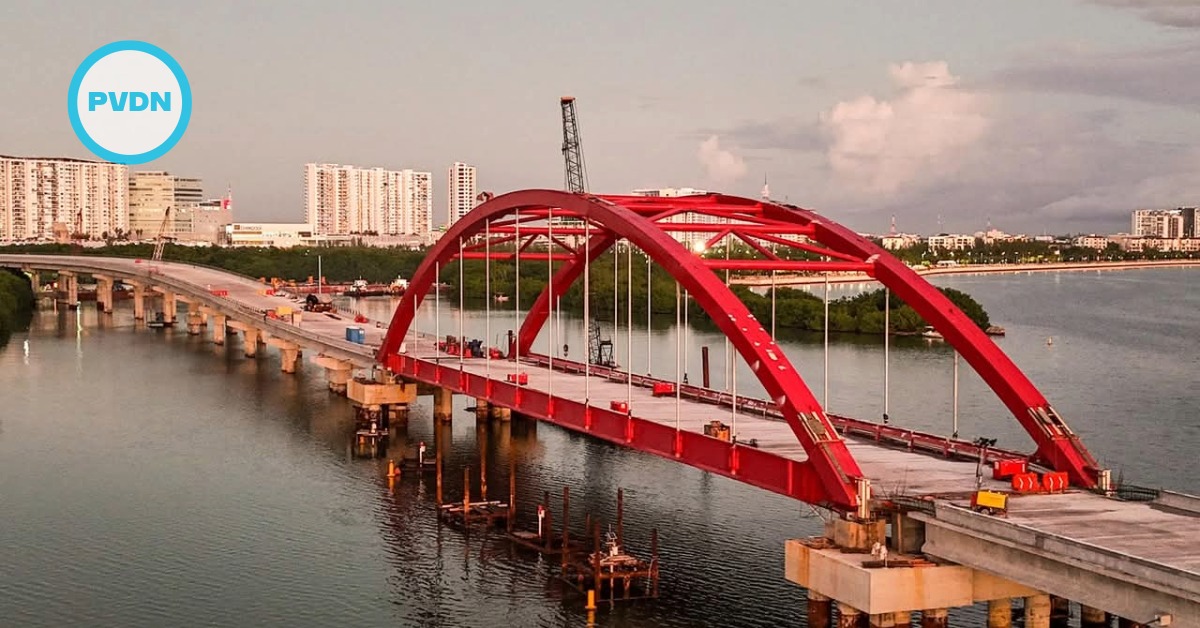
That overall number hides a more uneven reality on the ground. The work tied to the Colosio side is essentially in its final phase, along with much of the land-based structure and the bridge’s signature metal-arch section. The hotel-zone connection is the piece still playing catch-up. That matters, because the project only works as a relief valve if drivers can actually enter and exit cleanly on both ends.
The other message officials keep repeating is simple: it will be free. There has been steady talk on social media about tolls, tags, or “fees later.” The government’s position has been consistent in recent briefings. The crossing is planned as a public, no-toll route.
What the bridge actually changes for drivers
This is not a small overpass or a cosmetic upgrade. The core structure stretches about 8.8 kilometers across the Nichupté lagoon system. With its approaches and interchanges, the full build runs past 11 kilometers. In practical terms, it creates a second spine between downtown Cancún and Boulevard Kukulcán, meant to take pressure off the few routes that currently carry almost everything.
The design includes three lanes, with the middle lane intended to be reversible depending on demand. That detail matters more than it sounds. If the reversible lane is managed well, the bridge can lean into morning flow toward the hotel zone and then flip in the afternoon when workers and delivery traffic head back.
Plans also include lighting, pedestrian access, and a bike facility, plus traffic and security systems tied into a local monitoring center. Whether most people use the non-car features right away is an open question, but the point is that this was built as an urban mobility corridor, not just a tourist shortcut.
Why it matters if you live here
For expats who live in Cancún year-round, this is less about shaving minutes off a beach day and more about daily friction. If you work in the hotel zone, schedule appointments there, or have friends who avoid crossing town at rush hour, you already know the pattern: one crash, one flooded patch, one badly timed delivery truck, and the whole strip slows down.
Officials are promising time savings of up to 45 minutes on some commutes. That will not be true for every trip, every day. It will depend on where you start, where you enter, and how quickly traffic patterns settle. Still, even a modest shift—say, pulling a chunk of vehicles off the worst pinch points—can change the feel of the entire corridor.
There’s also a quieter benefit that longtime residents tend to appreciate: redundancy. Cancún has learned, repeatedly, that one main route is not enough when storms approach or when an incident blocks access. A second, purpose-built connection adds options during emergencies, not just during high season.
The lagoon question and the cleanup promises
Any major build over Nichupté was always going to trigger environmental scrutiny, and it has. Officials say the project has followed an approved environmental plan that includes dozens of mitigation actions, wildlife rescue and relocation, and restoration work in mangrove and seagrass areas. They also point to significant spending dedicated specifically to the environmental program tied to the bridge.
At the same time, critics argue the construction has still damaged sensitive areas and could fragment habitat or alter water flow. Both claims can be true in different ways. Large infrastructure can include real mitigation work and still carry impacts that communities argue about for years.
What seems clear is that, once the bridge opens, the environmental conversation will not end. It will shift from construction methods to long-term effects—water movement, maintenance practices, and how traffic and development pressures change around the lagoon.
What to watch between now and opening day
Late January is close, but “close” is not the same as “done.” The final weeks of a project like this are usually less dramatic and more technical. Crews finish paving transitions, install signage, test lighting, calibrate traffic systems, and tighten safety details that do not show up in glossy progress photos.
If you drive this corridor regularly, expect a messy middle period. New ramps can create temporary choke points. Navigation apps will lag behind reality. People will take wrong turns. Taxi and rideshare drivers will experiment with routes. The first two weeks may feel slower than expected simply because everyone is learning a new map.
The smart move is to treat the opening like a soft launch, even if officials call it an inauguration. Give yourself extra time, avoid “must-arrive” trips during the first rush hours, and keep a backup route in mind until the traffic pattern proves itself.