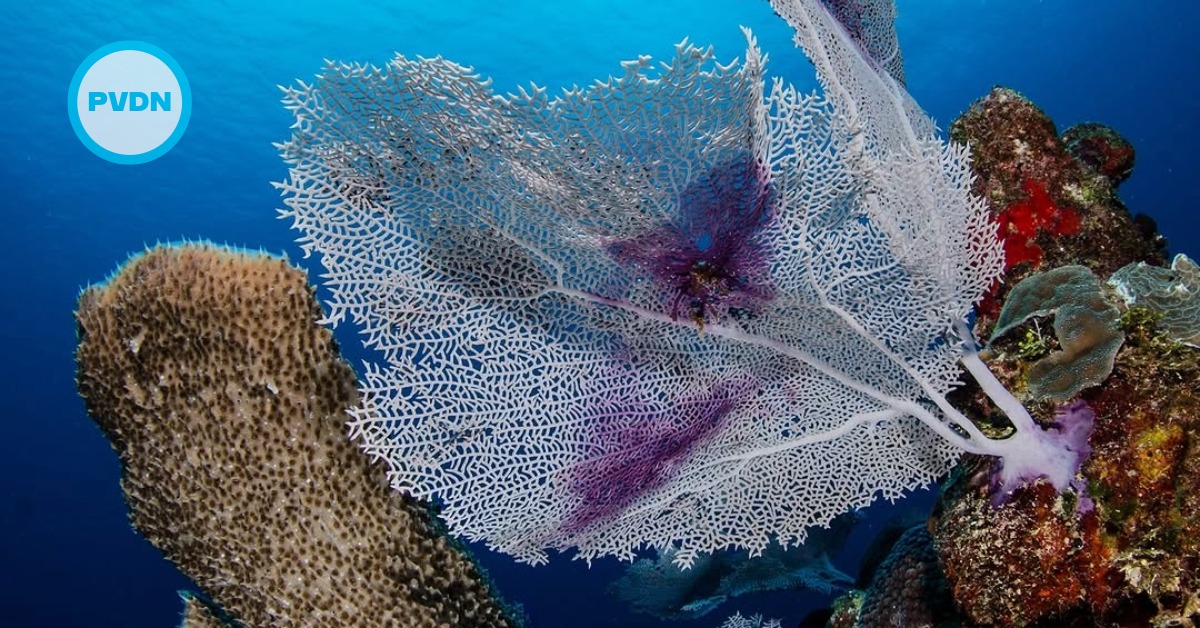
A warm morning boat ride, a pair of tanks, and a job skill that could change a life. Off Playa del Carmen, an NGO is betting that coral restoration can do more than patch a reef—it can pull adolescents back from the edge. The group says its teen trainees are helping rescue and reattach protected corals in some of the coast’s most heavily used waters, while preparing for work as divers and boat crew. The numbers are eye-catching. The backstory is even more so.
A reef project built for the real world
On the Riviera Maya, reef talk often comes in two tones: nostalgia for what used to be, and anxiety about what comes next. That tension is especially sharp around Playa del Carmen, where the sea isn’t a postcard backdrop—it’s a living breakwater, a fish nursery, and the main engine behind a tourist economy many residents depend on.
That is the backdrop for Hurakaan, a civil group founded in 2021 that is trying something unusually direct: using coral restoration work as both conservation and a pathway back into stability for teenagers who have had very little of it. Its fieldwork centers on reef zones off Playa del Carmen and Tulum in Quintana Roo—areas the organization describes as heavily impacted by human activity and, historically, less studied than more iconic reef sites.
Hurakaan frames its approach as citizen science with consequences: in-water monitoring and hands-on restoration that deliberately trains new local hands to make repeat visits, perform careful maintenance, and conduct long-term observation. That “repeatability” matters, because coral restoration is rarely a one-off miracle dive. It’s a relationship that has to hold across seasons, storms, disease outbreaks, and the slow grind of coastal change.
What the group says it achieved underwater and on land
Hurakaan describes its work through two main campaigns. One, Tejido Aquavida, combines reef monitoring, water-quality and contamination concerns, and direct coral restoration. The other, Raíz Viva, focuses on environmental education and skills training for adolescents living with vulnerabilities such as homelessness, abuse, or exploitation.
On the reef side, the group says it consolidated a rescue-and-stabilization program in August 2025 after several years of monitoring water quality and coral health. In January and February 2026, it says it documented growth of roughly 4 to 6 centimeters over 5 months in fragments of Acropora cervicornis and Acropora palmata—branching corals that have declined dramatically across the Caribbean but can still grow quickly under the right conditions.
The group also says the work has been carried out across 2,355 meters of reef in 14 sites, described as “strategic” locations that it considers degraded but still salvageable. Over a three-month period, it reports reattaching 406 corals (fragments and colonies), supported by 189 dives, 42 expeditions, and 378 tanks of breathing gas.
The social side is where Hurakaan’s pitch becomes more than conversation. The organization says Raíz Viva operates in collaboration with the municipal DIF Playa del Carmen and DIF Benito Juárez systems, pairing environmental education with structured training aimed at real employment in the local nautical and dive sector. It says it focuses particularly on teens ages 16 and 17 who are close to aging out of certain forms of state protection and who may need a bridge into legal, stable work.
Hurakaan reports 1,416 total “assistance” contacts, direct attention to 452 adolescents, and 83 workshops totaling 162 hours of instruction—numbers that suggest a program operating at more than pilot scale, even if the outcomes (job placements, certifications, retention) ultimately define its long-term impact.
Why this matters to people who live here
It is easy to talk about reef decline in the abstract, until you watch a norther kick up waves against a newly eroded stretch of beach, or hear a local guide explain—carefully, and with a hint of grief—that “this spot used to be alive.” Coral reefs punch above their weight. They occupy a tiny share of the ocean, yet they shelter a huge portion of marine life. They also blunt wave energy, which is not just about ecology—it is about public safety and about saving expensive infrastructure.
The coastal spine that makes this region famous is part of the Mesoamerican Reef, a massive reef complex that stretches across four countries. Regional monitoring in recent years has described a system under heavy strain, with disease outbreaks, warming-driven bleaching, and water-quality concerns consistently dragging reef health downward, even when some indicators show improvement.
One reason projects like Hurakaan’s attract attention is that they claim traction in the “hard places”: nearshore zones closest to dense development, heavy visitation, and chronic water-quality pressure. Those are exactly the areas where many people assume restoration is pointless. But nearshore reefs are also the ones most directly tied to local livelihoods—and the ones a resident or long-term visitor is most likely to see, snorkel, and care about.
There is also an uncomfortable truth that hangs over every restoration story: the Caribbean’s reefs are fighting on multiple fronts at once. A fast-spreading coral disease, first reported in 2014, reached the Mexican Caribbean by 2018 and has caused severe mortality among many reef-building species. This kind of regional shock can erase decades of slow recovery in a single season, and it helps explain why restoration groups emphasize not only planting corals but also the less glamorous work of monitoring, maintenance, and rapid response.
In that light, Hurakaan’s social component is not a side project. It is the labor strategy behind the ecology. Coral restoration, regardless of technique, depends on people who can return to the same sites year after year. Training adolescents into competent, safety-minded boat crews and divers creates exactly the kind of local capacity reef recovery needs—and, if it is done responsibly, provides a route into dignified work for young people who often face closed doors.
This model, of course, only works if the bigger pressures also move in the right direction. Reefs do not recover on good intentions alone. Sustained gains require better wastewater management, careful coastal planning, and climate realities that no NGO can solve underwater. What Hurakaan is betting is that you can still change the odds—by rebuilding coral where it can survive, and rebuilding a human support system strong enough to keep showing up.