Playa del Carmen’s new sargazómetro is being presented as a beach guide. But it also does something more important. It turns the city’s sargassum response into a daily public record. Each morning update is expected to show where conditions are better or worse. That gives residents and visitors useful information. It also gives them a way to judge whether barrier work, cleanup hiring, and municipal planning are making a visible difference.
A public scorecard for sargassum season
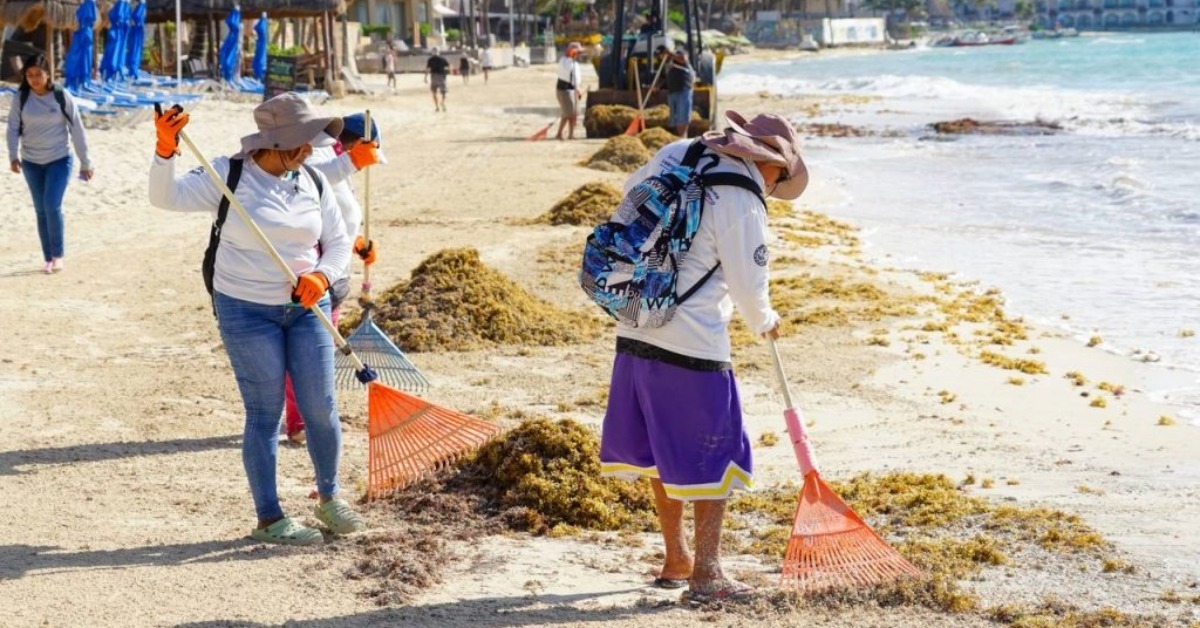
Playa del Carmen is turning sargassum season into a public-information test. Instead of limiting the response to cleanup crews and barrier work, the city says it will begin publishing a daily sargazómetro so residents and visitors can see beach conditions for themselves. Officials said the update will begin Monday morning. They also said it should be available early each day on municipal platforms. That gives the measure a second purpose beyond visitor guidance. It creates a visible daily record of what the government says it is seeing, where pressure is building, and whether the response is keeping pace. In places where sargassum can shift quickly from one shoreline to another, public confidence often depends on timely information. A beach may be cleaned, affected again, and cleaned once more within hours. By making conditions public each morning, the municipality is not just offering a service. It is also putting its own response under regular public scrutiny.
The early season changed the timetable
The timing helps explain why the city is giving the tracker such a visible role. Municipal officials said they moved up the 2026 strategy after early arrivals began in January. They also said Playa del Carmen had already collected 1,288 tons before March. Local authorities said barrier coverage has been expanded from 2.5 to five kilometers, reaching from Playa Cisne to Punta Esmeralda. At the state level, officials reported 4,558 tons collected so far this year. They also said more intensive beach work would begin in March. Those figures make the new tracker more than a communications tool. It is part of a broader effort to show that local and state authorities are not waiting for peak season to react. For residents, that matters as much as it does for tourists. Sargassum affects daily routines, shoreline access, and confidence in how the destination is being managed. For businesses, it shapes expectations around occupancy, staffing, and cleanup demands.
What the tracker may reveal each day
The daily update is also meant to sit beside the city’s operational response, not replace it. Officials said the anchoring work for the anti-sargassum barriers is about 70 percent complete. They also said there are 30 openings for beach cleanup workers, with room to hire more if arrivals intensify. Some hotels and condominiums in the southern zone have shown interest in connecting private barriers to the municipal system. That could extend protection farther down the coast. In that sense, the sargazómetro may be watched for more than beach advice. It may become a daily indicator of whether the city’s barriers, staffing, and coordination are making a visible difference. For readers who live in Playa del Carmen or follow its tourism economy closely, that is the stronger angle. The municipality is not only describing the problem. It is inviting the public to measure the response, day by day, against what people can actually see on the sand.
With information from H. Ayuntamiento de Playa del Carmen, Gobierno del Estado de Quintana Roo, Secretaría de Marina