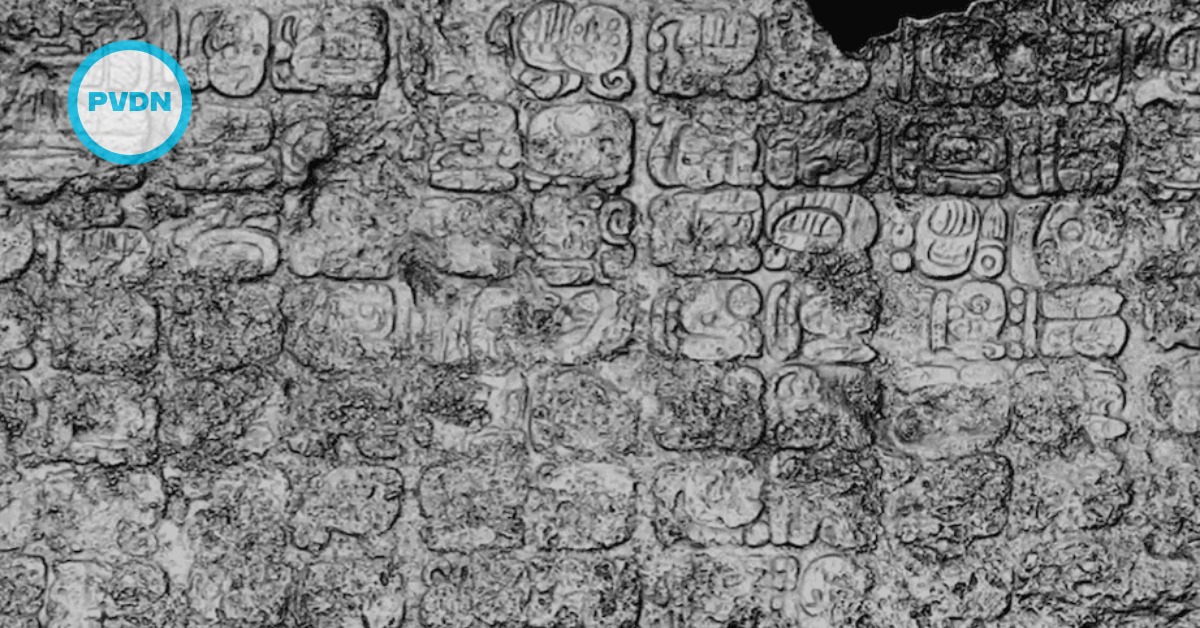
A newly read inscription at Cobá’s “Roca de la Fundación” pushes a woman to the center of a sixth-century power story. Epigraphers say the text names Ix Ch’ak Ch’een and ties her to key dates, buildings, and elite titles. The reading doesn’t stand alone: an earlier INAH announcement documented the same monument and its 569 CE foundation date for Keh Witz Nal. At the same time, other records note Cobá’s tradition of mighty queens. Together, they sketch a dynasty where women shaped politics, ritual, and city-making.
Cobá’s most enigmatic stone just spoke a little louder. New epigraphic work on the Roca de la Fundación identifies a woman—Ix Ch’ak Ch’een—as a ruler of Cobá in the sixth century, threading her name through dates, architecture, and divine titles carved beside a water body in the site’s Nohoch Mul group. It’s a human story, recovered from lime and time: a woman steering a city whose very name evokes water.
Female ruler of Cobá
The inscription links Ix Ch’ak Ch’een to a Long Count date equivalent to May 12, 569 CE, associated with the founding or installation of the title kaloomte’ at a place called Keh Witz Nal—“Deer Mountain.” The text also references her enthronement, her bond to Cobá’s protective deities, and building work around the ballcourt in Group D. While some glyphs are worn, conservators’ cleaning allowed epigraphers David Stuart (UT Austin) and Octavio Esparza (UNAM) to push the reading forward. Their take: variant spellings across Cobá’s monuments—Panel 7 and Stelae 26 and 30—are pointing to the same sovereign.
This moment sits on a solid paper trail. In August 2024, Mexico’s National Institute of Anthropology and History (INAH) announced the discovery of this unusually long inscription at Cobá, a 123-glyph panel found near Nohoch Mul. That bulletin documented the same 569 CE date for Keh Witz Nal. It highlighted the conservation challenges of a monument exposed to standing water, providing critical context for why some passages remained unreadable until now.
The new reading also clarifies a naming puzzle. Early coverage of the panel reported a previously unknown ruler called K’awiil Ch’ak Chéen, reflecting how Cobá’s lords adopted names linked to the deity K’awiil. The latest pass suggests the sovereign is Ix Ch’ak Ch’een, a woman, with contextual mentions of K’awiil in the water-edge inscription and the variant Ix Ch’ak Ch’een Yopaat on Stela 30. The dates line up; the person appears to be the same. That shift—from a deity-linked theonym to a clearly gendered royal—changes the center of gravity of the story.
What this means for Cobá’s dynasty
Cobá has long resisted simple timelines. Its sprawling causeways, far-flung ties, and layered monuments suggest a court that managed both power and image with care. Women are not new in this landscape: the Macanxoc stelae include prominent female portraits, and regional reporting has noted multiple women within Cobá’s K’awiil dynasty. Placing Ix Ch’ak Ch’een in 569–573 CE—when the text also notes the completion of 9.7.0.0.0 (December 8, 573 CE)—extends that tradition back into the mid-sixth century and closer to the city’s political rise.
There’s also a geopolitical hint. The inscription’s comparisons with texts from Okop/Yo’okop imply a link between Ix Ch’ak Ch’een and Testigo Cielo of Kaanul—the powerful Snake polity often anchored at Dzibanché and later Calakmul. The nature of that tie is still unknown. But even the possibility places a woman from Cobá in conversation with one of the age’s heavyweight courts. That’s a different map of influence than many visitors imagine when they climb Nohoch Mul and look toward the jungle.
The scholarship is still moving. Mexico’s Culture Ministry has circulated the identification, underscoring that epigraphic work is iterative. Readings tighten as conservators lift concretions, as light angles change, and as comparanda from other sites snap an ambiguous sign into place. For now, the weight of the panel—its date, titles, and cross-references—puts Ix Ch’ak Ch’een squarely in Cobá’s early dynasty, not as a consort on the edges but as a figure with her own acts to record.
There’s a human throughline here. The stone was carved beside water, and the text itself speaks of a water serpent tied to that landscape. Cobá’s name is often translated as “choppy water,” an echo of the aguada where the inscription was cut. The setting isn’t decoration; it’s context. Power was exercised in places where ritual, engineering, and daily life met—on causeways, in ballcourts, and, here, on the lip of a life-giving pool. The woman it names stood in those same places. The stone remembers.