Mérida Verde program
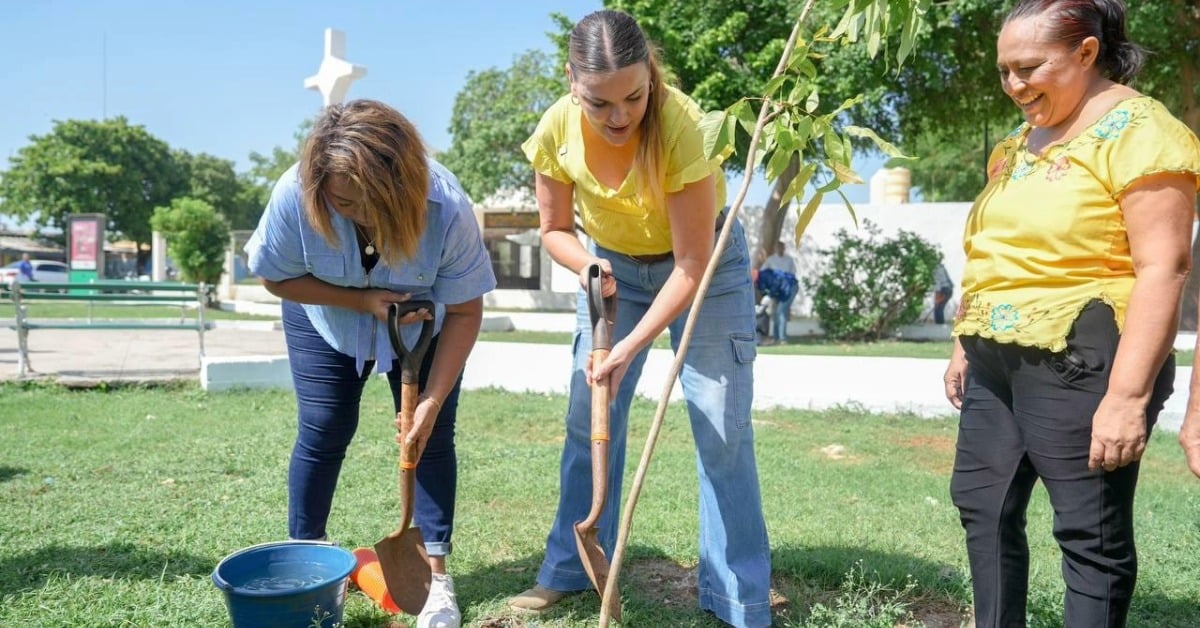
Mérida is treating urban nature as essential infrastructure. Mayor Cecilia Patrón Laviada framed the effort plainly this week: the city wants a “Green Mérida,” and it’s measuring progress in living trees, protected heritage, and citizen involvement, not press releases. City figures show the 2025 Forestry Crusade surpassed its goal with 10,230 trees planted between mid-June and mid-July. Those plantings weren’t scattered; they were clustered along corridors and neighborhoods to boost survival and shade where people actually live.
The city also says more than 44,000 trees have been adopted by families through “One Family, One Tree,” while 73 iconic trees now carry legal protection as part of Mérida’s natural heritage. Officials describe a municipal nursery holding over 250,000 plants and note the purchase of 2,000 “Air-Pods/Air-Pot” containers to strengthen young roots before they go into streets and parks.
A corridor strategy, chosen by residents
Rather than push a top-down map, Mérida asked residents to choose their first green corridor through a participatory process. The Caucel–Santa Fe corridor emerged from that vote earlier this year, and the city has been concentrating on planting and care there, along with Brisas and the Oriente corridor. The approach aims to stitch together shade, habitat, and safer walking routes, block after block.
This season’s numbers show how that strategy plays out on the ground: 3,048 trees in the Caucel corridor, 1,965 in Brisas, and 2,076 in the Oriente corridor (Pacabtún, Emilio Portes Gil, Vergel, Nueva Kukulkán, Reparto Granjas). Another 1,432 went to Los Héroes and Las Américas, with 1,709 spread across major avenues. It reads like logistics because it is—urban forestry that respects microclimate and maintenance routes.
Planting is day one. Survival is the job.
City crews are backing up the planting with pipa-delivered irrigation—the unglamorous but decisive work that keeps saplings alive in Yucatán heat. Mérida’s public services team runs 20,000-liter water trucks that can cover roughly four kilometers of avenues per day during seven-hour shifts, focusing on the youngest trees. The city ties that maintenance to its “Air-Pot” nursery practice, which encourages healthier root systems and better survival once a tree hits the street.
The result is a shift in emphasis: from counting holes dug to counting shade produced. That matters in a region where extreme heat and paved growth have outpaced canopy in many neighborhoods.
Heritage trees and a legal shield
Mérida’s heritage tree designation puts law behind affection. The 73 protected specimens—what the mayor calls “green jewels”—cannot be casually removed, pruned to death, or paved over; they are now part of the city’s identity on paper as much as in memory. Officials say the target is 100 in the near term, with new candidates identified as inventories expand.
The city also formalized a committee to evaluate culturally and historically significant trees, a step that links arboriculture to heritage protection rather than treating it as a separate technical field. Done right, that keeps landmark ceibas, chicos zapotes, and other native species standing long after administrations change.
Education, tools, and a public showroom
The Árbol MID app—relaunched this week for Android and iOS—puts tree ID and care guidance in residents’ hands, including species profiles and urban tree data. It is a practical on-ramp for families who adopted a sapling and now need to keep it alive through May heat.
To anchor that learning offline, the city opened the Anikabil Showroom in Ciudad Caucel, where staff offer workshops, training, and plant sales, and showcase species from the municipal nursery. It doubles as an outreach point for the Cuxtal Ecological Reserve and operates Monday to Friday, 8:00 a.m. to 3:00 p.m.
Mérida also signed a cooperation agreement with CICY to deepen environmental education and technical support—another sign that the program is pairing civic enthusiasm with institutional capacity.
<div class=”sidebar”> <h3>How to participate</h3> <p>Adopt a tree through city campaigns and keep it watered during the first two dry seasons. Use the Árbol MID app to identify species and learn care basics. Visit the Anikabil Showroom in Ciudad Caucel for training and to source nursery plants suited to Mérida’s soils and heat.</p> </div>
The Cuxtal Reserve, still the city’s green backbone
Mérida’s urban canopy effort sits next to a far larger lifeline: the Cuxtal Ecological Reserve at the city’s southern edge. Spanning roughly 10,757 hectares under municipal protection since 1993, Cuxtal safeguards biodiversity, cenotes, and critical groundwater recharge that supplies much of the city. Several comisarías sit inside its boundary, which is why the line between “urban” and “wild” is so porous here.
City hall is linking the day-to-day work of street trees to Cuxtal’s long-term health through education, corridor planning, and enforcement against land invasions—an important stance as development pressure continues on Yucatán’s fringe.
What’s next
Two near-term moves are already on the calendar. First, the city plans to reforest the Circuito Colonias with 555 trees, in coordination with the Mexican Army—a practical test of corridor thinking on a ring route that thousands use daily. Second, the Árbol MID relaunch will roll out features to nudge citizen reporting and care. If both pieces work, Mérida’s greenery will grow not just in number but in know-how.
The bottom line is straightforward. Mérida won’t solve heat or sprawl with trees alone. But it can make streets livable, parks cooler, and schools shadier by treating planting as the beginning of a relationship with residents, not the end of a ribbon-cutting. That’s the ethic emerging inside the Mérida Verde program—less ceremony, more stewardship.