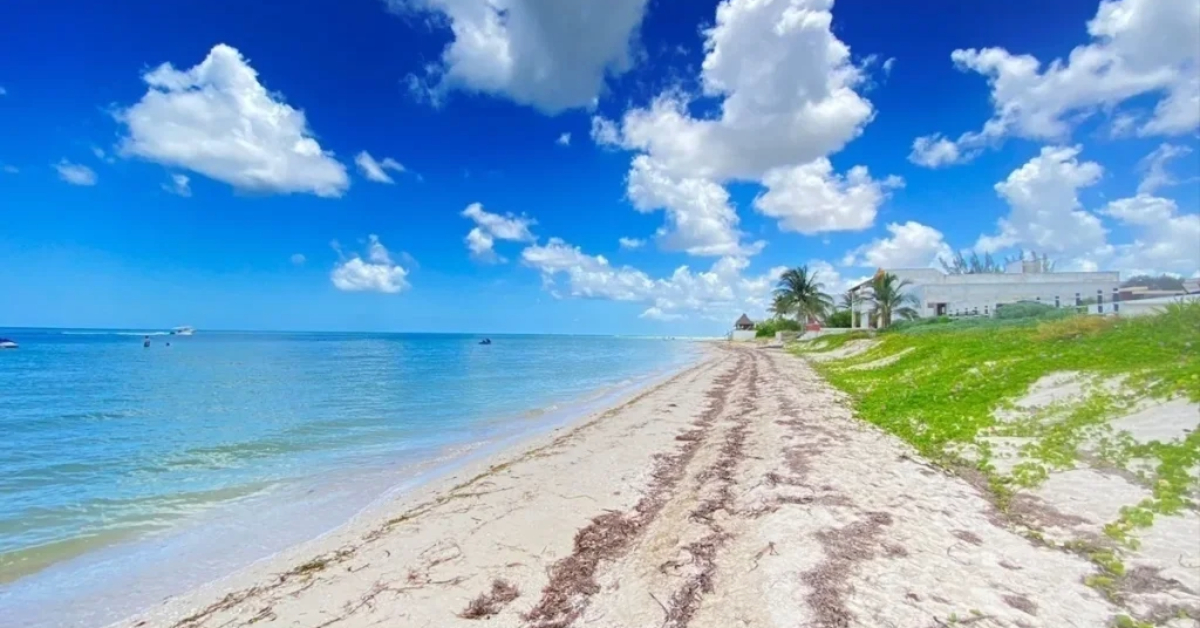
Semarnat approves a six-story beachfront development in Dzemul, Yucatán, despite documented environmental risks, social impacts, and lack of public consultation.
A controversial new real estate project has been approved on San Bruno Beach in the municipality of Dzemul, Yucatán, despite clear evidence of environmental degradation and growing opposition from local residents. The Ministry of Environment and Natural Resources (Semarnat) has authorized a six-story beachfront complex spanning nearly 4,000 square meters in an ecologically fragile zone.
According to the Environmental Impact Statement (EIS), the project—titled Apartments on the Beach—will consist of 30 apartments, a swimming pool, and a rooftop terrace. The report itself identifies at least 94 potential impacts ranging from disturbances to native vegetation and wildlife displacement to the contamination of groundwater and changes in the social fabric of the community.
The proposed site lies within the so-called “Semicircle of Cenotes,” a sensitive geohydrological system of cultural and ecological importance. Experts warn that the high concentration of residential properties—now exceeding 2,500 developments along a 16-kilometer stretch from San Bruno to Chabihau—is placing unsustainable pressure on the region’s water table, particularly due to the use of private wells. These unregulated extractions are accelerating the salinization of the aquifer and introducing pollution to one of the Yucatán Peninsula’s most vital natural resources.
Violations of Coastal Planning Regulations
Environmental advocates argue that the new development runs counter to the state’s Ecological Land-Use Planning Program for the Coastal Zone. The plan strictly limits construction height to seven meters and mandates the preservation of a 60-meter coastal dune buffer. The proposed building would exceed those restrictions significantly, raising concerns about erosion, loss of dunes, and diminished resilience to storm surges.
Semarnat’s approval comes despite these inconsistencies and in the absence of any public consultation. Residents and community groups say they were not informed or involved in the decision-making process. Many point to a troubling pattern: real estate developers increasingly blocking beach access by fencing off areas traditionally open to the public, effectively turning public land into private enclaves.
Academic Warnings Ignored
Researchers from institutions like Cinvestav have long warned about the consequences of unchecked coastal development across Yucatán. Over the past four decades, urban sprawl driven by tourism and real estate interests has altered much of the peninsula’s 1,250-kilometer coastline. According to these experts, more than 90% of the wastewater generated in the region is discharged untreated into the environment, contributing to aquifer pollution and posing serious long-term health and ecological risks.
Academic studies have also documented beach erosion, particularly in dune areas disrupted by construction. Heavy rains and hurricanes have compounded this erosion, further endangering the stability of coastal infrastructure. Social changes have followed, with residents reporting a loss of public spaces, changes in traditional practices, and a growing divide between wealthy developers and struggling local communities.
Community Outcry and Calls for Oversight
Between 2018 and 2025, over 200 complaints were filed with the Federal Attorney for Environmental Protection (Profepa) for environmental violations in Yucatán’s coastal areas. Yet enforcement remains lax. Community members are frustrated that the region’s fragile ecosystems are being sacrificed for short-term profit.
“We’ve lost more than just our view of the sea,” said one resident of Dzemul. “Our water is threatened, our access is restricted, and no one is listening to us.”
The investment in the San Bruno Beach project is estimated at 49.8 million pesos, with construction expected to take three years. The MIA outlines vegetation clearance and deep excavation for foundations in areas home to native species such as sea grape, purslane, and prickly pear. Local wildlife, already under stress from nearby developments, will likely be displaced again.
Broader Trend Across Yucatán Coast
This new development is just one of many. Between January and June 2025, Semarnat received at least ten other proposals for similar projects in Telchac Puerto, Progreso, San Crisanto, El Cuyo, and San Bruno. Each one adds pressure to a region already buckling under the weight of speculative development.
During a recent visit to the state, Semarnat Secretary Alicia Bárcena acknowledged growing concerns over beach access and promised that the agency would work to negotiate with private developers to reopen access routes. But for many residents, those words ring hollow as new towers continue to rise along the coast.
Local activists are now calling for a moratorium on new coastal developments until stricter regulations and transparent community consultations are in place. They also urge federal and state agencies to prioritize infrastructure projects that meet the needs of local communities—such as clean water access and wastewater treatment—over luxury condos for out-of-state investors.
The Real Cost of Coastal Luxury
While the Yucatán coast continues to be marketed as a paradise for investors and tourists, locals say they are paying the true cost: poisoned water, crumbling dunes, blocked beaches, and a social fabric under strain. The San Bruno Beach development is emblematic of a deeper crisis playing out all along Mexico’s shores, where unchecked tourism and real estate growth are pushing natural and human systems past their breaking point.
Unless meaningful safeguards are implemented—and enforced—this latest project may be yet another step toward turning Yucatán’s once-pristine coastline into an overbuilt corridor of gated communities, walled-off beaches, and dying ecosystems.
San Bruno Beach, Dzemul Yucatán, real estate development, environmental impact, Semarnat, coastal erosion, aquifer contamination, public beach access, Yucatán news