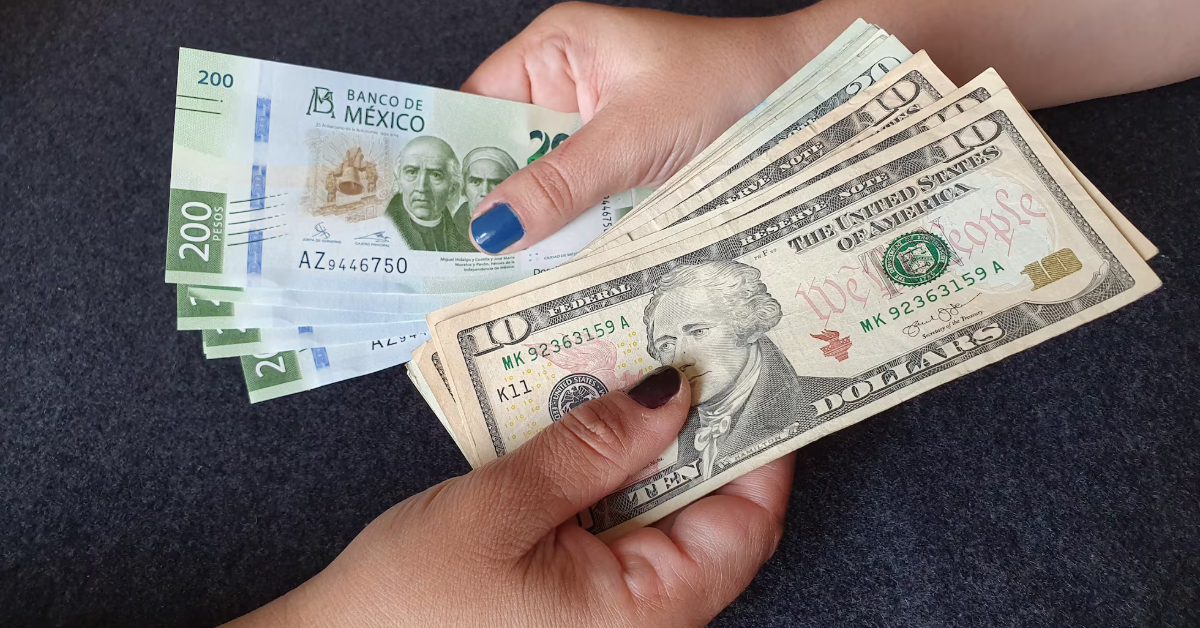
For years, Mexico meant big bang for the American buck – a place where dollars felt like they doubled in value. Lately, though, something’s changed. As the once mighty USD–MXN exchange rate has swung in favor of the peso, American visitors are finding their vacation budgets uncomfortably tight. From beach resorts in Los Cabos to expat enclaves in San Miguel de Allende, a new reality is setting in: the dollar doesn’t buy what it used to, and it’s quietly reshaping spending habits up and down Mexico’s tourist trail.
Americans’ Dollars Don’t Stretch Like Before
Strolling through a Puerto Vallarta market or Cabo beachfront, U.S. tourists are doing double-takes at price tags. The culprit is the exchange rate. Over the last year, the Mexican peso surged to its strongest levels in about seven years, at times trading around 17 pesos to the U.S. dollar – a big jump from the 20:1 rates Americans enjoyed not long ago. In practical terms, that means a $100 dinner now costs significantly more in pesos than it did before. Vacationers who once felt rich in Mexico are feeling a pinch.
This currency shift is already visible in spending data. In the summer high season, foreign visitor spending in Mexico dropped over 7% compared to the year before, even though traveler numbers barely fell. The same tourists are simply shelling out less. High-season arrivals in August dipped about 1.5% year-on-year – the first decline since pandemic times – but the spending slide was steeper. Put simply, many visitors are tightening their belts: skipping that extra round of poolside drinks, thinking twice about splurging on jewelry or day tours. One result is that being a tourist in Mexico isn’t quite the bargain it used to be.
Tourism Businesses Feel the Slowdown
Across Mexico’s tourist hotspots, local businesses are noticing the change. In Puerto Vallarta, for example, restaurant owners report that U.S. visitors now arrive with thinner budgets. Diners are ordering fewer top-shelf margaritas and costly seafood platters; as a result, average restaurant checks have shrunk. Shopkeepers who cater to American travelers also see more browsing and a bit less buying. A recent local business survey in Vallarta flagged reduced consumer spending by tourists, even though hotels are still fairly full. In short, travelers are coming, but they’re in saving mode.
A similar story plays out in Los Cabos, another popular destination with Americans. There, some business owners have faced such a sales slump that a number of restaurants have closed their doors in the past year. Rising operating costs and fewer big-spending tourists created a squeeze that not all eateries could survive. While Mexico’s tourism industry nationally hit record numbers post-pandemic, the so-called “super peso” is causing a subtle shift in who profits. With the peso strong, Mexican travelers suddenly have more buying power abroad, and indeed, many more Mexicans are vacationing overseas now, while some foreign tourists find Mexico less of a steal. This means local hotels and tour operators are competing harder to win tourist dollars.
Businesses haven’t sat idly by. To entice budget-conscious visitors, Mexican resorts and tour companies are leaning on promotions like never before. All-inclusive hotels are advertising deeper discounts for advance bookings and throwing in free extras – from complimentary spa credits to extra nights – to make packages attractive. Restaurants in tourist zones are expanding happy hour deals and “kids eat free” nights, hoping that volume can offset slimmer profit margins per customer. These tactics reflect a new reality: to keep revenue steady when each tourist is spending a bit less, you need either more customers or smarter perks. For now, companies are betting on the latter.
Local tourism officials, meanwhile, tout that Mexico is still a great value – just perhaps no longer the rock-bottom deal of a few years ago. It’s a delicate balance: raising prices isn’t really an option in this competitive market, so maximizing occupancy and foot traffic is key. In meetings from Cancún to Mexico City, industry leaders have been swapping ideas on attracting high-value visitors and tapping new markets to offset any U.S. slowdown. But there’s no escaping the core issue: when the dollar weakens, the millions of Americans who drive Mexico’s tourism engine collectively pull back on spending. And that ripple is felt from souvenir stalls to five-star resorts.
Expats and Retirees Feeling the Pinch
It’s not only short-term tourists rethinking their budgets – American expats living in Mexico are arguably even more affected. Many U.S. retirees, remote workers, and other expats chose Mexico partly for its lower cost of living, often relying on U.S.-sourced income like Social Security, pensions, or paychecks. Over the past year, however, those dollar incomes lost a chunk of their purchasing power against the peso. If an American retiree needed 20,000 pesos a month to live comfortably, that used to cost about $1,000 USD (at a 20:1 rate). Now, with rates nearer 17:1, that same 20,000 pesos requires closer to $1,175 USD. In real-life terms, it’s as if these expats got a pay cut purely due to the exchange rate.
Consider a concrete example: A couple from Texas living in San Miguel de Allende on a fixed $3,000 monthly budget used to get roughly 60,000 pesos to spend each month. Today, their transfer yields only about 51,000 pesos. That ~15% reduction means adjustments are needed. Perhaps they dine out less frequently at their favorite bistro on the town square, or postpone buying a newer car. Everyday expenses – groceries, rent, utility bills – now consume more of their U.S. income than before. For expats on tighter budgets, the change is even more stark: some report dipping into savings or seeking part-time work to make up for the peso’s strength.
In expat hubs from Lake Chapala to Playa del Carmen, the chatter has turned to creative coping. Some are taking advantage of Mexico’s still relatively low local inflation – about 5% last year, and easing – by stocking up on staples before expected price hikes. Others strategize the timing of their currency exchanges, watching daily forex rates like a hawk. A few lucky ones with flexible timing try to transfer money on days when the dollar ticks up a bit against the peso. But these small maneuvers only go so far. The consensus in Facebook groups and at weekly expat meetups is that a strong peso might just be something to live with for now. “We enjoyed years of 18, 19, even 20 to one,” one longtime Mexico City expat shrugs. “It was unrealistic to think that party would never end.”
Why the Peso Packed On Muscle
What’s behind the peso’s climb, after all? In part, Mexico’s central bank kept interest rates high to fight inflation, thereby attracting foreign investors seeking higher yields. Global companies are also investing in Mexican factories and operations (the nearshoring trend), bringing more dollars into Mexico’s economy. These factors pushed the peso’s value up. President Andrés Manuel López Obrador even hailed the “super peso” as a sign of a strong economy. For Mexicans who spend in pesos, a robust currency can indeed be a point of pride and has some benefits – imported goods and international travel become cheaper for them. But for anyone holding dollars, it’s a different story. As one observer wryly noted, “What’s good for Mexico’s economy isn’t always good for Americans’ wallets in Mexico.”
Notably, this isn’t a free-fall of the U.S. dollar globally – it’s more that the peso has been unusually strong. In fact, in 2022–2023, the Mexican peso was one of the world’s best-performing currencies. Economists say this episode is unlike Mexico’s past financial crises. The peso’s strength today comes from market forces, not a government peg, and Mexico holds large reserves. So while nervous expats might secretly hope for a sudden peso crash (and a return to easy exchange rates), experts don’t foresee a dramatic reversal in the immediate future. Barring unforeseen shocks, the dollar-peso rate may hover in this new range, give or take some fluctuations.
Adjusting to the New Normal
For American visitors and residents in Mexico, the upshot is that expectations need to be adjusted. Travelers can still find Mexico quite affordable compared to U.S. prices – a taco at a street stand is often under $2, and a boutique hotel in Oaxaca or Guadalajara can be a great value – but they’re no longer unbelievably cheap once you convert from dollars. The psychology has shifted. Ten dollars spent in pesos now feels more substantial than it did a few weeks ago. Travel experts advise Americans to budget a bit more for Mexico trips than they did a couple of years ago, and to lock in rates on big-ticket items (like all-inclusive stays or guided tours) early when possible.
Expats, on their side, are employing a mix of frugality and flexibility. Many are negotiating longer leases to lock in rent in pesos before prices rise further. Some are cutting unnecessary subscriptions and imported goods, learning to “live like a local” where possible to take advantage of lower-cost domestic products. Community newsletters share tips on everything from finding the cheapest produce markets to carpooling on trips to Costco in larger cities. In a way, the strong peso has nudged some expats to integrate more deeply into the local economy out of necessity – cooking at home more, exploring Mexican brands, and even picking up more Spanish to navigate better bargains.
There are silver linings. The currency swings have been a reminder that life abroad comes with financial ebbs and flows. Long-term U.S. residents in Mexico have seen ups and downs before. A few recall the peso crashing dramatically in the 1990s; others remember when it slowly slid from 10:1 to 20:1 over many years. Compared to those wild swings, today’s situation is less dire – more of a correction than a crisis. And some expats point out that Mexico’s inflation has eased, so at least not everything is getting pricier at once. If the peso’s strength reflects a healthier Mexican economy, that could mean better infrastructure and services in the long run, which everyone benefits from.
Still, in day-to-day terms, Americans in Mexico are navigating a period of belt-tightening. Vacationers have become more value-conscious, and retirees have become more budget-conscious. The trend serves as a reality check that exchange rates can go both ways. For now, U.S. travelers aren’t abandoning Mexico – its cultural richness and natural beauty remain huge draws – but they might pass on the $300 tequila tour they used to book without hesitation. And American expats aren’t packing up en masse; they’re simply adapting, finding new rhythms in their spending.
In the Bigger Picture, this adjustment may normalize over time. If the dollar-peso rate stabilizes, people will get used to the “new normal” and plan accordingly. Mexican businesses, for their part, are proving resilient and resourceful, courting different markets and innovating to keep attracting foreign customers. And it’s worth remembering that exchange rates are cyclical. A few years down the road, the pendulum could swing back in favor of U.S. dollar holders – or maybe not. The prudent path for anyone with a foot in both countries is to stay informed and avoid taking currency windfalls (or setbacks) for granted.
For now, American tourists and expats in Mexico alike share the same mantra: watch the pesos, budget a bit more carefully, and appreciate the value that’s still there. Mexico may not be the ultra-bargain it was when the dollar was king, but it remains a place where a great lifestyle or vacation can be had at a fraction of U.S. costs. The difference today is that those costs require a few more dollars out of pocket – and that’s forcing a rethink on spending, from the resort towns on the coast to the highland villages inland. The dollar’s dip has introduced a dose of caution into the American-in-Mexico experience, but it hasn’t taken away the magic – it’s just made it a little pricier.