Mexico is counting down to its third World Cup moment, with stadiums ready, fan zones planned, and officials promising lasting improvements. Yet a new UNAM-linked survey suggests the mood in the country’s host cities is more complicated than the national celebration makes it appear. Behind the flags and giant screens, many people are looking at traffic, higher prices, public spending, and neighborhood disruption with a lot less excitement than organizers expected.
Mexico’s World Cup hype has a problem in host cities
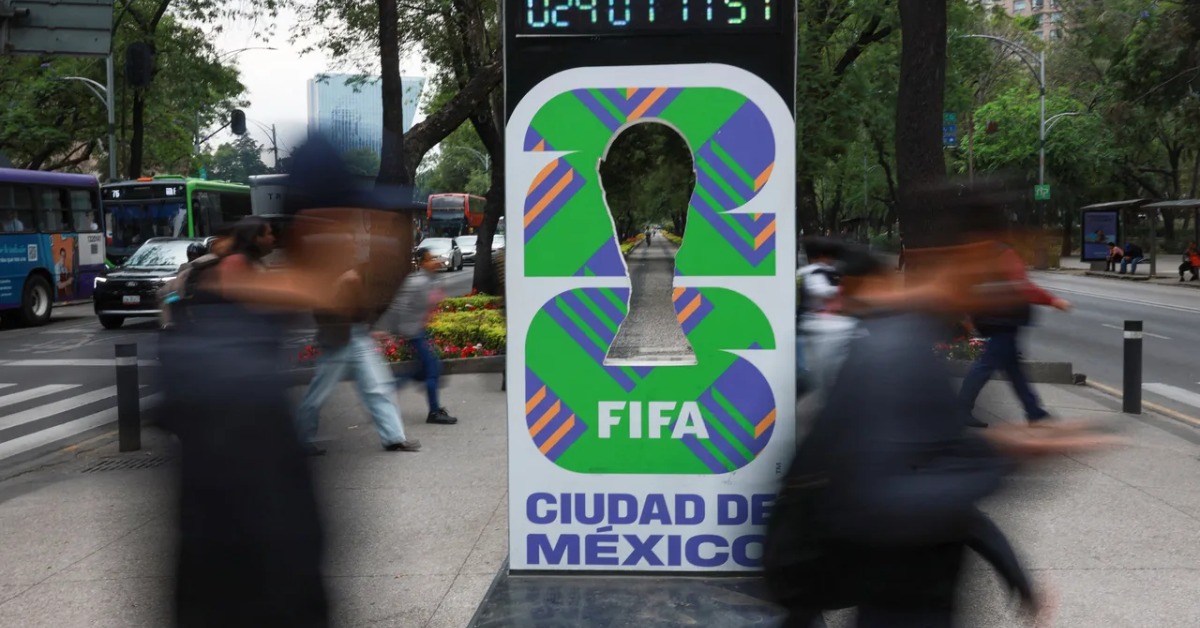
Mexico is co-hosting the biggest World Cup in history, yet a new UNAM survey says the mood in the country’s three host cities is not all green jerseys and countdown clocks.
The survey by the Institute of Geography and the Universitat de les Illes Balears asked 460 people living in Mexico City, Guadalajara, and Monterrey about their views on the 2026 tournament. The answer was guarded. The group showed low enthusiasm and limited expectations that the event would build social unity.
Concerns about traffic, daily mobility, higher living costs, noise, pollution, and displacement ranked above the celebration itself. The sample included 51 percent women, 47 percent men, and two percent nonbinary participants.
Concerns are louder than celebration
Ilia Alvarado Sizzo, a researcher at UNAM’s Institute of Geography, said the World Cup changes movement, public space, tourism, housing prices, and wider urban dynamics. She called it “a mirror of contemporary urban tensions.”
Mexico will host matches in Mexico City, Guadalajara, and Monterrey during a tournament FIFA describes as 48 teams, 104 matches, and 16 host cities across three countries.
In the survey, people did not reject the idea of money entering the three cities. Many expected economic gains and job openings. The concern was who would get the money and who would absorb the disruption.
UNAM said the survey also found distrust around public spending, transparency, corruption control, government organization, and security capacity. Participants questioned whether the benefits would be distributed evenly once the games, sponsors, and visitors arrive.
The party pitch meets daily-life anxiety
In Mexico City, the government message has been much brighter. The capital announced 18 free football festivals, more than 1,000 cultural, sports, and recreation activities, and a promise that the tournament will leave more than 2,000 infrastructure works and 500 football fields built or rehabilitated.
The city has also launched a transparency platform tied to World Cup works. Officials said more than 23 billion pesos are linked to the projects. Clara Brugada summed up the pitch in one sentence. “The World Cup leaves, but the works remain.”
People want to know whether the works will solve old problems or simply dress up the city for television. UNAM’s Álvaro López López warned that investment tied to megaevents often gathers around tourist corridors, stadium areas, and strategic spaces meant to project modernity.
His warning was blunt. The World Cup may end up “deepening spatial contrasts” that already existed.
A bigger tournament with local friction
The university work also places the Mexican mood inside the tournament’s new commercial shape. Luis Alfonso Escudero Gómez, from the Universitat de les Illes Balears, said the expansion to 48 teams and the use of large cities respond more to the market, television, and sports betting than to the older civic experience of the World Cup.
He said the event still connects territories, fan bases, and collective emotions. Then came the caveat. “Economic interests increasingly outweigh the popular dimension,” he said.
A host city can gain cameras, tourists, hotel nights, and public works. It can also face higher rents, blocked streets, construction fatigue, and a sense that decisions are being made at a level above the neighborhood.
The findings add a social layer to the tourism story around Jalisco and the Pacific coast. Earlier coverage has tracked World Cup crowds not filling Vallarta hotels and how Guadalajara games could still push some demand toward Puerto Vallarta during the World Cup period.
Erick David García González, a postdoctoral researcher at the Institute of Geography, said the effects outside the stadium often receive little attention. He pointed to displacement, local resource use, and event waste as part of the same urban picture. His summary was simple. Too little is known about “what happens beyond the field.”