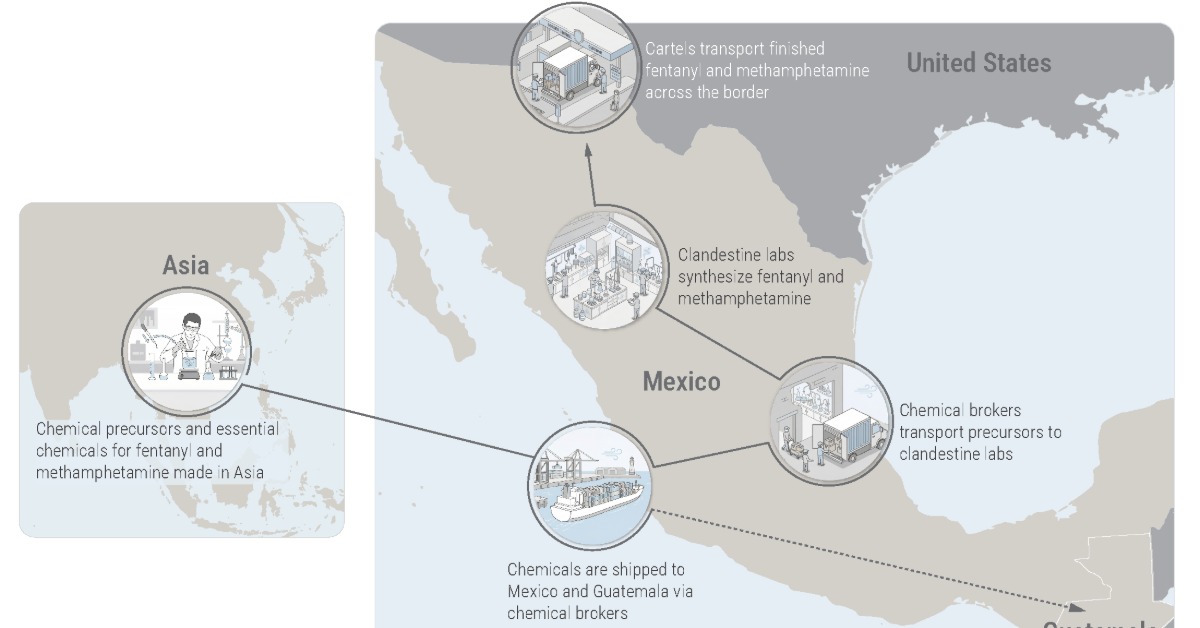
The U.S. Treasury said Thursday it had sanctioned 23 people and entities tied to a Sinaloa Cartel procurement network tied to synthetic opioids. The action goes well beyond street trafficking. It targets chemical suppliers, brokers, importers, and cartel-linked operators who, according to U.S. authorities, helped move the materials needed to make fentanyl and methamphetamine. Treasury said the network touched every stage of the supply chain, from sourcing chemicals overseas to moving them toward clandestine labs in Mexico.
That broader focus is the real story. In public debate, cartel enforcement is often framed around arrests, seizures, and shootouts. This case points to the quieter side of the trade. It centers on the commercial system that can sit behind production. According to the Treasury, key chemicals were sourced mainly from Asia, then routed through brokers and import businesses in India, Guatemala, and Mexico before reaching criminal operators. In other words, the action is meant to disrupt the business architecture that helps keep synthetic drugs flowing.
Why precursor chemicals matter
The sanctions matter because precursor chemicals are the starting point for large-scale synthetic drug production. Treasury said suppliers and brokers in this network helped move materials such as N-Boc-4-Piperidone, which can be used to produce fentanyl. Authorities say some shipments were mislabeled as safe chemicals. That detail helps explain why these cases are difficult to police. The trade can pass through ordinary cargo channels, import paperwork, and cross-border logistics long before it reaches a hidden lab.
That is why U.S. officials increasingly describe the problem as a supply chain, not just a smuggling route. The alleged network named this week included India-based chemical suppliers, Guatemala-based intermediaries, Mexico-based brokers, and cartel-linked operators tied to lab production and trafficking. Treasury also said the network linked to both Los Chapitos and Los Mayos, the two major factions inside the Sinaloa Cartel. That makes this action notable. It is not aimed at one isolated cell. It is aimed at the system that keeps production possible even when individual traffickers are arrested or killed.
The Mexico connection is central
Several of the names announced by Treasury were tied directly to activity inside Mexico. U.S. authorities identified Karina Guadalupe Carrillo Torres in Sinaloa as an alleged broker for fentanyl precursor chemicals. Treasury said she had ties to Los Chapitos. It is also named Regulo Acosta Hernández, described as a fentanyl and cocaine supplier, as well as related companies. Treasury said both were arrested in Mexico in March 2026 on drug-related allegations.
The U.S. action also named María Viridiana Rugerio Arriaga in Guanajuato, José de Jesús Ramírez Torres in Jalisco, chemical importers in Mexico City, and Alejandro Reynoso Jiménez, described as a chemist and lab operator in Guadalajara, tied to fentanyl production for the cartel. Treasury said Reynoso was arrested in Spain in late 2025. For readers in Mexico, that geographic spread matters. The sanctions were not limited to a single border corridor or a single cartel plaza. They point to a network spanning different states, businesses, and parts of the production chain.
What the sanctions actually do
For many readers, OFAC sanctions can sound abstract. In practice, they are meant to cut targets off from the U.S. financial system and from any property or interests under U.S. control. Treasury said the move blocks property in the United States or in the possession of U.S. persons. It also bars U.S. persons from dealing with those designated targets unless authorized. That can have a wider effect than the legal text suggests, because banks, freight firms, suppliers, and counterparties often back away from any transaction that creates sanctions risk.
That is one reason Washington continues to use this tool. Sanctions can pressure a network even when the people involved are abroad. They can also reach companies that authorities believe act as fronts, facilitators, or procurement channels. In this case, Treasury said the designations were issued under U.S. authorities aimed at the proliferation of illicit drugs and at support for terrorist organizations. That legal framework matters because the Cartel de Sinaloa has carried a Foreign Terrorist Organization designation under U.S. law since February 2025. The label does not change life in Mexico overnight, but it does show how Washington now frames later actions against the cartel and its support structure.
Why this matters to readers in Mexico
For foreigners living in Mexico, this is the part worth watching. The story is not only about narcotics. It is about trade routes, shipping, front companies, customs channels, brokers, and cross-border payments. That means the U.S. strategy is moving deeper into the commercial side of cartel operations. It is less about a single headline arrest and more about making chemical sourcing and movement harder at every stage.
It also reflects a broader shift in how cartel pressure is being applied. In recent years, the focus has often been on kingpins, gunmen, or local security flare-ups. This case shows a more layered approach. The United States is going after the financiers, suppliers, intermediaries, and business entities that allegedly keep production running. Whether that materially reduces drug flows is a separate question. But the intent is clear. Washington is trying to squeeze the synthetic-opioid supply chain before it reaches the lab, not just after the drugs are already on the street.