Friday’s security meeting was already delicate. Now it’s loaded. Washington is warning Mexico that gradual progress is no longer enough—and that the next phase must be measurable, checkable, and fast. Mexico arrives after a high-profile transfer of 37 cartel-linked prisoners to U.S. custody, and with a familiar counter-demand: curb the flow of U.S. guns that arm criminal groups. The talks are mostly behind closed doors. But their consequences won’t be. Watch for what each side calls “results,” and what they’re willing to trade to get them.
Officials from Mexico and the United States will sit down on Friday, January 23. The meeting is the next session of the bilateral Security Implementation Group. It comes at a moment when Washington is turning up the heat on cartel networks and fentanyl trafficking. In recent days, U.S. officials have signaled they want more than broad promises or incremental gains. In their phrasing, gradual progress is now unacceptable. The message, repeated in official messaging, is blunt: future cooperation will hinge on “concrete, verifiable” results. Mexico enters the session after sending 37 alleged cartel figures to U.S. custody, an extraordinary move framed as a sovereign decision. That transfer, plus a recent phone call between Presidents Claudia Sheinbaum and Donald Trump, has put security back at the center of the relationship. Yet Mexico will also arrive with its own demand, one that has been constant for years. It wants the United States to do more to slow the flow of firearms that arm criminal groups. Both sides now face the same test: can they show progress that survives scrutiny at home?
A tougher tone ahead of Friday’s talks
Washington’s sharper language is not just a diplomatic flourish; it is a political signal. President Trump has repeatedly talked about taking the fight directly to cartels. He has even floated action on Mexican soil, and Mexico has pushed back hard. In the United States, fentanyl deaths remain a powerful talking point. The administration wants proof it is producing measurable change. That pressure has been amplified by high-profile U.S. actions elsewhere in the region, which have made Mexico especially sensitive about sovereignty. Inside Mexico, the very suggestion of foreign troops is radioactive. Sheinbaum has drawn a bright line against it. At the same time, she has tried to avoid a public rupture by emphasizing cooperation and shared responsibility. Neither side wants a rupture, but neither can look weak. Washington wants outcomes it can point to. Mexico is searching for ways to deliver without looking submissive. Friday’s meeting is where those competing needs collide.
The metrics Washington wants to see
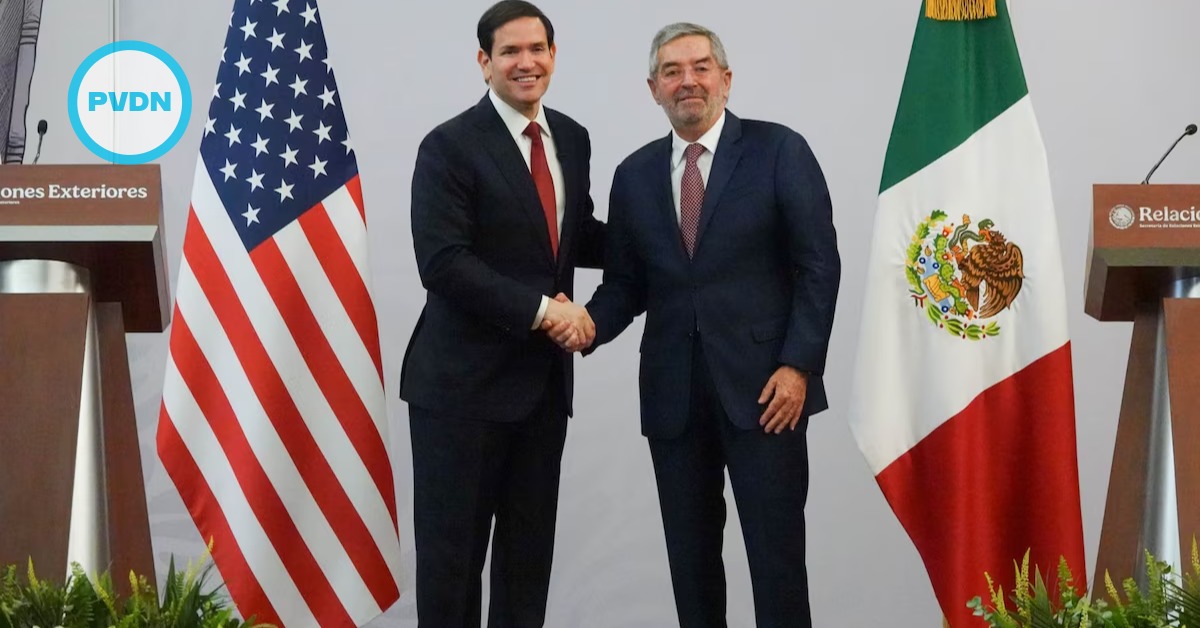
“Verifiable” is the keyword, and it is doing a lot of work. In practical terms, Washington is looking for actions that can be counted and confirmed, not just announced. That could mean more high-value arrests, lab seizures, and faster disruption of money flows that keep cartel cells alive. It also likely means deeper information sharing, because intelligence turns a public pledge into a targeted raid. Mexico has already shown one kind of measurable cooperation by transferring prisoners whose U.S. cases were pending. Officials say more coordination is coming. The date was set after a January 15 call between Marco Rubio and Juan Ramón de la Fuente. The bilateral group meeting on January 23 is expected to revisit existing cross-border initiatives and identify gaps. A ministerial-level session planned for February in Washington is meant to check progress and set expectations. The risk for Mexico is that “results” becomes a moving target. The risk for the United States is that pressure turns into spectacle, and cooperation turns into resentment.
Mexico’s counter-demand and the sovereignty line
Mexico’s leaders hear the U.S. demand, but they answer with a familiar question: What about the guns? Officials argue that cartels do not arm themselves, and that U.S.-sourced weapons make killings easier and enforcement harder. That is why Mexico keeps pressing for stronger southbound inspections and tougher action against trafficking networks on the U.S. side. Both countries have experimented with joint work in this area. It includes expanded firearm tracing and the sharing of ballistic data. Mexico wants faster, wider results. Sheinbaum is careful about the optics of any cooperation that looks like foreign command. Her government insists that operations on Mexican soil stay under Mexican control. Training and technical help can come from abroad. The recent prisoner transfer illustrates that balancing act. Mexico can offer concrete cooperation, but with conditions attached. One condition is assurance that transferred suspects will not face the death penalty. Friday’s talks will test whether that model can scale, or whether Washington will insist on a deeper role.
Why expats should pay attention
For expats living in Mexico, this can feel like high politics far away from daily life. But the outcomes tend to show up in practical places. A tougher U.S. stance can mean tighter checks at ports of entry. It can also mean more visible enforcement along key corridors. Official messaging about security risks may sharpen as well. The tougher tone can also shift the conversation inside Mexico. Federal and state authorities may feel pressure to show progress through arrests and seizures. None of that translates into safer streets overnight. In some areas, it may create short-term turbulence as criminal groups adapt. The bigger point is predictability. When Washington links cooperation to “verifiable” results, it creates incentives for measurable actions. Those actions often concentrate in specific regions. People who travel frequently, ship goods, or run cross-border businesses may notice the change first. It is also worth watching whether security demands start bleeding into trade talks, especially with major binational events approaching.
Friday’s meeting is unlikely to produce dramatic public announcements. The more telling signs will be quieter. Watch whether both governments agree on shared metrics, coordinate actions, and cool the rhetoric. If the two sides can show progress on fentanyl while also tackling firearms trafficking, the relationship gains breathing room. If they cannot, the debate will drift back toward unilateral options, which Mexico has rejected and many U.S. lawmakers have warned could be destabilizing. For now, both governments say they prefer cooperation, but on different terms. The United States wants proof it can sell to voters and courts. Mexico wants results without compromising sovereignty or ignoring the U.S. role in weapons and demand. The next checkpoint comes in February in Washington. Expect more movement before the Washington check-in. Between now and then, each seizure, arrest, and statement will be read as either momentum or defiance on both sides of the border.
With information from El Financiero, Associated Press, Reuters, House Foreign Affairs Committee