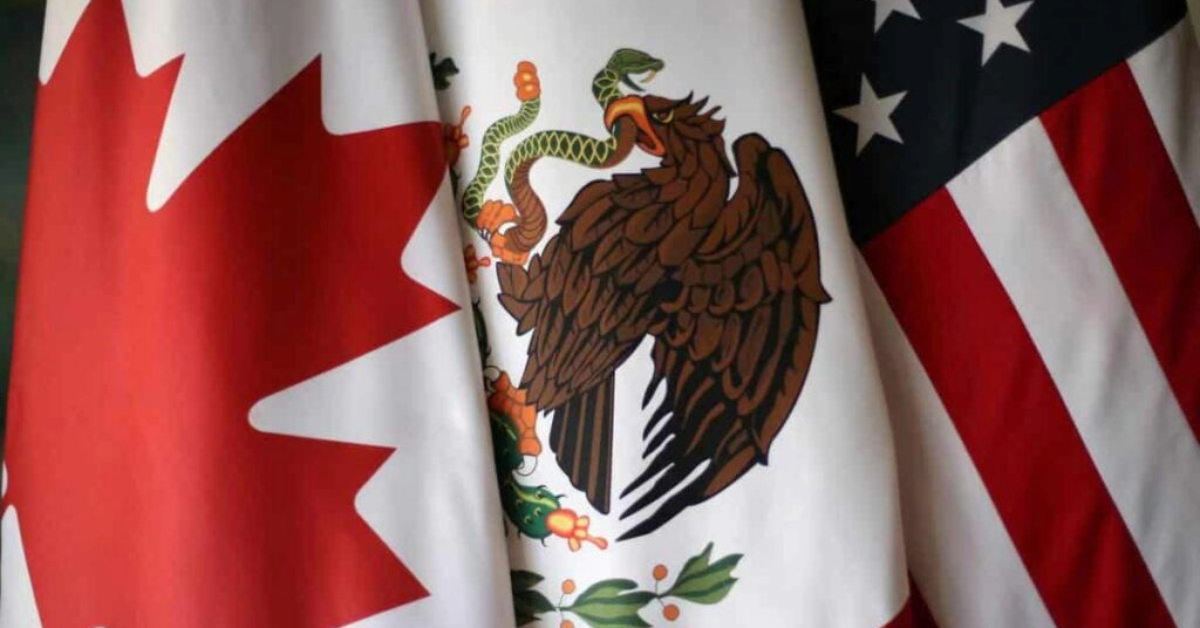
Mexico’s biggest economic question in 2026 may not be inflation or rates, but whether North America can keep its trade deal intact. Behind the scenes, companies are already pausing some investment and infrastructure calls while they wait for clarity. The six-year USMCA check-in can stay a technical review, or it can morph into a fight that drags in energy policy, auto content rules, and labor enforcement. For expats, the stakes show up in jobs, the peso, and the cost of doing business.
The USMCA 2026 review is not “automatic” but it is risky
The word “review” sounds calm. In practice, it is a political moment built into the agreement, and politics rarely stays calm for long.
The USMCA has a built-in six-year checkpoint on July 1, 2026. On paper, the three governments sit down, evaluate how the deal is working, and decide what to do next. If all three confirm they want to continue, the agreement rolls forward for another 16-year term. If one country refuses to confirm, the agreement does not end that day, but it shifts into a more fragile phase, with annual reviews until the original term runs out.
That structure matters because it changes incentives. A routine review offers stability. A review framed as “renegotiation” invites leverage, threats, and side deals. Even if the legal text stays untouched, the messaging around it can freeze corporate decision-making. Companies do not build factories on vibes.
Why specialists expect a tougher fight this time
Specialists watching the lead-up to July 2026 are flagging two overlapping problems: the substance of the disputes already on the table, and the way the United States has been using trade policy as a political tool.
Start with substance. The USMCA has become a living agreement, enforced through formal cases and constant pressure. Rules of origin in autos remain a sore point because “what counts” as North American content is not just paperwork. It determines who pays tariffs and who gets market access. Labor enforcement has also sharpened. The rapid-response labor mechanism was designed to make labor disputes faster and more targeted, and it has done exactly that. Add energy to the mix, and you get a third rail. Trade partners have criticized Mexico’s push to favor state-owned energy companies as undermining commitments on competition and investment protections.
Now add the political overlay. The fear is not simply that Washington demands tweaks. The fear is that Washington treats the review as a stage for protectionist signaling, with tariffs and market-access threats used as bargaining chips. Some specialists also see a scenario where the trilateral structure weakens, with pressure toward bilateral arrangements instead of a single three-country framework. That is the kind of shift that forces companies to redraw supply chains and risk models.
For Mexico, that combination is why the review is being described as the top macro risk of 2026. It is not because trade will stop overnight. It is because uncertainty spreads quickly through investment, hiring, and long-term infrastructure choices.
The uncertainty is already showing up in delayed decisions
This is the part that can feel abstract until you look at the calendar and the boardroom logic.
Big projects have long lead times. If you are deciding where to expand a plant, whether to add a second shift, or whether to build a logistics hub, you need predictable rules for years, not weeks. When executives believe the rules might change, the safest move is often to wait. That does not always mean canceling Mexico. It can mean slowing down Mexico, or pairing Mexico investments with backup options elsewhere.
Specialists in Mexico’s financial sector have pointed to postponed investment calls and infrastructure projects tied to trade uncertainty. It is a simple chain reaction. Fewer green lights today can mean weaker growth tomorrow, even if demand remains strong.
For expats living in Mexico, the knock-on effects can be subtle at first. A delayed expansion might show up as fewer new jobs in a city’s industrial corridor. A paused infrastructure project might show up as slower improvements in ports, highways, or power supply. A cautious market can show up in the peso, especially when traders sense political risk approaching a hard date.
It is also worth remembering how concentrated Mexico’s trade relationship is. Mexico’s export engine is tightly linked to the U.S. market. That dependence is a strength when the relationship is stable, and a vulnerability when the rules feel up for debate.
What to watch as July 2026 gets closer
The biggest tell will be whether the review stays a review.
If the three governments start signaling “extension” early, that helps. If the tone shifts toward “rewrite,” businesses will price in disruption. The review mechanism is also untested at this scale, which means process uncertainty becomes a problem in itself. When the meeting rules are vague, everyone assumes the worst-case scenario.
Watch for three kinds of signals.
First, look for early agreements that reduce uncertainty before July. Even narrow understandings can matter because they signal to markets that the adults are in the room.
Second, pay attention to tariff posture. If tariff threats remain central, the review becomes less about technical fixes and more about leverage. That is when unrelated issues can get pulled into the room, including migration pressure, industrial policy, or security disputes that have nothing to do with trade text.
Third, track the “spillover” topics that could dominate headlines: autos, labor enforcement, and energy policy. These issues are already loaded, and they touch powerful domestic constituencies in all three countries. That makes compromise harder, not easier.
None of this guarantees a breakdown. North America’s supply chains are deeply intertwined, and the cost of blowing them up is enormous. But the 2026 moment forces choices and public positioning. That alone can be enough to delay investment, lift volatility, and leave households and businesses wondering what rules they will be living under next year.