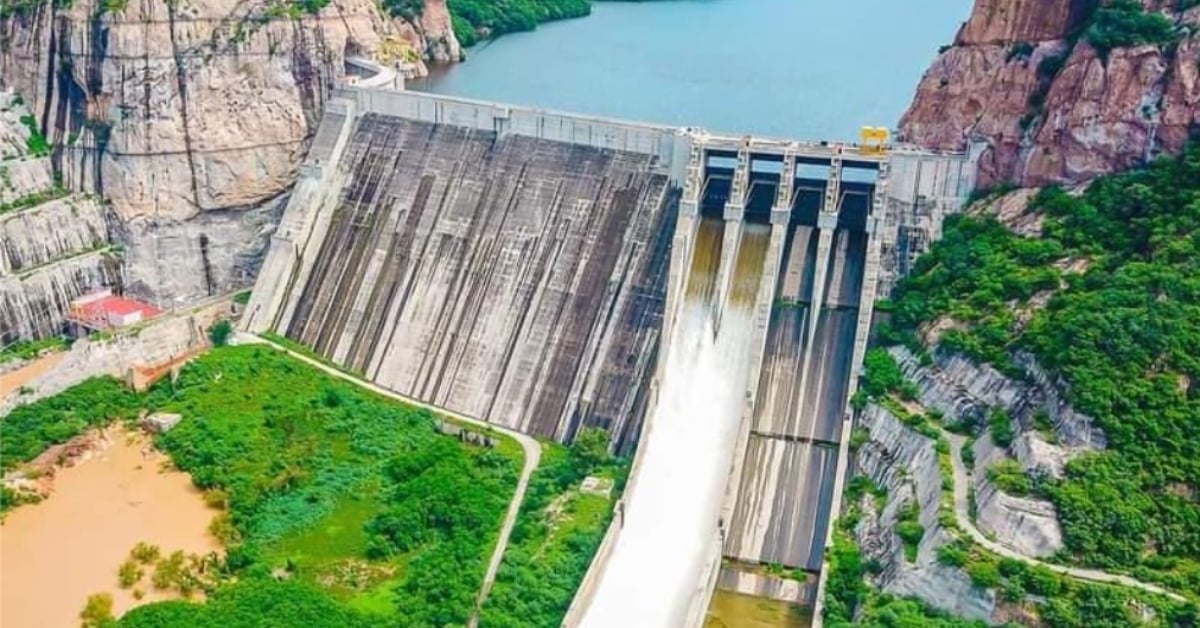
The Luis Donaldo Colosio dam—better known as the Huites reservoir—in the municipality of Choix has climbed to 654 million cubic meters of stored water, representing 20.4% of its total conservation capacity, according to the latest report from the National Water Commission’s Pacific North Basin Authority (Conagua) published July 21, 2025. This marks a notable improvement after the region’s prolonged dry season, offering renewed hope for irrigation and hydroelectric power generation across northern Sinaloa.
Huites reservoir capacity on the rise
Built between 1992 and 1995 on the Río Fuerte, the Huites dam stands 162 meters tall and impounds a reservoir with a total capacity of 4.568 billion m³—of which 2.908 billion m³ serves active storage for irrigation and power production. After bottoming out at just 1 percent in November 2024, the reservoir has gradually recovered thanks to timely rains in June and July, multiplying its volume more than twentyfold in eight months.
Reservoir levels have climbed from 543 million m³ (17%) on July 17 to today’s 654 million m³ (20.4%), an increase of over 100 million m³ in just four days. The latest inflow of more than 33 million m³, recorded over the past week, underscores the value of sustained precipitation for water security and agricultural planning across Sinaloa’s fertile Fuerte River valley.
Impact on agriculture and hydropower
Farmers in Choix and surrounding municipalities rely on Huites for irrigation of nearly 90,000 hectares of farmland, especially for critical summer crops such as maize and beans. At full capacity, the dam’s hydroelectric plant generates 422 megawatts, but its output has been limited by low water levels. Crossing the 20 percent threshold enables operators to plan for gradual increases in power generation and maintain stable electricity supplies to rural communities.
Local officials say the rise in water levels will also ease pressure on smaller upstream reservoirs, allowing Conagua to coordinate water releases that balance flood control with downstream demand. “Huites leads the recovery of our water system,” noted a Conagua spokesperson, adding that further rainfall is needed to secure a productive next planting cycle.
Despite recent gains, the Huites reservoir remains far from its conservation target of 60 percent required to guarantee a full agricultural season. Conagua projects that an additional 2.5 billion m³—more than the reservoir’s current volume—is needed before year’s end. State and federal agencies continue cloud-seeding operations and watershed management initiatives to maximize runoff capture from the Sierra Madre Occidental.
Meanwhile, residents and farmers remain cautiously optimistic. “We’ve seen real progress, but our fields still need more water,” said a local grower. As the region enters the peak of its rainy season, all eyes are on the next storms. For now, the Huites reservoir’s climb past 20 percent offers a vital reprieve for Sinaloa’s water network and the communities that depend on it.