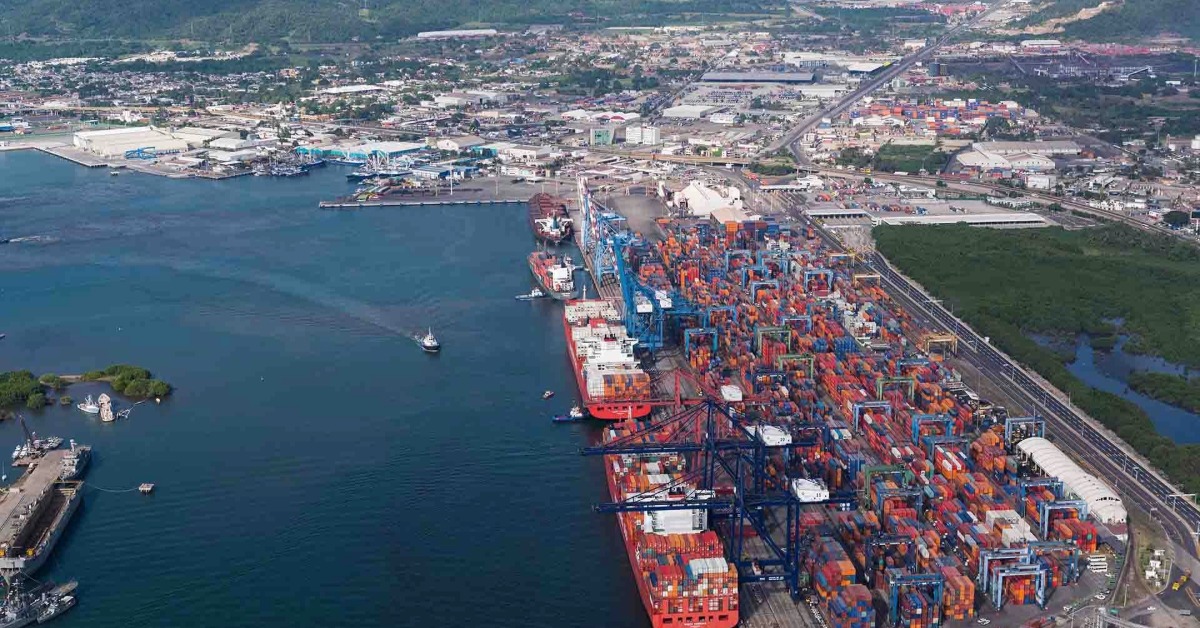
A new federal security push in Colima is drawing attention to a fight that reaches far beyond one small state. Authorities say Los Chapitos, La Mayiza, the CJNG, and Los Mezcales are disputing control of territory linked to Manzanillo and the roads that feed its port. That matters because Colima is not just a local battleground. It sits on a strategic Pacific corridor where legal trade, customs controls, and criminal logistics meet.
For many international readers, Colima can seem easy to overlook. It is small, and it rarely dominates national headlines for long. But Manzanillo gives the state national weight. It is one of Mexico’s most important Pacific ports and a major entry point for cargo from Asia. That same commercial importance makes the area attractive to criminal groups that want access to routes, storage points, transport networks, and corruptible institutions along the way.
Why Manzanillo matters so much
The fight in Colima is not only about street-level territory. It is about the control of a port corridor. That means the port itself, nearby urban areas, highways, warehouses, transport services, and the people who move goods through them. When authorities describe the zone as key to the movement of precursor chemicals and other illicit cargo, they are pointing to the broader logistics chain, not just a single dock or customs gate.
That distinction matters. Cartels do not need to control every part of a port to benefit from it. Influence over trucking, local enforcers, lookout networks, fuel theft, extortion, and access routes can be just as valuable. In Colima, officials have also highlighted the seizure of slot machines, stolen fuel, and motorcycles allegedly used in crimes. Those details show that the contest is not limited to drug shipments. It also includes the local criminal economy that helps organizations finance themselves, recruit members, intimidate rivals, and maintain territorial presence.
A four-sided contest, not a simple two-cartel war
The Colima story is more complicated than the familiar CJNG-versus-Sinaloa Cartel frame. The reported presence of Los Chapitos and La Mayiza suggests that rival factions linked to the Sinaloa side are both part of the picture. At the same time, Los Mezcales, a Colima-based group, remains central to the local conflict. That creates a layered struggle in which local actors and larger national organizations overlap, compete, and at times shift alignments.
That complexity helps explain why violence in Colima can be hard to read from the outside. A homicide, an arrest, or a seizure may look like an isolated event. In reality, it may reflect pressure inside a much larger contest over routes and local control. The mix of local cells, outside operators, and fractured alliances can also make enforcement harder. Removing one operator may disrupt a cell, but it does not necessarily settle the broader balance of power.
What the new federal strategy is doing
The current response is built around a heavier, more targeted security presence. Authorities say the new strategy in Colima has already produced a high daily arrest average. They also say it has led to the recovery of stolen fuel and the seizure of machines and vehicles tied to criminal activity. The approach appears to combine naval presence, state and municipal coordination, surveillance technology, heat maps, and focused patrols in priority zones.
This strategy fits the logic of the state’s problem. If the conflict centers on a logistics corridor, authorities need more than random patrols. They need sustained pressure on transport routes, urban access points, communication networks, and local support structures. That also helps explain why officials have publicized arrests of operators linked to violent cells and why recent cases involving police officers accused of aiding organized crime have drawn attention. A corridor cannot be secured on paper if criminal groups have inside visibility into local enforcement.
Why this matters beyond Colima
For residents, the impact is direct. Businesses, workers, and families live with the risk posed by a contested criminal market. For the federal government, the issue is broader. Manzanillo sits at the intersection of trade policy, customs oversight, port security, and the campaign against synthetic drugs. Every major seizure reinforces that the state is not only dealing with local violence. It is also dealing with an international supply chain problem.
That is why this story matters to foreign residents in Mexico, even if they have never been to Colima. The battle over Manzanillo is part of a larger pattern in which organized crime targets strategic infrastructure, not just neighborhoods. Ports, border crossings, highways, and customs systems all shape the security environment that surrounds investment, tourism, and day-to-day life. Colima may be the immediate setting, but the stakes are national.
The latest operation may disrupt cells and produce visible results in the short term. The harder question is whether authorities can sustain pressure long enough to weaken the networks around the corridor itself. That will depend not only on arrests, but also on intelligence work, institutional cleanup, customs enforcement, and the ability to prevent local infiltration. Until that happens, Colima’s violence will remain tied to something larger than a local turf war. It will remain tied to control of one of Mexico’s most strategic Pacific gateways.