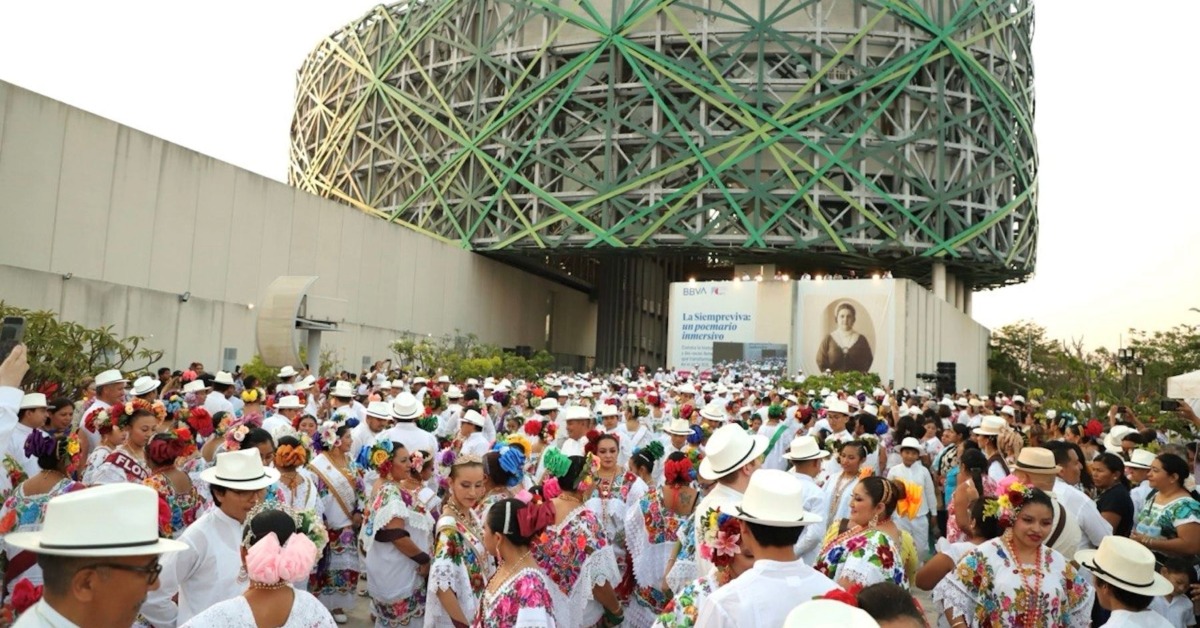
More than 1,800 jaraneras, jaraneros, and traditional dancers gathered in Mérida for a large Tarde de Vaquería celebrating Yucatán’s jarana tradition.
The event took place Saturday, April 25, 2026, at the Gran Museo del Mundo Maya, as part of activities tied to International Dance Day, observed globally on April 29.
Dancers from 84 municipalities in Yucatán took part, filling the museum’s esplanade with music, embroidered clothing, footwork, and regional orchestras. The celebration ran for about six hours, from late afternoon into the night.
The gathering included the Orquesta Jaranera del Mayab and the Real Orquesta Yucateca de Arturo Turriza, along with the Ballet Folklórico del Estado de Yucatán “Alfredo Cortés Aguilar.” Traditional pyrotechnic elements, including toritos and a ciprés, were also part of the program.
State cultural authorities said the event brought together dancers of different ages and communities. The celebration also included recognitions for 15 jarana teachers who have helped preserve and teach the tradition.
Why jarana matters in Yucatán
For many international readers, jarana yucateca may look like a folkloric stage performance. In Yucatán, it is more than that.
Jarana is both music and dance. It is closely tied to the vaquería, a community celebration with roots in ranching, town festivities, and patron-saint traditions. Over time, it became one of the peninsula’s clearest expressions of regional identity.
The dance is known for its upright posture, fast footwork, and strong sense of rhythm. Unlike many partner dances, the steps are not rigidly separated by gender. Men and women often share the same footwork while each dancer adds personal style.
The music is usually played by a jaranera orchestra, often using wind and percussion instruments. The sound is closely associated with village celebrations, civic events, and cultural festivals across Yucatán.
For residents who did not grow up in Mexico, jarana can be a useful entry point into local culture. It shows how Yucatán’s public life often blends music, clothing, family participation, religious tradition, and civic pride in one gathering.
The clothing is part of the story
The visual identity of jarana is also important. Women often wear the terno, a formal regional dress with embroidery. Men commonly wear white clothing, including the guayabera, along with hats, scarves, and traditional footwear.
At the Mérida event, dancers arrived in colorful regional clothing from different communities. State cultural officials highlighted the use of textiles and embroidery linked to Yucatán’s Maya heritage.
These details matter because the clothing is not just decorative. The garments are part of the tradition’s public language. They signal place, family practice, community pride, and continuity between generations.
For many Yucatecan families, these dances are learned outside formal classrooms. They are passed down through town events, family celebrations, festivals, and local teachers who keep the style alive.
A museum becomes a community stage
The choice of the Gran Museo del Mundo Maya gave the event added meaning.
The museum is usually known for exhibitions on Maya history, archaeology, textiles, daily life, and regional heritage. For this celebration, its open space became a public dance floor.
That shift matters. It placed living culture beside museum culture. It also turned a major cultural institution into a gathering space for people from across the state.
Officials said they would seek to repeat the event and make it an annual tradition at the museum. If that happens, the celebration could become a regular cultural marker in Mérida’s public calendar.
For foreign residents in Yucatán, this type of event also shows where local culture is most accessible. It is not always hidden in museums or private spaces. Often, it is in plazas, parks, community events, and public festivals.
A broader peninsula tradition
Jarana and vaquería are especially associated with Yucatán, but the tradition reaches across the peninsula. Cultural references also connect it with communities in Campeche and Quintana Roo.
That wider context helps explain why the celebration included dancers beyond Yucatán. The tradition is part of a shared peninsula identity, even as each community keeps its own style and local meanings.
The Mérida event also included references to inclusion and diversity. Participants included jaranera ambassadors from the LGBTQ+ community, Reinas Vaqueras, and local teachers recognized for their work in transmission and preservation.
That mix reflects how traditional culture can remain rooted while still adapting. The jarana is not only a museum piece or tourist show. It continues to appear in community life, public identity, and newer cultural spaces.
International Dance Day with a Yucatán accent
International Dance Day was created in 1982 by the Dance Committee of the International Theatre Institute. It is observed every April 29, the birthday of Jean-Georges Noverre, a major figure in ballet history.
In Yucatán, the commemoration took a local form. Instead of focusing only on professional stage dance, the state centered one of its most recognizable folk traditions.
That choice helped connect a global cultural date with a regional practice that many residents know from town celebrations and family life.
For international residents, the event is also a reminder that understanding Mexico often means looking beyond national symbols. Each region has its own cultural language. In Yucatán, jarana remains one of the clearest ways that language is heard, seen, and danced.