Mexico plans to renew its grocery price agreement covering 24 basic products as rising fruit and vegetable prices put pressure on household budgets.
Mexico City, Mexico, November 25, 2026 – Mexico’s federal government is preparing to renew an agreement with food producers and supermarket chains to contain the cost of 24 basic household products, as rising food prices continue to put pressure on family budgets.
President Claudia Sheinbaum confirmed during Wednesday’s morning press conference that the voluntary agreement, known as the Paquete Contra la Inflación y la Carestía (PACIC), is approaching another renewal.
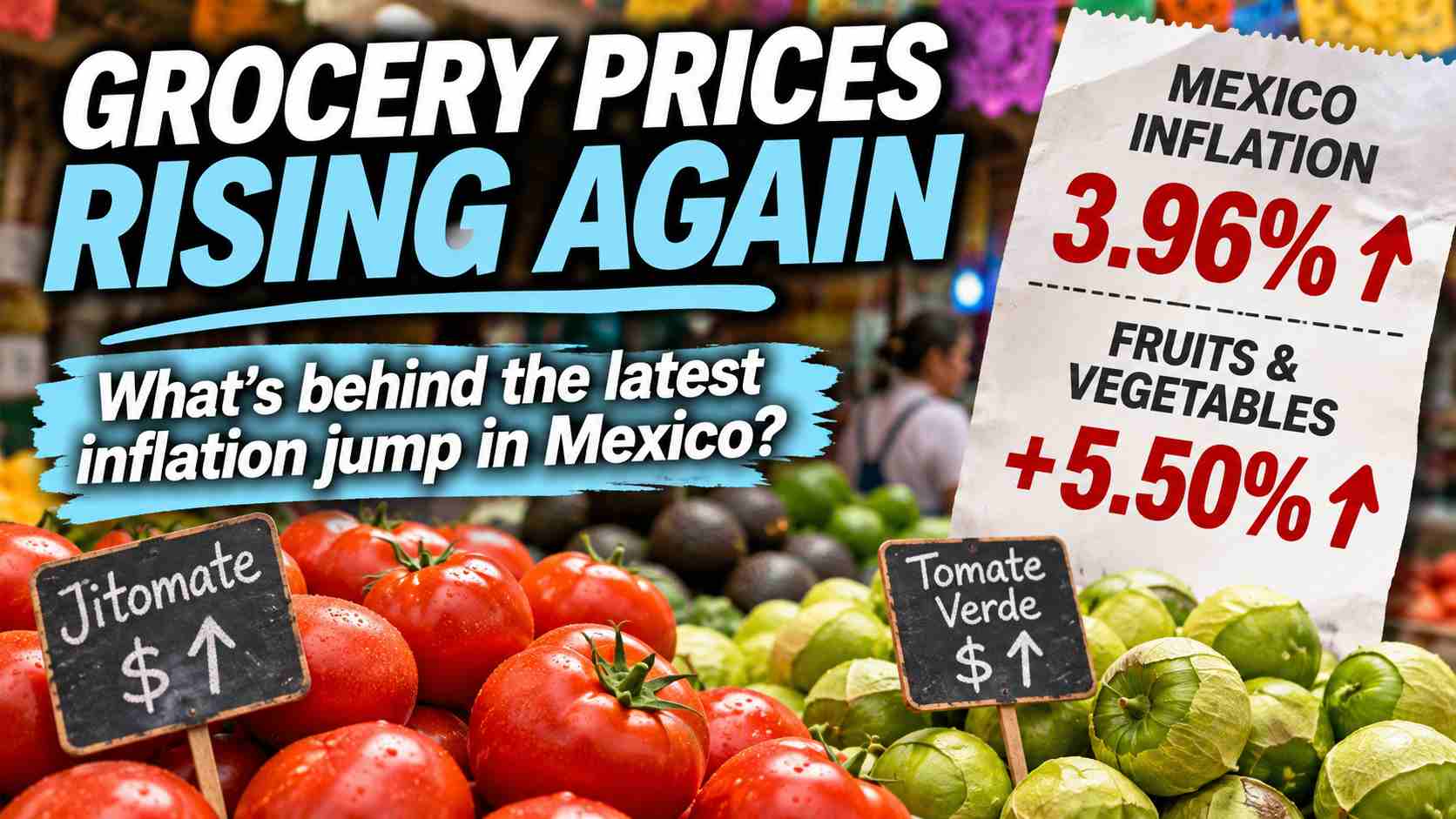
The announcement comes just one day after Vallarta Daily reported that Mexico’s annual inflation had climbed to 3.96 percent, driven in part by significant increases in fruit and vegetable prices.
Sheinbaum credited the grocery price agreement, along with a separate agreement covering fuel prices, with helping contain inflation.
The president did not specify when the renewed agreement would be signed.
What is Mexico’s grocery price agreement?
The PACIC is a voluntary arrangement between the federal government, food suppliers and retailers intended to keep essential household products affordable.
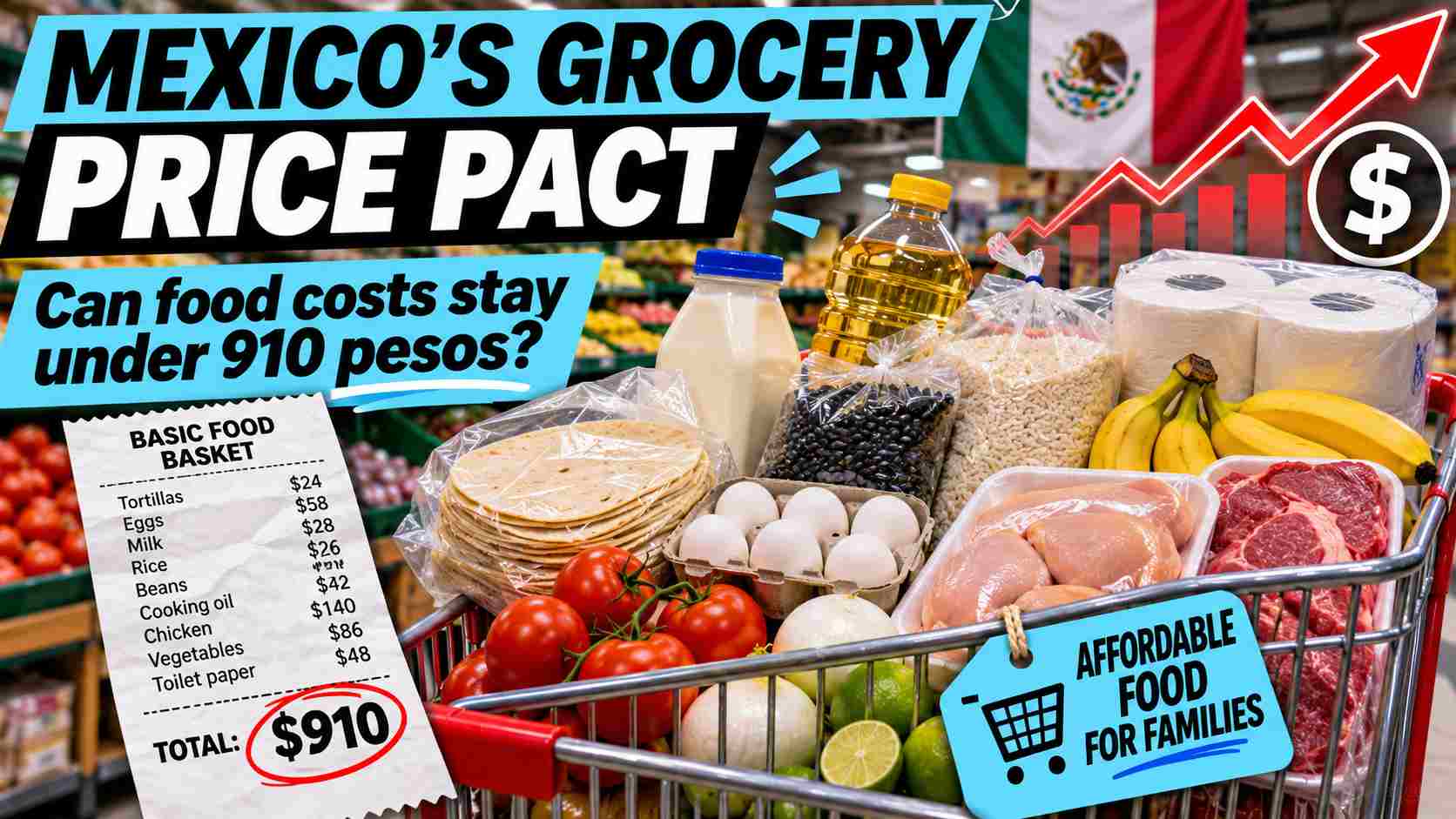
Rather than establishing individual price controls on every product sold in Mexican supermarkets, the agreement focuses on the combined cost of a specific basket of 24 essential products.
In May, the federal government and 32 participating companies renewed their commitment to keep the basket at 910 pesos for another six months.
During Wednesday’s press conference, Sheinbaum referred to a benchmark of 911 pesos, although the most recent signed agreement and Monday’s consumer price monitoring report both identify 910 pesos as the target.
The terms of the upcoming renewal have not yet been formally announced.
Individual product prices can fluctuate according to availability, seasonal conditions and production costs. The objective is to keep the combined cost of the selected products within the agreed amount.
For consumers, that means an increase in the price of tomatoes might be offset by lower prices for chicken, rice or other products included in the basket.
It does not mean that every item in a supermarket is subject to a price restriction.
What can you buy for 910 pesos?
The federal consumer protection agency, PROFECO, developed its basket using estimated weekly consumption quantities for a household of four people.
The basket includes fresh produce, meat, dairy products, pantry staples and two basic personal hygiene products.
According to PROFECO’s published basket specifications, these are the products and quantities used in its price comparisons.
| Product | Quantity |
|---|---|
| Corn tortillas | 4 kg |
| Milk | 5 liters |
| Eggs | 18 |
| Chicken | 1 kg |
| Beef | 1 kg |
| Pork | 1 kg |
| Rice | 1 kg |
| Black beans | 900 g |
| Sugar | 1 kg |
| Vegetable oil | 946 ml |
| Canned tuna | Two 140 g cans |
| Canned sardines in tomato sauce | 425 g |
| White sandwich bread | 680 g |
| Soup pasta | 220 g |
| Tomatoes | 1 kg |
| White onions | 1 kg |
| Jalapeño peppers | 1 kg |
| Potatoes | 1 kg |
| Carrots | 1 kg |
| Limes | 1 kg |
| Apples | 1 kg |
| Bananas | 1 kg |
| Bar soap | 1 bar |
| Toilet paper | 4 rolls |
The basket is a standardized price comparison tool rather than a complete nutritional or household budget.
Products such as coffee, cheese, butter, additional cleaning supplies and many other items regularly purchased by households are not included.
Shoppers who prefer imported products, premium brands, organic produce or specialty foods can expect their grocery bills to differ considerably from the government’s benchmark.
Not every supermarket is meeting the target
While the federal government says most monitored retailers are complying with the agreement, prices continue to vary between individual supermarkets.
During PROFECO’s Monday morning presentation, consumer protection chief Iván Escalante Ruiz identified a difference of more than 190 pesos between the cheapest and most expensive baskets in its latest featured comparison.
The monitoring covered prices recorded between November 9 and 13.
| Supermarket | Location | Basket price |
|---|---|---|
| Bodega Aurrera Aeropuerto | Chihuahua | $767.00 |
| H-E-B 2984 | León, Guanajuato | $957.70 |
The Chihuahua supermarket came in 143 pesos below the agreed benchmark, while the León location exceeded it by 47.70 pesos.
All supermarkets included in separate comparisons for Coacalco, Monterrey and Mérida remained below the 910-peso target.
The figures illustrate why shopping around can make a meaningful difference, even when purchasing essentially the same products.
They also demonstrate that the agreement is not a legally enforceable nationwide price ceiling for every supermarket.
Food prices are still climbing
The government’s efforts to contain grocery costs come at a particularly important time for Mexican households.
According to the latest inflation report from Mexico’s national statistics agency, INEGI, consumer prices increased 0.54 percent during the first half of November compared with the previous two-week period.
Fruit and vegetable prices rose 5.5 percent during those two weeks alone and were 20.05 percent higher than during the corresponding period last year.
That is considerably higher than Mexico’s overall annual inflation rate of 3.96 percent.
The distinction helps explain why official inflation figures do not always reflect what people experience when visiting their neighborhood supermarket or produce market.
Households that devote a large proportion of their income to food can feel the effects of rising agricultural prices more acutely than the national inflation rate might suggest.
Sheinbaum acknowledged Wednesday that some agricultural products have experienced seasonal price increases and said the Agriculture Ministry continues monitoring supply and distribution conditions.
The grocery agreement may help contain the combined cost of certain essential products, but it cannot eliminate fluctuations caused by weather, harvest conditions, transportation costs and market demand.
What does the agreement mean for Puerto Vallarta shoppers?
For people living in Puerto Vallarta, the national grocery basket provides a useful reference when evaluating local food prices.
However, it should not be interpreted as a guarantee that residents can purchase the same basket for 910 pesos at every local supermarket.
Prices can vary between branches of the same supermarket chain, and local markets may offer better prices on certain fresh products while supermarkets remain more competitive on packaged goods.
Puerto Vallarta’s position as an international tourism destination also means residents have access to a wide selection of imported groceries and specialty products that fall outside the government’s price agreement.
As we explain in our guide to the cost of living in Puerto Vallarta, grocery expenses can vary considerably depending on shopping habits and how closely a household’s consumption resembles that of the local population.
One practical approach is to use the government’s basket as a starting point for evaluating the cost of essential products, even if your regular shopping list looks quite different.
A household of one or two people, for example, may purchase considerably less milk, meat and tortillas than the quantities included in PROFECO’s four-person basket.
How to compare supermarket prices in Mexico
Consumers do not need to wait for the president’s weekly press conference to find out which retailers are offering competitive prices.
PROFECO maintains its online Quién es Quién en los Precios service, where shoppers can consult published price comparisons for essential household products.
In September, the agency also introduced a monthly color-coded price comparison showing average prices for the 24 products across supermarket chains operating nationally.
The comparison is designed to help consumers identify which retailers tend to offer lower prices on individual items rather than simply identifying the cheapest overall supermarket.
National chain averages will not necessarily reflect current prices at a particular Puerto Vallarta location, but they provide another reference when deciding where to shop.
For now, the federal government’s intention is to extend the grocery price agreement into its next term.
The next important announcement will be the signing of the renewed agreement, when consumers should learn whether the existing basket, participating companies and price benchmark will remain unchanged.