What sounds like another border construction dispute is turning into something more sensitive. Officials in Baja California are warning that explosive work near El Cuchumá could damage a sacred Kumiai site, archaeological remains, and a fragile cross-border ecosystem. The dispute now reaches beyond local protest. It is drawing in state culture authorities, federal agencies, and broader questions about how both countries treat Indigenous heritage when security projects move into places that communities still use and revere.
Baja California culture officials urge the US to halt blasting near sacred El Cuchumá
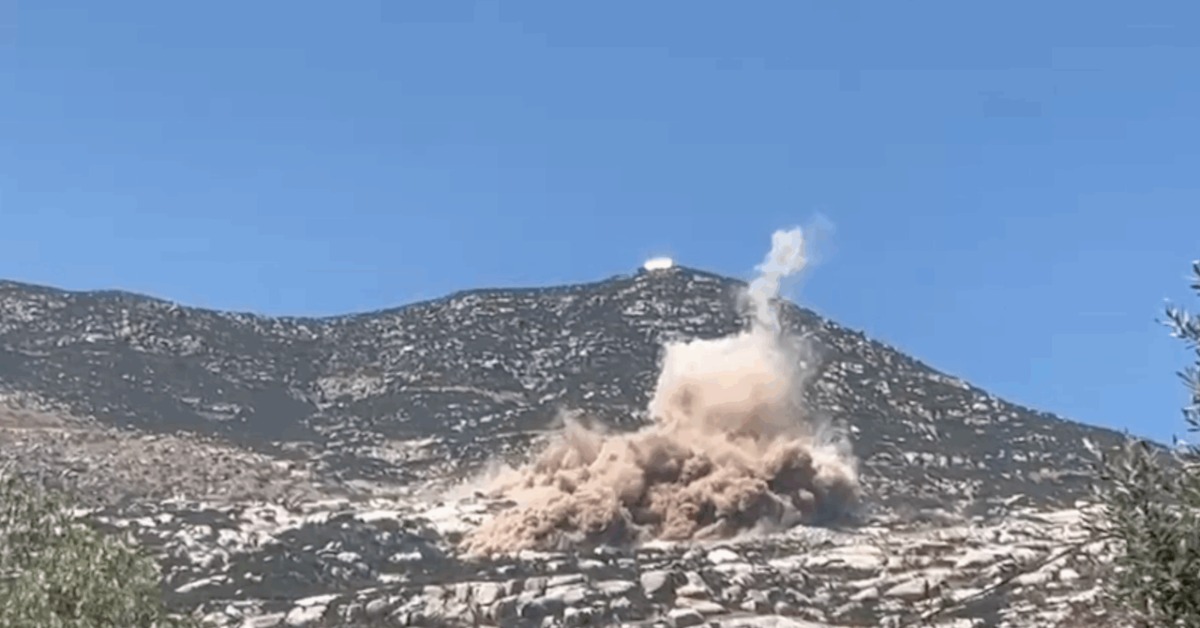
Baja California’s culture ministry has formally asked US Customs and Border Protection to stop using explosives near El Cuchumá, a mountain in the Tecate border region that holds deep spiritual meaning for Kumiai communities on both sides of the frontier.
The request raises the stakes in what had first appeared to be a local protest over recent border construction. State officials now argue the issue is not only about security infrastructure. They say it also involves Indigenous heritage, possible damage to archaeological remains, and the integrity of a broader biocultural landscape that cannot be treated as empty land.
The state culture secretary, Alma Delia Ábrego, called for work to stop while specialists from Mexico and the United States evaluate the extent of any damage. The request also asks US authorities to respect consultation protocols with Indigenous communities before any further work continues in the area.
Why El Cuchumá matters beyond the immediate dispute
For many readers outside Baja California, El Cuchumá may be unfamiliar. In Tecate, it is not. The mountain has long been understood as a sacred place for the Kumiai people, who continue to use it as a ceremonial and spiritual site. That is what makes the current dispute more sensitive than a routine public works complaint.
The mountain is tied to living practice, not only memory. Community members describe it as a place for ceremony, initiation, and spiritual balance. Researchers and cultural institutions also identify it as part of Mexico’s intangible cultural heritage, meaning its value does not rest solely on stones, artifacts, or visible ruins. Its meaning also lives in ritual use, oral tradition, and the relationship between community and landscape.
That difference matters. If a project affects a highway shoulder or an unused ridge, officials can focus on engineering and environmental mitigation. But when construction reaches a place still treated as sacred by a living Indigenous community, the debate changes. The question becomes whether development or border enforcement can move forward without overriding cultural rights that predate the border itself.
A mountain divided by a border, but not by memory
Part of the tension comes from geography. El Cuchumá is a binational landscape. The mountain sits across the Mexico-US border, with most of it on the Mexican side and the rest in the United States. For generations, that political line has split Indigenous territories that existed long before either modern boundary enforcement or current migration politics.
That helps explain why officials in Baja California are framing the issue in larger terms. Their argument is that damage on one side of the line still harms a single cultural landscape. From that perspective, a mountain does not stop being sacred because a border fence cuts through it.
This is also why the call from Baja California is not limited to a complaint about a single blast or work crew. The state is asking for a binational review. In practical terms, that means experts from both countries would assess whether there has been harm to ceremonial spaces, archaeological traces, and the surrounding terrain before more work is allowed to proceed.
The concern is not only archaeological
The public debate around El Cuchumá has centered on sacred space and possible archaeological damage, but the concern reaches further. Environmental groups and local residents say recent detonations may also be affecting flora, fauna, and water systems around the mountain.
That broader framing matters because officials are describing El Cuchumá as a biocultural site. In that view, the landscape cannot be divided into neat categories such as culture here and nature there. The cultural significance of the mountain is bound up with the ecosystem around it, including native species, vegetation, and water flows that communities see as part of the same living place.
This is one reason the dispute has attracted so much attention so quickly. A site can suffer lasting harm even before specialists finish cataloging every damaged point. Blasting may shift rock, alter habitat, restrict access, and change the conditions that allow ceremonies and traditional use to continue. That makes the issue as much about future access and continuity as about the already reported damage.
Mexico’s response is growing, but key questions remain
The latest push from Baja California comes after several days of public complaints and growing scrutiny. President Claudia Sheinbaum said last week that Mexico’s Culture Ministry and Foreign Relations Ministry were reviewing the case. That suggests the matter has already moved beyond a local complaint and into the early stages of a federal diplomatic and cultural response.
What remains unclear is how far Mexico will take the issue if blasting continues. For now, the most immediate demand is a pause and a technical review. But the underlying questions are larger. They touch on how both governments balance border enforcement with Indigenous rights, how they treat sacred spaces that lie in divided territories, and whether consultation can happen after damage is alleged or only before work begins.
The case also raises a practical challenge that often appears along the border. Projects designed through a security lens can move quickly. Cultural and environmental evaluation usually moves much more slowly. Once that gap opens, communities are often left trying to defend a place after the heavy work has already started.
Why this story may travel beyond Baja California
This dispute may seem regional, but it connects to a broader issue many international readers will recognize. Across the world, infrastructure and security projects often collide with sites that Indigenous communities still use and protect. Those cases are rarely only local. They force governments to answer whether a place is being valued as a living cultural landscape or reduced to terrain on a map.
In Baja California, that argument is now centered on El Cuchumá. For the state’s culture officials, the point is clear. Border security cannot be treated as an automatic override for sacred heritage. For Kumiai communities, the issue is even more direct. They are trying to protect a mountain that remains part of their identity, not only their history.
The next phase will likely depend on whether the requested review happens, what specialists find, and whether US authorities agree to suspend work in the meantime. Until then, El Cuchumá is no longer only a local border story. It has become a test of how both countries respond when state power meets a sacred place that is still alive in community life.