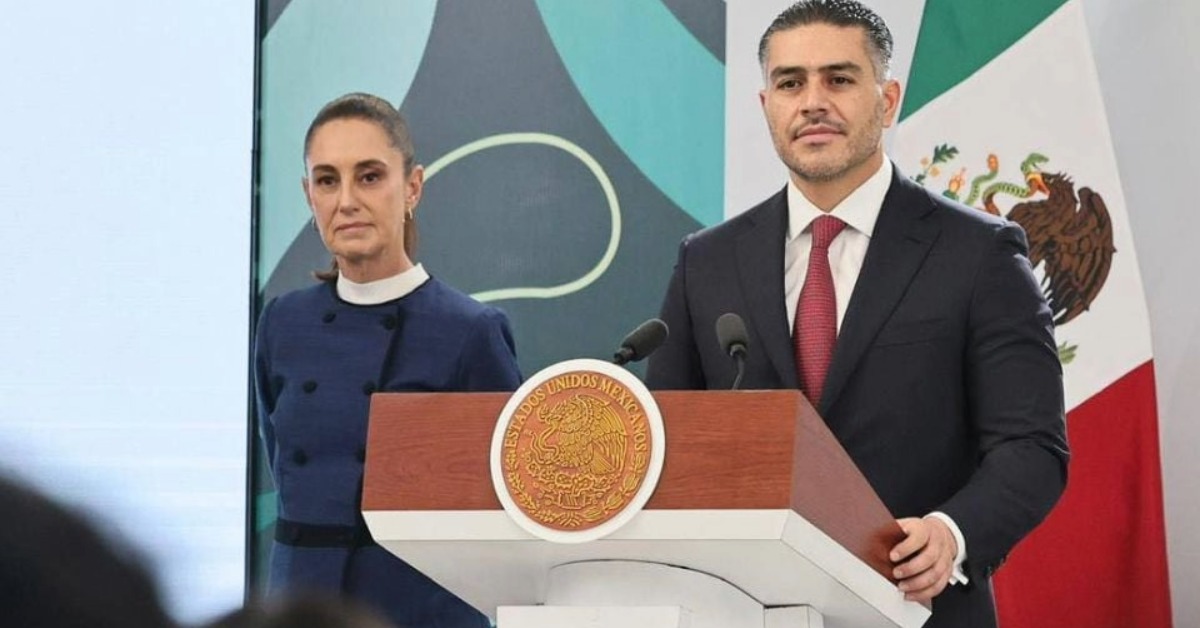
Mexico’s federal security cabinet is putting a sharper number on one of the country’s hardest security problems. Officials say 85 current and former public officials have been detained during the Sheinbaum administration in cases tied to alleged criminal activity, including municipal presidents still in office when arrested. The count raises a deeper issue for local governments across Mexico, where cartel influence is no longer treated only as a police matter.
Federal count puts city halls inside Mexico’s security crisis
Mexico’s federal security cabinet says 85 current and former public officials have been detained during President Claudia Sheinbaum’s administration in cases tied to alleged criminal activity, including six municipal presidents who were still in office when arrested.
The figure was presented during the federal security report as part of the government’s Estrategia Nacional de Seguridad, which links the arrests to its anti-impunity policy. Security Secretary Omar García Harfuch said the cases involve officials and former officials from different political parties, using the phrase “todos los partidos” while defending the investigations.
The government’s own record is not fully clean on the number of sitting mayors. The federal security bulletin says six municipal presidents were in office when detained, plus one former mayor. The official transcript of the same May 27 conference quotes García Harfuch referring to seven sitting municipal presidents. Several news accounts repeated the lower figure of six.
That difference does not change the central point of the federal message. The government is presenting alleged municipal collusion with organized crime as an institutional problem, not only as a matter of cartel gunmen, street violence, or police raids.
García Harfuch described the arrests as part of a policy of “cero impunidad.” He said officials or former officials will be investigated when authorities find indications and evidence of crimes.
Sheinbaum backed that line during the conference. Asked about public officials linked to criminal groups, she said “se actúa,” and added that federal prosecutors had found alleged collusion in cases involving mainly municipal officials.
Municipal corruption moves into the security brief
The arrests fall within a broader federal strategy that combines police operations, intelligence work, financial investigations, and military deployments. García Harfuch said that since October 2024, authorities have detained 54,297 people for high-impact crimes. He also reported nearly 30,000 firearms seized, more than 400 tons of drugs confiscated, and 2,382 clandestine drug laboratories dismantled.
The financial side of the strategy has also widened. The Financial Intelligence Unit has added 1,422 people to the blocked-persons list, with more than 4 billion pesos frozen, according to the federal report.
The municipal cases have been linked in several reports to Operación Enjambre, the multi-agency crackdown targeting local officials accused of protecting or assisting criminal groups. Previous coverage of Operación Enjambre and municipal corruption in Mexico described the operation as a test of whether federal authorities can move against local political protection networks without reducing the issue to isolated arrests.
Among the sitting mayors identified in recent coverage are Agustín Toledano Amaro of Atlatlahucan, Morelos, Diego Rivera Navarro of Tequila, Jalisco, and Pedro Luis Hernández de Paz of Santo Tomás de los Plátanos, State of Mexico. The allegations and procedural status vary by case, and criminal responsibility must still be handled through the courts unless there is a final conviction.
The Tequila case has drawn particular attention in Jalisco because Rivera Navarro was accused of links to organized crime after federal and state authorities moved against the municipal administration. Earlier coverage of the Tequila mayor’s arrest and alleged cartel influence placed the case inside the larger debate over local governments operating under pressure from criminal groups.
The politics of calling out public officials
The federal government is trying to draw a clear line between its security strategy and party protection. García Harfuch said the cases include people from different political backgrounds. That claim is politically important because several of the most visible cases involve officials or former candidates tied to Morena or allied parties, while opposition figures have also faced scrutiny in other states.
The federal presentation also came as the government promoted a separate claim that homicides have fallen 49 percent from September 2024 to May 2026. Sheinbaum attributed the decline to sustained work by the security cabinet, coordination with states, and a strategy centered on prevention and prosecution.
The numbers give the administration a way to argue that its security strategy is producing results. They also expose the risk in the same argument. When public officials are counted among those detained for alleged criminal links, the problem is no longer only whether police can capture suspects. It becomes a question of whether municipal institutions were usable by criminal groups before anyone intervened.
That is the harder part of the federal count. A mayor controls police appointments, permits, local contracts, public works, and daily access to municipal power. When prosecutors allege that a municipal administration has been used to protect crime, the damage usually extends beyond one person.
The government has not released a single public case file explaining each of the 85 detentions in one place. Until it does, the figure works more as a political and security benchmark than as a complete public accounting.