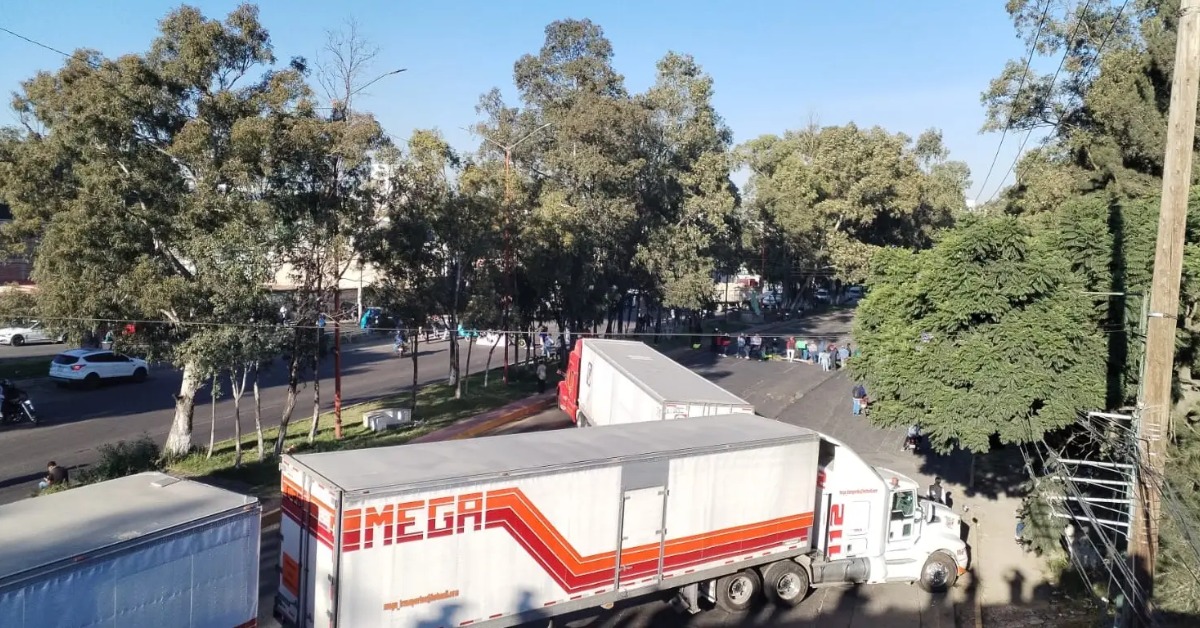
Mexico City, Mexico, June 23, 2026 – Truckers and passenger carriers are preparing highway blockades across Mexico on Wednesday, June 24, in a national protest over road security, extortion claims, towing fees, and transport regulation.
The Alianza Mexicana de Organización de Transportistas, known as AMOTAC, has called for mobilizations in all 32 states beginning at 7 a.m. The group says the protest will focus on federal highways and key access points into major cities.
The most specific public route lists so far point to the center of the country. Expected trouble spots include the México-Querétaro, México-Pachuca, México-Puebla, México-Cuernavaca, México-Pirámides, and Arco Norte corridors, along with several access roads in the Mexico City metropolitan area.
What is confirmed so far
The named blockade points are strongest in central Mexico, not Jalisco. Azteca Jalisco reported that AMOTAC had not confirmed blockade points in Jalisco in the public notice it reviewed.
Drivers should check GN Carreteras and CAPUFE before leaving. Guardia Nacional describes GN Carreteras as an official digital alert service for highway incidents and closures.
Why carriers are going back to the highways
AMOTAC is pressing a long list of complaints from small and independent operators, including highway crime, alleged extortion at checkpoints, high towing charges, municipal access fees, pending paperwork, and the treatment of smaller carriers by security authorities.
The group has also warned that trucks could move in a slow march toward the Zócalo in Mexico City if authorities do not respond.
“We need decisive action,” AMOTAC said in its public message, arguing that carriers have been pushed into protest after failing to get results from authorities.
Mexico recorded 10,367 investigation files for cargo transport robbery in 2025, according to figures cited by Revista TyT from the federal public security system. That amounts to an average of 28 cases per day, even after a year-over-year decline.
Canacar, the national freight transport chamber, has also said robberies fell in 2025 but became more violent for drivers. Its president said the sector was “not happy” with the level of violence still hitting operators.
The government response is still developing
President Claudia Sheinbaum said Tuesday that the federal security cabinet is preparing new highway-security measures. She said the government is working on something similar to a “C5 en carreteras,” a reference to surveillance and coordination systems used in large cities.
That promise has not stopped Wednesday’s protest plan.
AMOTAC’s demands go beyond patrols. The group wants towing fees to be regulated across federal, state, and municipal levels. It also wants municipal permit charges removed for supply vehicles entering cities. Other requests involve faster SICT paperwork for plates, licenses, and certificates.
A travel problem and a supply-chain warning
A partial closure at a toll booth or on an access road can create hours-long backups, especially when heavy trucks are involved.
Many of the roads named in public route lists are freight corridors that feed Mexico City and connect the capital to industrial and port routes. A slow-moving protest can interrupt deliveries even without a full shutdown.
Similar Mexico highway blockades last year showed how quickly road protests can become national economic pressure, especially when farmers and transport groups align around security and regulation.