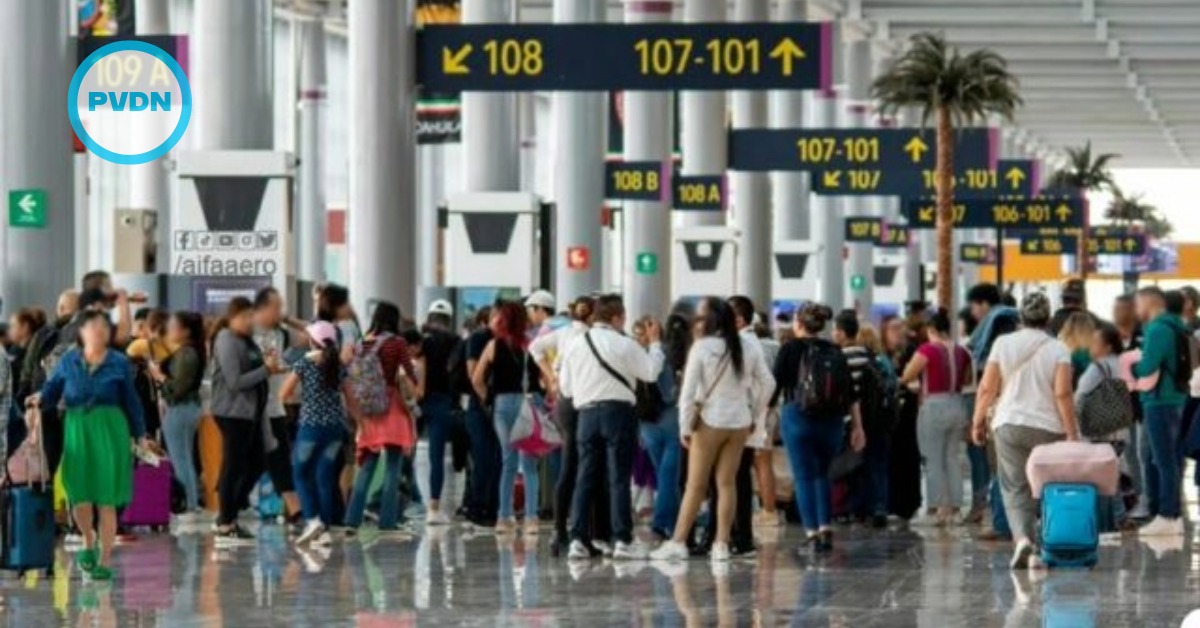
A month after Washington moved to block new US service tied to Mexico City’s Felipe Ángeles airport, AIFA’s international numbers are already sliding. The dip is small in absolute terms, but it lands in the one market AIFA needed to prove it could grow beyond domestic flyers. Behind the scenes, airlines are rewriting schedules, local officials are lobbying, and cargo planners are watching the next shoe. The bigger question is what happens if the US door stays shut through 2026.
AIFA’s US bet just got riskier
Felipe Ángeles International Airport, better known as AIFA, has spent its short life chasing one thing that turns a new airport into a real airport: reliable demand. For most travelers, that starts with schedules and ends with convenience. AIFA has tried to compete with lower fares, smoother crowds, and the promise that ground connections will eventually catch up.
The problem is that international growth, especially to the United States, was always the fastest way for AIFA to change the narrative. US-bound routes are the bread-and-butter market for Mexico’s air travel economy. They also carry a steady stream of “visiting friends and relatives” passengers, including many expats and binational families who fly several times a year.
That is why the recent US move to revoke approvals for multiple Mexico–US routes landed like a body blow for AIFA, even though the airport’s overall passenger totals are still dominated by domestic traffic. The US action did not just clip a couple of flights. It froze momentum. Two Texas routes that were already flying out of AIFA were ordered to stop, and a larger set of planned services was pulled back before it could mature into a dependable network.
US officials framed the decision as a response to Mexico’s aviation policy choices over the past few years, including capacity and slot changes in Mexico City and the push to relocate cargo activity away from the capital’s main airport. Mexico’s government has pushed back and signaled it wants to negotiate. Still, for airlines and passengers, the timeline that matters is simple: routes that were supposed to be available are no longer on the board.
The early warning signs in November
The first hard hint of fallout shows up in the kind of monthly statistics airports watch obsessively. According to official airport figures prepared by Mexico’s Defense Ministry, AIFA recorded 1,755 fewer international passengers arriving in November than in October. International operations also fell sharply, dropping from 319 to 233 in the same period. Departures fell by roughly a quarter, and arrivals fell by a similar margin.
Those numbers matter for two reasons.
The first is symbolism. AIFA’s international passenger share remains small, so a drop like this is not going to collapse the airport. But it undercuts the argument that international expansion is steadily gaining traction. When an airport is still proving itself, perception is part of the product.
The second is math. International travelers tend to spend more at airports and generate stronger per-passenger revenue. They buy food, they pay fees that help fund operations, and they justify the kind of route growth that attracts more airlines. When international volumes slide, the airport can still fill seats domestically and still look “busy,” but the revenue mix starts to tilt in the wrong direction.
For expats, it is also a practical signal. If you were hoping AIFA would become the easier option for quick US trips from Mexico City, this is the opposite of that. Even a small cut in international volume can translate into fewer choices, longer flight times, and less price competition.
Cargo feels the pressure too
The passenger story is only half the warning light. Cargo activity also softened in November. The same official figures show outbound cargo volume falling from 7,255,441 kilograms in October to 6,632,562 kilograms in November.
Cargo is where the broader US–Mexico aviation dispute gets especially sensitive. Mexico’s policy push to shift cargo operations toward AIFA was designed to ease congestion at the main Mexico City airport and to force activity into the new facility. US officials have argued that these moves harmed competition and predictability for carriers, and they have floated additional restrictions that could affect how cargo travels in the belly holds of passenger planes on key routes.
That matters because cargo is not a side hustle for airlines. It helps subsidize routes that might otherwise be marginal, and it can be the difference between keeping a flight year-round or cutting it in the low season. When cargo rules tighten, airlines have fewer ways to balance the books. Airports feel that through fewer frequencies, fewer route launches, and less incentive to experiment with new markets.
AIFA, in particular, has leaned on the promise that it can be a cargo-friendly alternative with room to grow. A visible drop in cargo volume, even over one month, reinforces the risk that policy and politics can overwhelm the airport’s operational pitch.
What this means for 2026 travel plans
If you live in Mexico and fly to the United States often, the immediate takeaway is not panic. Most Mexico–US flying still runs through established airports and established routes. The issue is that AIFA’s path to becoming a true second option for Mexico City just got steeper.
If you already booked a US-bound itinerary marketed out of AIFA, you should expect more schedule churn than usual as airlines reroute passengers, consolidate service, or shift flying to other airports where they have more flexibility. Even when airlines protect tickets, the friction shows up in travel time and ground logistics, especially if you planned around AIFA’s location and pricing.
The deeper issue is strategic. AIFA is operated through a federal, military-linked structure, and its long-term plans rely on public-sector support as well as growing commercial revenue. International routes are one of the cleanest ways to generate that revenue without leaning on the budget. If the US market remains constrained, AIFA’s growth becomes more dependent on domestic demand and on government backing to bridge the gap between ambition and cash flow.
For now, the airport is not empty, and it is not failing. But the November dip is an early sign that international fragility is real. AIFA’s US bet was supposed to be the quick win. Instead, it has become the pressure point.