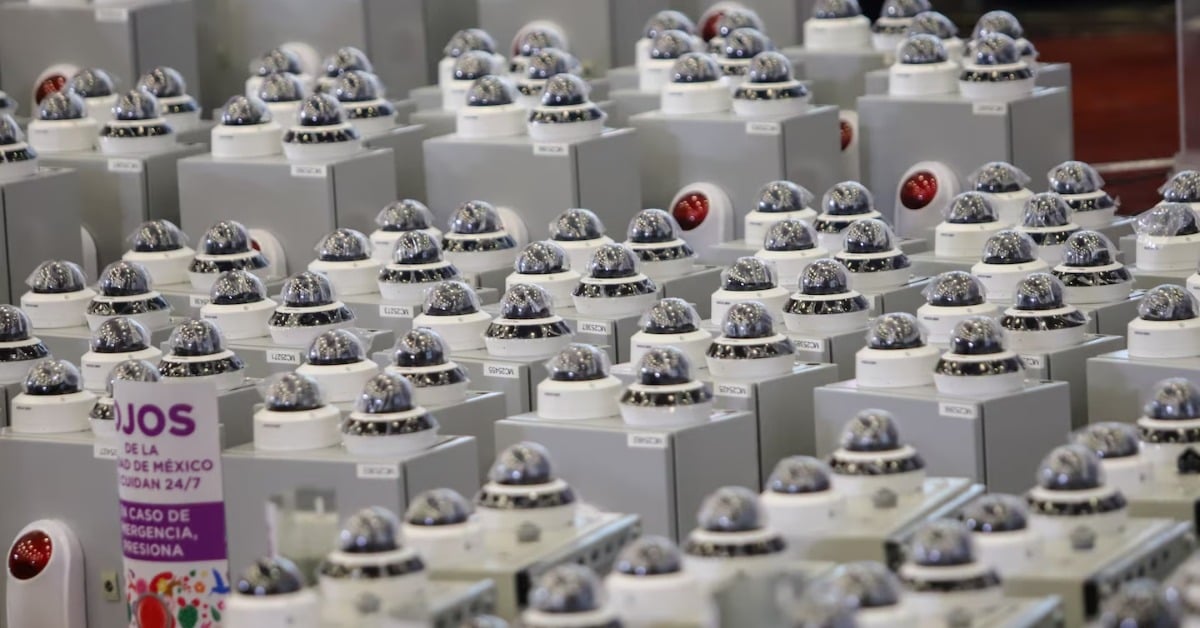
C5 eyes that watch over you
Mexico City will add 30,400 surveillance cameras to its C5 network. Officials frame the expansion as the latest push to make the capital the most-watched city in the Americas. The new gear sits on totems designed for street use and rapid calls for help.
Each totem pairs higher-definition video with upgraded emergency buttons and loud, directional alarms. If a device fails, self-diagnostics ping the control center so crews can fix it without waiting for a complaint. The goal is simple. When someone hits the button, it works, and the help moves.
A surge in hardware and a promise of speed
City officials say the new deployment is equivalent to 15,209 totems across the map. Cameras carry PTZ heads that sweep 360 degrees and save footage for 14 days. In plain terms, operators can follow motion, zoom when needed, and hand usable clips to investigators in the first two weeks after an incident.
The announcement also referenced a tranche of 1,200 totems housing 3,400 cameras, described as a 46 percent step toward the system the city envisions for 2030. It highlights how the plan mixes big totals with targeted phases on the ground.
What the numbers say
The city pegs the new outlay at 345.7 million pesos. With the additions, officials claim CDMX tops New York (70,882 public cameras), Chicago (48,283), and Rio de Janeiro (27,575) in public video coverage. The claim is about government cameras, not private systems.
This scale is the result of steady growth. The program began in 2012 with 8,310 cameras, reached 15,310 by 2018, and then expanded rapidly. Under Claudia Sheinbaum, upgrades and totems took the grid to 43,310. From 2022 to 2024, the city moved from 49,142 to 83,414 cameras—the current administration projects 113,814 by December 2025, a 36 percent jump in its first year.
Where the city plans to put them
The C5 will seed totems in all 16 boroughs. Placement, officials say, follows “territorial intelligence” that weighs crime patterns, foot traffic, transit hubs, and emblematic tourist and cultural sites. It is a push to leave the old bias behind, where central zones were dense with cameras and the outskirts lacked coverage.
The city will also buy a separate batch earmarked for the Metro. That move targets platforms, corridors, and interchanges where dense flow and tight spaces raise both safety and investigative needs.
What it could mean on your block
For residents, the change will be felt in small moments. You notice the new blue totem on your corner. The button has a ring light and more transparent labels. When a dispute breaks out near the bus stop, the alarm cuts through traffic noise, and you see a patrol arrive. These are the scenes the plan promises to multiply.
There is also a civic ask. The government wants homeowners with private cameras to opt in and share clips when investigators seek evidence. City leaders pitch that as a way to extend coverage without building new poles on every block. The network grows by cooperation, not by hardware alone.
The test ahead
Ambition is not the same as impact. The C5 eyes that watch over you rollout will be judged on response times, device uptime, and whether prosecutors can move cases with video that meets the standard. Officials speak about a system that “observes, prevents, and accompanies” daily life. The measure is whether residents feel that on the sidewalk after dusk, not only in a press room at noon.