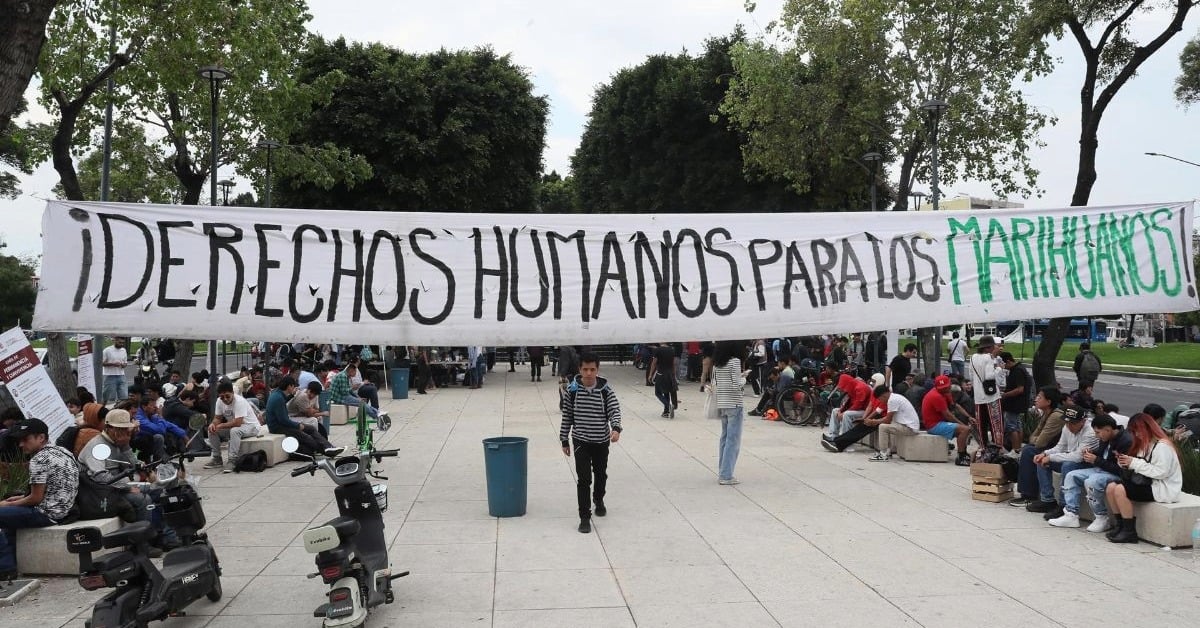
Mexico City has opened three supervised places to smoke cannabis, a first for the capital. They run on rules—daytime hours, time limits, no sales—and on a fragile social contract among users, officials, and nearby residents. In practice, that contract is already strained. Police show up. Neighbors complain. Activists document stops and searches. The law still says “no,” except when courts and permits say “maybe.” Mexico City’s tolerance zones promise order and respect. On the ground, they expose how far regulation still has to go.
Cannabis tolerance zones in Mexico City
On paper, the city’s new “4:20” areas are a compromise: safer, supervised places to consume without clogging sidewalks or clashing with schools and offices. The government set them after dismantling older camps around landmarks that had become headaches for merchants and residents. Officials say the goal is to protect liberties while restoring order in busy corridors.
The first three locations—Plaza de la Concepción in the historic center, the Simón Bolívar monument area off Reforma, and the José Saramago reading plaza—came with explicit rules: adults only, 8:00 a.m. to 8:00 p.m., stays capped at 40 minutes, no sales or alcohol, and a possession cap of 28 grams per person. City personnel were assigned to provide information about responsible use.
Within days, reality intervened. Neighbors mobilized against the Plaza de la Concepción site, citing safety and disruption. After protests, authorities and collectives agreed to move that “point 420” to the more isolated Plaza Tlaxcoaque, a sign of how sensitive site selection remains even with official backing.
A legal framework that says “yes, but…”
Mexico’s legal map explains the whiplash. In 2021, the Supreme Court issued a general declaration overturning the absolute ban on recreational cannabis in the Health Law, directing the health regulator (Cofepris) to issue personal-use authorizations to adults who request them. Congress has still not passed a whole regulatory law.
In 2022, the Court went further and said prosecutors shouldn’t automatically criminalize simple possession above 5 grams when it’s for personal use—chipping away at a threshold that for years fueled petty arrests. But the ruling did not legalize commerce, nor did it erase the rest of the Health Law. That gray zone leaves broad room for police discretion.
Cofepris confirms it issues authorizations strictly for personal use—no buying, selling, or sharing. Advocacy and news tallies suggest tens of thousands of people have sought those permits in recent years, but most users still don’t carry paperwork, especially in spontaneous public settings.
Policing the “tolerance” in tolerance zones
Tolerance has limits, and enforcement shows it. On August 6 at Plaza de la Concepción—two days into the rollout—activists say officers approached a user after closing time and escalated to a body search. Collectives intervened; the user was not detained, but the episode echoed long-standing complaints of intimidation at cannabis gatherings. Similar accounts have surfaced as zones shifted and space got tighter.
City officials insist the aim is to curb dealers, not criminalize consumers. The security chief has said police will act against sales around these areas while maintaining a harm-reduction posture toward adults who consume. That balance is fragile on street corners where music, crowds, and trade often blend.
From camps to corridors
Before the city-sanctioned sites, cannabis communities occupied symbolic spaces—outside the Senate, near the Estela de Luz, and around Metro Hidalgo—equal parts protest and mutual aid. Those encampments pushed the issue into the open but also attracted thieves, street vendors, and complaints that fueled the current reset. The city’s move removed high-profile camps and redirected people to lower-traffic plazas under more straightforward rules.
Many activists see the new map as a mixed bag: visibility with guardrails, but also what they call an “urban clean-up” timed to international events like the 2026 World Cup. Whether one agrees or not, the argument underscores how drug policy, public space, and city branding now intersect.
The human factor
For users, the tolerance zones are social as much as legal. Some describe feeling “safer” when a city liaison or health worker is present. Others don’t trust that presence will prevent selective stops, especially at closing time. A relocation like the one to Plaza Tlaxcoaque—quieter, fewer residents—can lower friction, but it also reinforces the idea that consumption should stay out of sight.
Mexico’s patchwork law adds daily uncertainty. The Health Law still lists cannabis as a prohibited narcotic except for medical and scientific uses; its table of “personal use” quantities has long pegged cannabis at 5 grams, a figure courts have now complicated. Civil groups warn that confusion enables abuse and advise users to document interactions and, when possible, carry their Cofepris authorization.
What success would look like
Harm-reduction policy rises or falls on trust. Success here would mean fewer pointless arrests, fewer neighborhood complaints, and fewer gray-area stops that feel punitive. It would also mean more credible health guidance at the sites and a real pathway—permits today, legislation tomorrow—to finally resolve the “yes, but” that governs cannabis in Mexico.
Some of that work is underway: human-rights organizations call the zones an opportunity to reset drug policy around health and dignity. But the test will be daily practice—what happens when the clock hits 8:00 p.m., when a vendor shows up with pre-rolls, or when a neighbor calls the city because music is too loud. A rulebook is a start. Consistent, rights-based enforcement will decide whether tolerance is more than a sign on a fence.