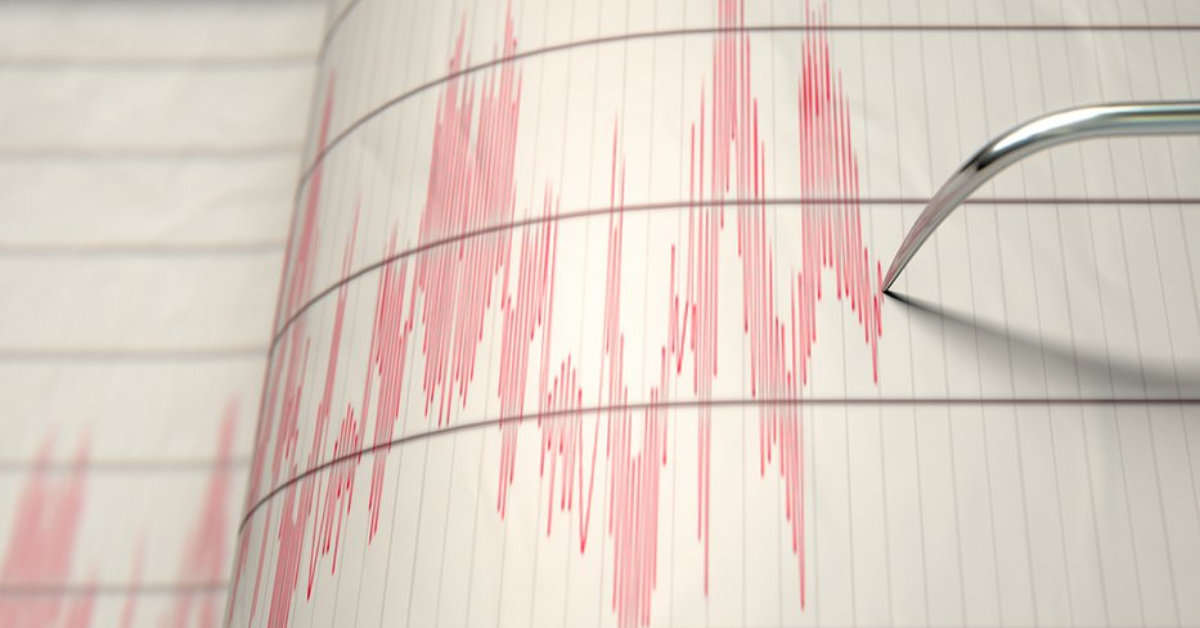
Before sunrise on Thursday, a run of offshore earthquakes appeared in Mexico’s official seismic reports near Cihuatlán, Jalisco. None was major on its own, but the timing drew quick attention. For readers who saw scattered alerts or headlines, the key questions are simple: how many quakes hit, how serious were they, and does a cluster like this point to something larger? The short answer is that the coast is active, officials were tracking it in real time, and the broader risk picture needs context.
A run of quakes before sunrise
Mexico’s early-morning seismic update on Thursday centered on the Pacific off Jalisco. In about 100 minutes, official reports highlighted four offshore earthquakes of magnitude 4.0 or higher southwest of Cihuatlán. The strongest was a 4.8 at 3:51 a.m. central time. A 4.4 followed at 4:36 a.m. A 4.1 came at 5:10 a.m., and another 4.0 was logged at 5:32 a.m. The quakes were offshore, about 183 to 198 kilometers southwest of Cihuatlán, with shallow depths of roughly 10 to 12 kilometers.
That pattern pushed the story beyond a routine seismic note. None of the quakes was large by Mexican standards. What stood out was the tight timing. The same offshore corridor kept appearing in the official log before dawn. The national running record also showed additional nearby events earlier that morning. For many readers, especially those new to Mexico, a burst like that can sound more alarming than it is. The best way to read it is with context.
Why Cihuatlán keeps showing up
The reports use Cihuatlán as a reference point, but the earthquakes were not centered in the town itself. They were recorded in the Pacific, off Jalisco’s southern coast. That distinction matters. A headline that says a quake occurred “in Cihuatlán” can sound as if the epicenter was under homes, streets, or hotels. In this case, the events were well offshore.
Even so, the location matters. Mexico sits in a highly active seismic zone because five tectonic plates interact around the country. Along the Colima-Jalisco coast, major earthquakes have occurred over time. Official background material links that risk the interaction between the Rivera and Cocos plates and North America. The region also has a long seismic history. That history includes the 1932 Colima-Jalisco earthquakes, which remain part of the official record. That does not make every offshore tremor a sign of disaster. It does explain why this stretch of coast appears so often in seismic bulletins.
What a cluster does and does not mean
In everyday language, Thursday’s run of quakes looks like a cluster. In seismology, officials often describe this kind of short-lived concentration as a sequence. The term means several events occur in the same area over a relatively brief period. That description is useful because it explains the pattern without overstating it. A sequence indicates that the crust released energy several times within a short window. It does not, by itself, tell us what comes next.
That is where official science stays careful. Earthquakes cannot currently be predicted with reliable precision. Scientists can explain where seismic risk is higher. They can also explain why one coast is more active than another. They cannot say that a dawn cluster means a stronger quake will follow later that day. Mexico’s disaster authorities also remind the public that the country records earthquakes every day. Many are too small to be felt. On Thursday, the unusual part was the pace of the reports, not one extreme magnitude.
Why alerts can feel confusing
Earthquake alerts in Mexico often confuse people who move between cities or who are still learning the system. The Servicio Sismológico Nacional records and publishes the events. The public alert system works through a separate warning network. That network does not sound for every earthquake. It depends on the epicenter, the expected intensity, and whether covered cities can gain useful warning time.
That is why someone may read about several quakes and never hear an alarm. Official guidance says that if an earthquake is outside the warning coverage area, the system will not alert. It also says that if the epicenter is too close to a city, the warning can arrive almost with the shaking. In other cases, an offshore event may register clearly on instruments but still be too weak or too distant inland to trigger a broad warning. For readers in Guadalajara, Mexico City, and other large urban areas, that distinction matters.
What readers should watch next
For now, the most useful takeaway is practical. Thursday’s quakes were a same-day offshore sequence, not a confirmed emergency. The next step is to watch the Servicio Sismológico Nacional for updates and follow civil protection notices if local authorities issue them. That matters most for people living in or visiting beach communities in southern Jalisco and nearby Colima.
There is also a broader lesson for international readers. Mexico’s seismic reporting can seem intense because monitoring is constant and updates are frequent. That visibility helps, but it can also raise anxiety when several moderate events appear close together. The safest balance is to stay informed without jumping to conclusions. If a person on the coast feels strong shaking, official tsunami guidance says not to wait for rumor or speculation. They should move away from the shoreline and low areas. But when the reports involve moderate offshore quakes logged by instruments, context matters as much as the headline.