Search collectives say 456 bags of human remains found near Guadalajara’s World Cup stadium expose a deep, unresolved crisis in Jalisco.
Guadalajara is already being sold to the world as a World Cup host city, a place of mariachi, plazas and four sold-out matches at Estadio Akron. On paper, Zapopan’s modern stadium is a success story. In the surrounding hills and rural plots between 10 and 20 kilometers away, families of the disappeared see something else: a ring of clandestine graves that has grown quietly as the tournament draws closer.
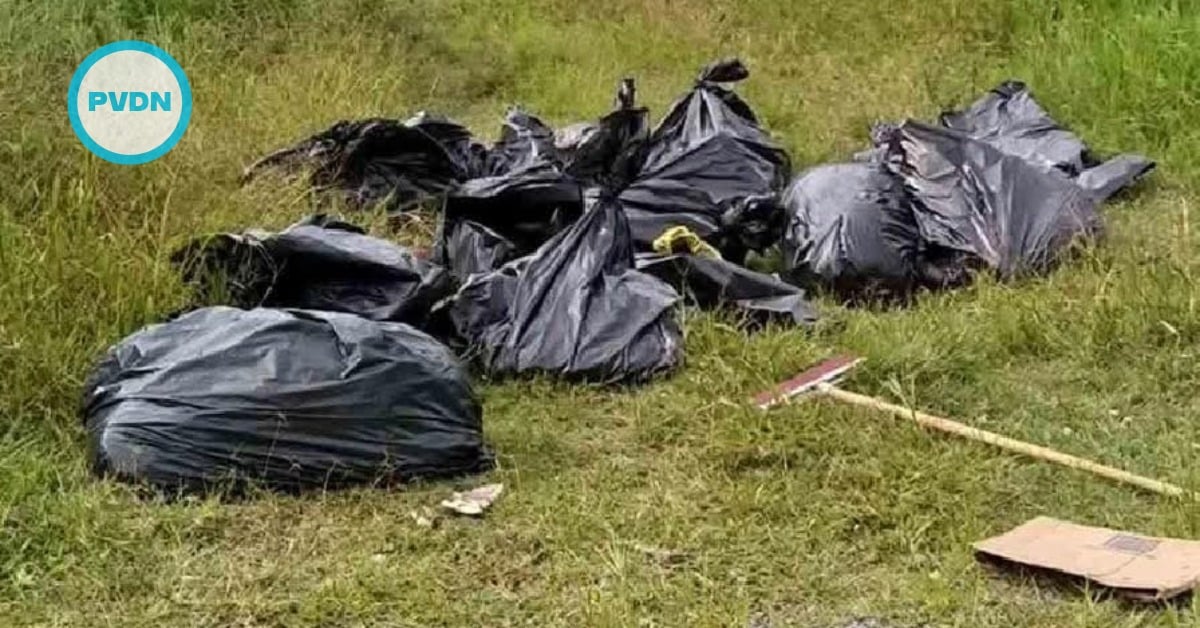
Since 2018, search collectives working with authorities have located at least 456 plastic bags filled with human remains in a cluster of sites around the stadium. The largest is Las Agujas, where construction workers digging for a new housing development uncovered bags of remains and alerted authorities. Searchers say they later returned and counted nearly 300 bags from that single property once the digging continued under their watch.
Other bags have come from sites like Nextipac and Plan de la Noria, as well as Arroyo Hondo, all within a short drive of matchday traffic routes. In total, investigators have recovered remains corresponding to at least 93 victims from this ring of graves, and only 38 have even reached a preliminary identification stage. The bags contain whole bodies, dismembered remains and old bones mixed together. Some victims died years ago, in 2018 or 2020. Others were killed far more recently, within the last year.
For the families who search, these numbers are not statistics. Every bag pulled from the soil could be a missing son, a daughter or a partner. Each exhumation brings a rush of hope and dread, followed by months or years of waiting for a call that may never come.
Estadio Akron human remains
The slow work of turning those 456 bags into names has exposed Jalisco’s long-running forensic crisis. The state morgue system has struggled for years with overcrowded facilities and an identification backlog. Search leaders describe cases in which a body spent more than a decade in official custody before being returned to relatives, and complain that remains are sometimes mixed in ways that make DNA work harder and slower.
Families say this delay is another form of violence. Many have spent years paying for buses, private tests and days off work to follow up on paperwork. They watch as new graves appear in news reports and social media videos, while the person they are looking for remains an entry in a database and a photocopied flyer.
The calendar sharpens those fears. Estadio Akron will not only host four World Cup group-stage matches, including one featuring Mexico’s national team, but also key inter-confederation playoff games in March 2026. Local and national authorities are investing heavily in infrastructure, security operations and fan experiences to present a polished face to visiting supporters.
Search collectives worry that this rush to shine could push their cause into the shadows. Some report seeing missing-person posters taken down around high-traffic areas and say they are under pressure to accept official timelines for closing exhumations. They fear the temptation to declare the work “finished” before all the bags are processed and all possible identifications pursued.
At the same time, they continue to walk the fields near the stadium, marking possible burial sites, watching backhoes bite into the ground and standing next to forensic teams as each bag is lifted out. Their message is simple: the tournament will come and go, but the families will still be there.
World Cup spotlight on Jalisco’s disappearances
The graves around Estadio Akron are shocking, but they are not an isolated horror. Jalisco has become one of the epicenters of Mexico’s disappearance crisis. An analysis of the National Register of Missing Persons shows nearly 15,000 people listed as disappeared or not located in the state as of mid-2024, part of more than 125,000 cases nationwide.
Civil society groups tracking official data warn that the problem is still growing. Their national 2025 report notes that after Mexico surpassed 100,000 disappeared people in 2022, the total climbed again in 2023 and 2024, and the pace of new cases has accelerated this year. More than half of all disappearances recorded in the country since 1960 have occurred just since 2018.
State officials in Jalisco point to a more hopeful trend. Government figures for January to August 2025 show 1,857 disappearance reports, down from 2,199 in the same period of 2024, a drop of 15.5 percent and the lowest figure for that eight-month window since 2019. They also highlight that a majority of people reported missing in 2025 have been located.
Both realities coexist. Fewer new reports still leave hundreds of families each year without answers. And the thousands of older cases remain open, their traces scattered in morgues, unmarked graves, and sites like Las Agujas or Rancho Izaguirre in Teuchitlán, another Jalisco property where searchers recently discovered massive evidence of killings and clandestine burials. That earlier case drew international attention to the state’s violence and the alleged role of organized crime in running “extermination fields.”
World Cup organizers and local authorities argue that the tournament is a chance to bring investment, jobs and visibility to Guadalajara. For the families who spend their weekends probing the ground near a global stadium, visibility means something different. They want visiting fans to understand that the same roads carrying buses to group-stage games also pass close to fields where hundreds of bags of human remains have been dug up.
As the clock ticks down to 2026, the question hanging over Jalisco is whether the global spotlight will speed up serious work on search, identification and justice, or simply help hide what has already been uncovered. The Estadio Akron human remains are a reminder that for many people here, the real measure of success is not the number of matches played, but the number of names finally returned to their families.