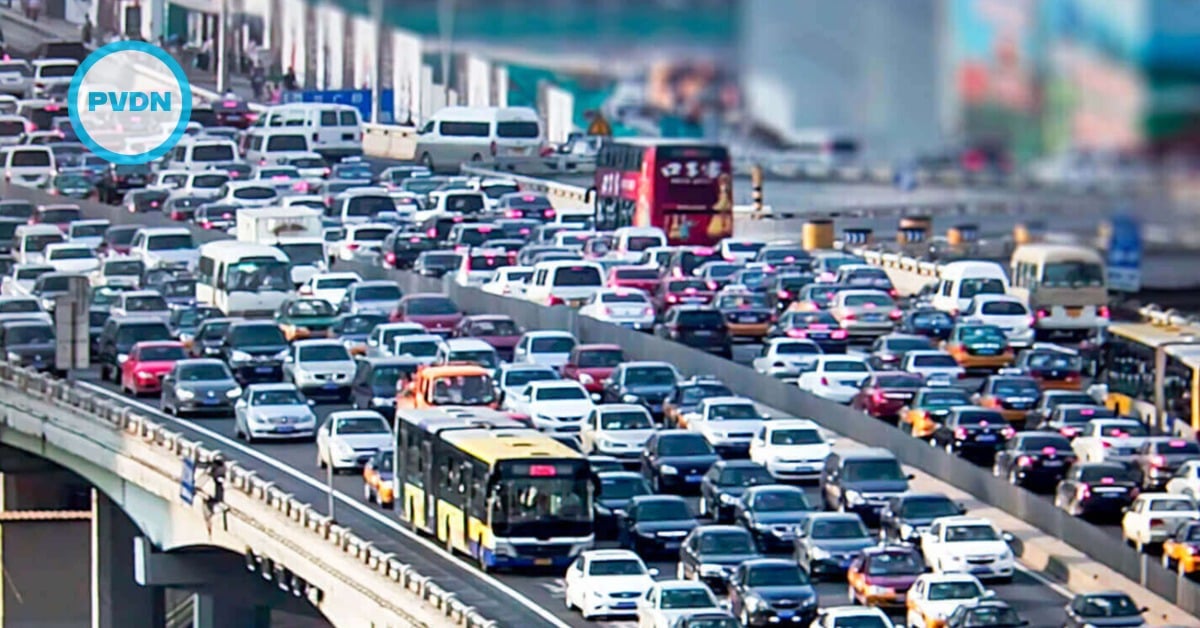
The red brake lights start before sunrise on Mexico City’s ring roads and barely let up until night. For hundreds of thousands of drivers, the daily commute has become a slow ritual of inches rather than meters. A new global ranking now confirms what many residents already feel in their bones. The capital has climbed to first place worldwide for traffic congestion.
The latest edition of the TomTom Traffic Index finds that people in the metropolitan area lose about 152 hours a year in traffic jams. That is more than six full days spent inside a vehicle, much of it crawling through bottlenecks where the city’s wide avenues narrow to a standstill. At rush hour, average speeds on some main corridors drop to levels closer to a brisk walk than to urban driving speeds.
On key arteries such as Eje Central, Constituyentes, Viaducto, and Periférico, drivers often advance only a few dozen meters before stopping again. Road works, minor crashes, garbage trucks, utility vehicles, and heavy freight all fight for the same space as private cars and buses. In peak hours, measured speeds can fall to around five kilometers per hour, with even the “good” stretches barely reaching three times that pace.
According to national vehicle records, more than 5.5 million motor vehicles are registered in Mexico City alone, not counting those that pour in every day from the surrounding State of Mexico. Each morning and evening, the fleet concentrates on a limited network of roads that was never designed for this volume, turning bridges, underpasses, and major junctions into pressure points.
Mexico City traffic congestion by the numbers
The TomTom Traffic Index evaluates hundreds of cities worldwide using travel times, congestion levels, and hours spent in traffic. In its most recent release, Mexico City is placed at or near the top of every congestion metric. One key figure stands out. Drivers spend about 52 percent more time on trips than they would on the same routes without traffic.
In practical terms, a ten-kilometer journey that might take a little over twenty minutes on an empty road can stretch well past half an hour on a typical day. During the worst afternoon peaks, that same trip can approach three-quarters of an hour, with average speeds hovering around thirteen kilometers per hour. For commuters who repeat that pattern twice a day, the lost minutes quickly add up to lost weeks every year.
Globally, Mexico City now sits alongside, or even above, megacities long synonymous with gridlock. Different analyses of the TomTom data rank it first when focusing on congestion level, while other metrics place it just behind London in total hours lost. Whatever the exact position, the message is the same. The Mexican capital is in the elite tier of the world’s most jammed cities.
Those hours on the road are not only an inconvenience. Studies linking the exact traffic figures to health and productivity warn of rising stress, sleep disruption, and respiratory problems among people who spend long periods in polluted corridors. Longer commutes are also tied to higher rates of burnout and fewer hours of rest or family time, especially for workers who cross the city from peripheral neighborhoods to job centers in the core.
The economic impact is substantial. Mobility analysts estimate that congestion in large Latin American cities can shave several points off local GDP through wasted fuel, lost work time, and delays in moving goods. In Mexico City, companies increasingly factor traffic into schedules, salaries, and even hiring decisions, as businesses struggle to retain staff who spend 4 to 5 hours a day on the road.
Behind the numbers, specialists point to a familiar list of structural causes. Years of fragmented transport policy left buses, minibuses, informal services, private cars, and motorcycles competing instead of feeling like parts of one system. Public transport still does not reach many fast-growing suburbs, pushing new residents toward car ownership. Freight vehicles and service trucks often operate during the busiest daytime hours, blocking lanes as they load, unload, or perform maintenance.
Can Mexico City traffic congestion be reversed
Despite the bleak rankings, mobility experts say the city is not condemned to permanent gridlock. Some changes are already visible. New trolleybus corridors, more dedicated bus lanes, and upper-cable systems in hillside neighborhoods are attempts to give residents reliable options that do not add more cars to the streets. Projects to extend the Metro network and modernize existing lines aim to shift more commuters underground, away from the clogged roads.
For these efforts to make a real dent in congestion, they have to be paired with demand management. That could include stricter rules on where and when heavy trucks can circulate, more stringent enforcement of double parking, and consideration of pricing tools that discourage solo driving in the most saturated corridors. City planners also argue for concentrating new housing and jobs around high-capacity transit corridors, so people do not have to cross the entire metropolis to reach work or school.
Another piece of the puzzle is safety. As congestion worsens, more residents have turned to motorcycles and informal transport services that promise faster trips but expose riders to higher crash risks. Any strategy to reduce traffic must also make walking, cycling, and formal public transport attractive and safe enough that people do not feel forced to take riskier options to reclaim a few minutes in their commute.
The political challenge is timing. Large infrastructure projects take years to deliver results, while the frustration of daily gridlock is immediate. Mexico City’s global traffic crown shows how far things have already gone. The 152 hours a year now lost in jams are a warning that the cost of inaction will only grow. Reclaiming those days will require a level of coordination, investment, and enforcement that the city has struggled to sustain in the past, but which many residents now see as urgent.