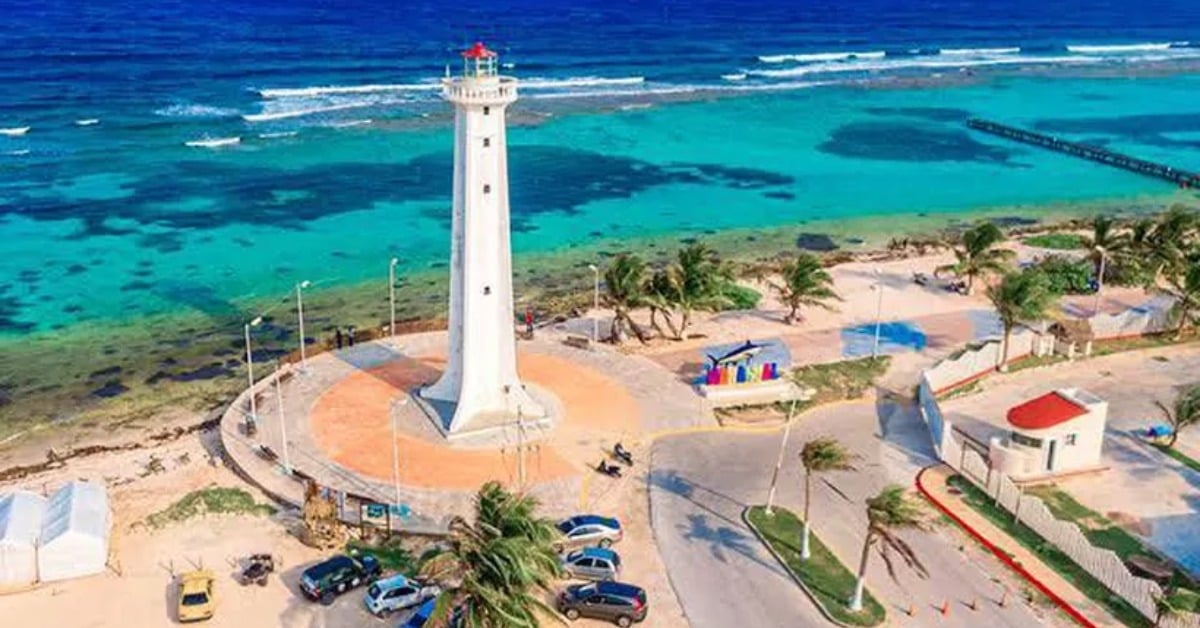
Royal Caribbean’s plan for a new private-day destination on the Costa Maya is now under the microscope. In recent days, Quintana Roo officials reminded the public that no work can begin until federal regulators finish an environmental review. The company says it will submit the required impact statement “in the coming weeks.” Meanwhile, residents and conservation groups have mobilized with large petition drives and public statements. The debate centers on mangroves, coral reef health, beach access, and the allocation of cruise tourism dollars within the local economy.
Perfect Day Mexico
Local outlet MegaNews reported that state authorities are analyzing the environmental implications and that the project still lacks a public executive plan. Their coverage underscores that the next formal step is a federal review by the Environment Ministry (SEMARNAT). There is no green light yet. That aligns with statements from the governor, who said the project “must still be analyzed” by SEMARNAT before any decision.
Royal Caribbean, for its part, states that it will not proceed without permits and plans to file a Manifestación de Impacto Ambiental (MIA) shortly. The company has promoted the destination since late 2024, describing it as opening in 2027 in Mahahual, with significant water attractions and beach areas. It also completed the purchase of the Costa Maya port assets in 2025, subject to competition conditions.
What is being reviewed
In Mexico, large coastal projects must file an MIA so SEMARNAT can evaluate effects on soil, water, flora, fauna, and cumulative impacts. After a submission, a public extract is posted, and residents may offer comments. Authorities can request more data, impose conditions, or deny authorization. This process is not a formality; it sets the legal and technical baseline for any future work.
Officials and residents tracking Mahahual say the MIA has not been entered yet. The state’s environment secretary and the governor have both pointed to that fact in recent days, telling residents to wait for the federal review rather than rumors. The company has reiterated that message in its public letters and press outreach, promising a filing.
Why Mahahual is sensitive
Mahahual is situated on the Caribbean coast, near the Mesoamerican Barrier Reef, the largest in the Western Hemisphere. Offshore lies the Banco Chinchorro Biosphere Reserve, a protected reef-and-mangrove system recognized by Mexico and UNESCO. Any nearby dredging, shoreline alteration, or freshwater outflows can affect reef water quality and fish nurseries. That is why mangrove protection rules and reef-area planning standards loom large in any evaluation.
Mexico’s mangrove protections, including NOM-022-SEMARNAT-2003 and related legal articles, restrict the filling, clearing, and alteration of hydrological conditions in mangrove zones. Projects must prove they avoid and mitigate damage, restore functions, and maintain ecological connectivity. These are not optional guidelines; they are binding standards.
Company and government positions
Royal Caribbean’s press materials pitch Perfect Day Mexico as a significant investment that creates jobs and uses “advanced environmental technology and infrastructure.” Company statements also say they will preserve existing mangroves and meet sustainability benchmarks. Those claims will be tested in the MIA, where engineers must detail site hydrology, vegetation, wildlife, and wastewater handling.
State economic and tourism officials have welcomed new cruise investments, noting Mahahual’s role as Mexico’s second port by cruise volume after Cozumel. But support has come with the caveat that environmental authorizations are pending and mandatory. The Costa Maya port deal itself passed competition review with conditions meant to protect access for other lines.
Community pushback and the petition wave
Opposition has grown quickly. A Change.org campaign called “Salvemos Mahahual” asks to halt or redesign the project and require a rigorous, public review. Reports in local media indicate that signatures surpassed 200,000 in August. The worries are familiar to coastal towns worldwide: loss of mangroves, stress on reefs, water use, and whether a self-contained attraction will keep visitor spending behind the gate instead of in town.
Royal Caribbean has stated that Perfect Day Mexico will complement, not cannibalize, regional tourism and will adhere to Mexican law at every stage. The company frames the resort as part of a broader investment that includes a separate Royal Beach Club in Cozumel, set to open earlier. Any claims—on either side—will be judged against what the MIA actually proposes.
What happens next
The near-term milestone is the MIA filing. Once entered, SEMARNAT posts an extract for public comment. Technical reviewers then weigh habitat impacts, hydrology, wastewater design, and cumulative effects. If approved, the permit will include conditions, monitoring plans, and timelines. If denied, the project cannot legally proceed as proposed. Until that point, there is no authorization to proceed with the building. Residents and readers should watch SEMARNAT’s public consultation page for the official docket.
For Mahahual, the stakes are high. The coast supports fishing families, dive operators, and small businesses clustered around a fragile reef. Cruise tourism is already a pillar of the local economy. The question is not whether tourism should exist, but how to shape it so reefs, mangroves, and community livelihoods endure. That is precisely what an honest, transparent environmental review is designed to test.