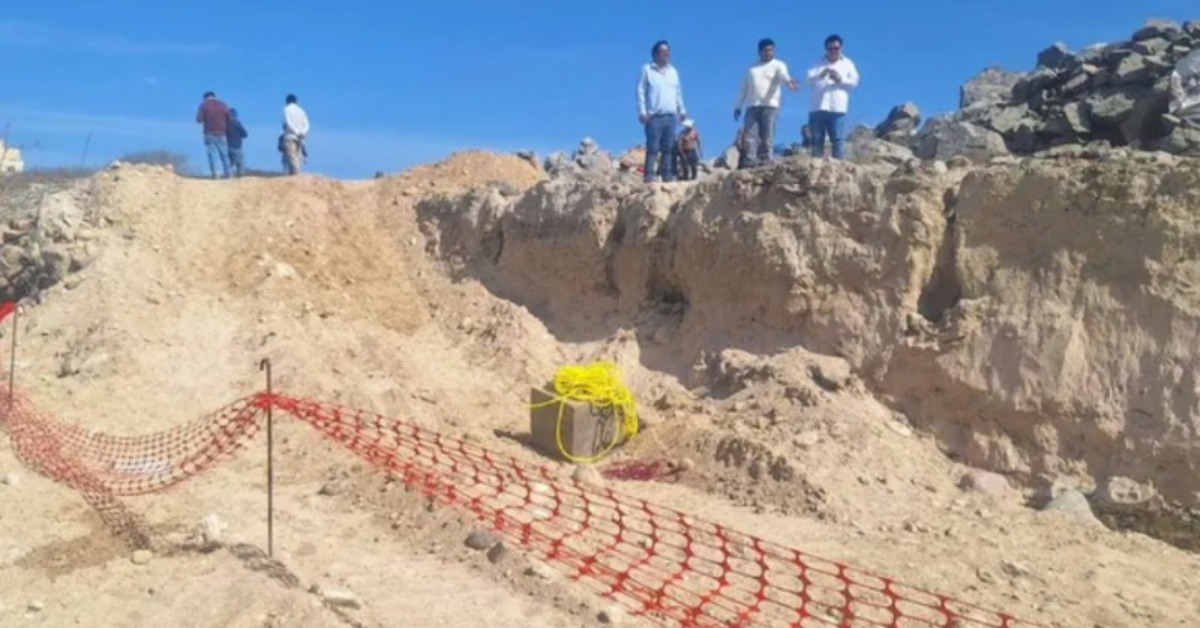
Pressure on the Playa Las Cocinas project did not begin this week. It has been building for months. Residents and activist groups in Punta de Mita say the latest push is part of a longer effort to stop coastal works they believe go beyond what should be allowed on the ZOFEMAT, Mexico’s federal coastal strip.
The current complaint centers on work along the shoreline in Bahía de Banderas, Nayarit. Opponents say the project is damaging dunes, narrowing public access to the beach, and pushing private development too far into a protected coastal space. Local organizers have also said they want the case raised beyond the municipal level after earlier meetings and protests failed to settle the dispute.
What residents say is at stake
For many people in Punta de Mita, this is not only about one wall or one construction phase. It is about public access, coastal ecology, and the fear that a community beach could become harder to access as luxury development expands.
Residents have argued since March that heavy machinery has been working too close to the sea. They say the activity threatens the dune system, could affect turtle nesting areas, and may change how water moves across the beach during high tide. In late March, community representatives pressed authorities for a full precautionary suspension, an independent environmental study, clear oversight of wastewater, and guarantees that the public could still reach the beach even when the tide rises.
That helps explain why the pressure has not faded after temporary action by authorities. A short closure does not resolve the larger question of whether the project can continue, under what conditions, and how access to the shoreline will be protected in practice.
Why ZOFEMAT matters
For international readers, the legal term at the center of this dispute can sound technical. In Mexico, the Zona Federal Marítimo Terrestre, or ZOFEMAT, is the federal strip that runs along the coast. Government guidance describes it as a 20-meter band of firm land contiguous to the beach.
That matters because conflicts in this zone are never just private property disputes. They involve federal rules on coastal use, environmental oversight, and public movement along the shore. In plain terms, when residents say construction has crossed the ZOFEMAT limit, they are arguing that the work is affecting land subject to a stricter legal regime than an ordinary private lot.
The access issue is just as important. In Mexico, beaches are public. So when coastal works appear to narrow the passage, block movement, or make access depend on a private development, the reaction can be immediate. That is one reason this case has drawn support from residents, local committees, and environmental advocates rather than remaining a routine permit fight.
What is known about the project
A key reason the current protest has credibility is that the site already has a documented enforcement history. In August 2025, PROFEPA announced a temporary total closure of works in the area after environmental authorization was not produced during an inspection. The federal agency said the proposed works included an anti-undercutting mat, relocation of 87 trees, and the replacement of gabion protection with armor rock. Reports at the time identified the promoter as Cantiles de Mita, S.A. de C.V.
That federal action did not end the dispute. By March 2026, residents were again calling on PROFEPA to intervene. Local reporting tied the works to the broader Montage & Pendry Punta Mita development. Another report this month said the project had resumed after the company’s legal action, which has been described as seeking coastal protection for a tourism complex exposed to natural forces.
On March 31, local media reported a partial 20-day closure after a closed-door meeting involving the company, citizens, and environmental authorities. Yet the same reports made clear that the community did not see the matter as resolved. Monday’s renewed pressure suggests the conflict has moved from a simple question of permits to a wider debate over enforcement, transparency, and the long-term shape of Punta de Mita’s coastline.
What happens next
The immediate question is whether federal authorities impose a broader shutdown, allow the project to proceed with conditions, or conclude that the existing work can continue. As of April 20, 2026, the public dispute appears unresolved.
The larger question may matter more. Punta de Mita sits inside one of the most valuable tourism corridors on Mexico’s Pacific coast. That makes every beach-access and shoreline case a test of how far high-end development can go before communities, regulators, and environmental law push back.
For expats and other foreign residents, the story is worth following because it goes beyond one local protest. It touches the issues that often shape daily life in coastal Mexico: who can reach the beach, how environmental rules are enforced, and whether fast tourism growth leaves enough room for public space and fragile ecosystems. In Punta de Mita, those tensions are no longer abstract. They are playing out on the sand.