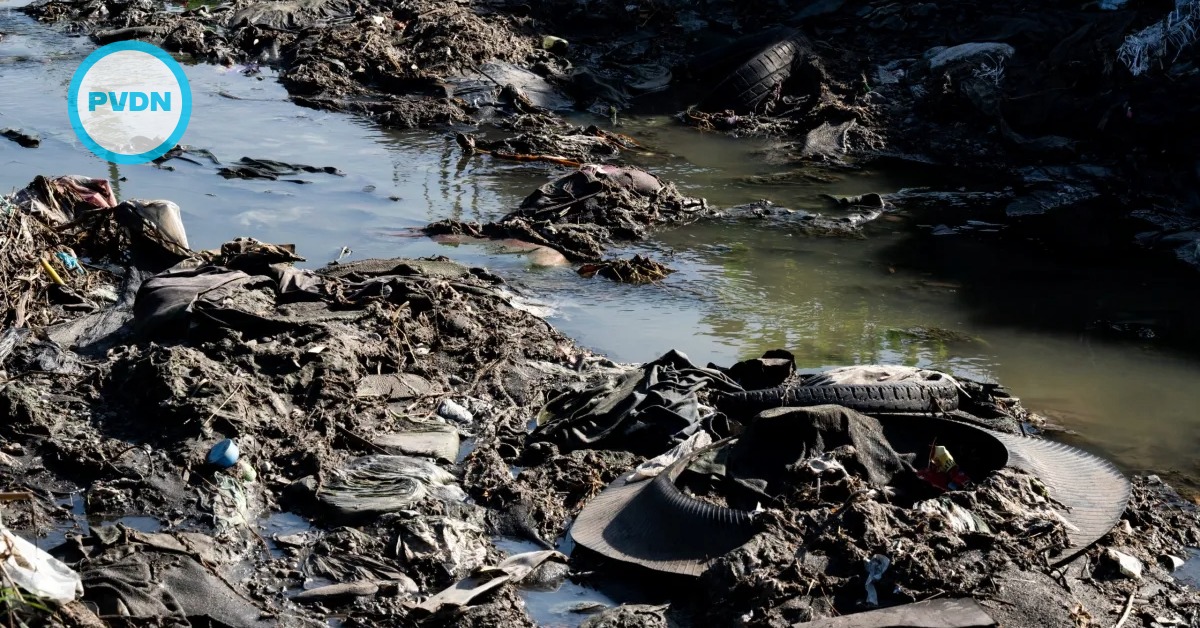
Trump warns he will slap a 5 percent tariff on Mexican exports unless Mexico moves faster to stop Tijuana River sewage fouling US shores.
U.S. President Donald Trump has opened a new front in his long-running fight with Mexico over water and pollution, this time zeroing in on the Tijuana River sewage crisis. In a new video and message posted on his social network, Trump accused Mexico of allowing millions of gallons of untreated wastewater to cross the border and warned that he is prepared to impose a 5% tariff on Mexican exports if the problem is not “fixed immediately.”
Trump framed the issue as a direct threat to public health in California and Texas, saying that foul water and sewage flowing north endanger U.S. communities and border agents working in the Tijuana River Valley. He also linked the sewage problem to a broader dispute over Mexico’s obligations under the 1944 Water Treaty, claiming that the country is behind on required water deliveries and demanding that Mexico release a large block of water before the end of the year.
The ultimatum arrives just months after his administration celebrated a new binational agreement on the Tijuana River, and it puts fresh pressure on Mexico’s new government at a moment when both sides insist they are already racing to repair failing infrastructure on the border.
Tijuana River sewage crisis
The Tijuana River watershed has been an open wound between the two countries for decades. Aging and overloaded sewer lines in Tijuana, combined with rapid urban growth, have repeatedly sent raw sewage and polluted runoff into the river and across the U.S. border. California regulators estimate that since late 2023, more than 47 billion gallons of river flow from Mexico, carrying both stormwater and wastewater, have crossed into the San Diego region. Those flows have triggered a long string of “spill events” and transboundary discharges documented by the U.S. section of the International Boundary and Water Commission.
The human cost on the U.S. side has been severe. Beaches near Imperial Beach and along the South Bay coast have been closed for long stretches, with state officials noting more than 1,000 consecutive days of closures at one point. Residents and business owners speak of constant foul odors, illness concerns, and a local economy forced to live with the idea that the ocean next door is often too contaminated to use. Border Patrol agents and Navy personnel who train in near-shore waters have also raised alarms about exposure.
Mexico’s border communities carry their own share of the burden. Neighborhoods in Tijuana sit next to trash-clogged canyons and broken pipes that spill directly into gullies feeding the river. When pump stations or canyon collectors fail, sewage can back up into streets on the Mexican side before flowing downhill into the United States. Both governments formally recognize that Mexico has primary responsibility to prevent wastewater discharges into the Tijuana River Valley, while the United States is expected to maintain its collectors and treatment plant as a backstop to catch remaining flows.
After years of lawsuits and diplomatic friction, Washington and Mexico City tried to reset the relationship in July 2025. The U.S. Environmental Protection Agency and Mexico’s environment ministry signed a memorandum of understanding that built on an earlier binational framework known as Minute 328. Under the deal, Mexico agreed to obligate remaining funds for new sewage projects, add extra works to handle population growth, and complete all Minute 328 projects by the end of 2027. The United States promised to release additional border-water infrastructure funds and quickly expand the South Bay International Wastewater Treatment Plant from 25 to 35 million gallons per day, with a target date in 2025.
That agreement was hailed as a breakthrough that could finally deliver a “100 percent solution” to the cross-border sewage flows if both sides kept to the new timelines. Trump’s latest threats now sit uncomfortably beside that cooperative script, raising questions about whether diplomatic pressure through tariffs could derail the technical work that is already under way.
Tariff threats and treaty pressure
Trump’s message on the Tijuana River came days after he threatened to impose an additional five percent tariff on Mexican exports over an alleged shortfall in water deliveries from the Rio Grande basin. The 1944 treaty that governs the use of the Colorado, Rio Grande and Tijuana rivers requires Mexico to send a set volume of water to the United States over a five-year cycle, while the United States delivers Colorado River water to Mexico. Trump argues that Mexico owes hundreds of thousands of acre-feet under that agreement and accuses it of “very unfair” treatment of U.S. farmers in Texas.
Mexico counters that it is facing multi-year drought in key basins and that the treaty measures compliance over a full five-year cycle, not a single dry year. President Claudia Sheinbaum has said publicly that her government will work to fulfill its international obligations while also “defending the interests of the Mexican people.” She confirmed that talks with Washington on the water dispute will continue and stressed that any solution must remain within the legal framework of the 1944 treaty.
On the sewage side, Sheinbaum has pointed to ongoing efforts with Baja California authorities to repair and upgrade key facilities in Tijuana. That includes work on treatment plants and pumping stations that have failed repeatedly in recent years, sending waves of contaminated water down the river valley. Mexican officials insist that they are coordinating closely with U.S. agencies and that the July memorandum, along with a planned new IBWC “Minute” on the Tijuana River, lays out a realistic timeline to permanently reduce cross-border pollution.
For communities along the border, the clash of narratives is familiar. Residents have heard promises of permanent fixes for years while watching beaches close, projects stall and politics in both capitals shift. Trump’s new tariff threats raise the stakes, putting trade on the line as leverage over water and sewage. Sheinbaum, still early in her term, faces pressure to show that Mexico can both honor the treaty and avoid being seen at home as bowing to U.S. demands.
The next few months will show whether both governments keep their focus on the nuts and bolts of the Tijuana River sewage crisis or allow it to become just another talking point in a broader political fight. If the binational construction schedule holds, new pipes, pumps and plant expansions on both sides of the border could start cutting pollution flows well before the 2027 deadline. For families in Tijuana, Imperial Beach and the wider San Diego region, the real test will be simple: whether the warning signs finally come down from their beaches and the river valley stops smelling like a sewer.