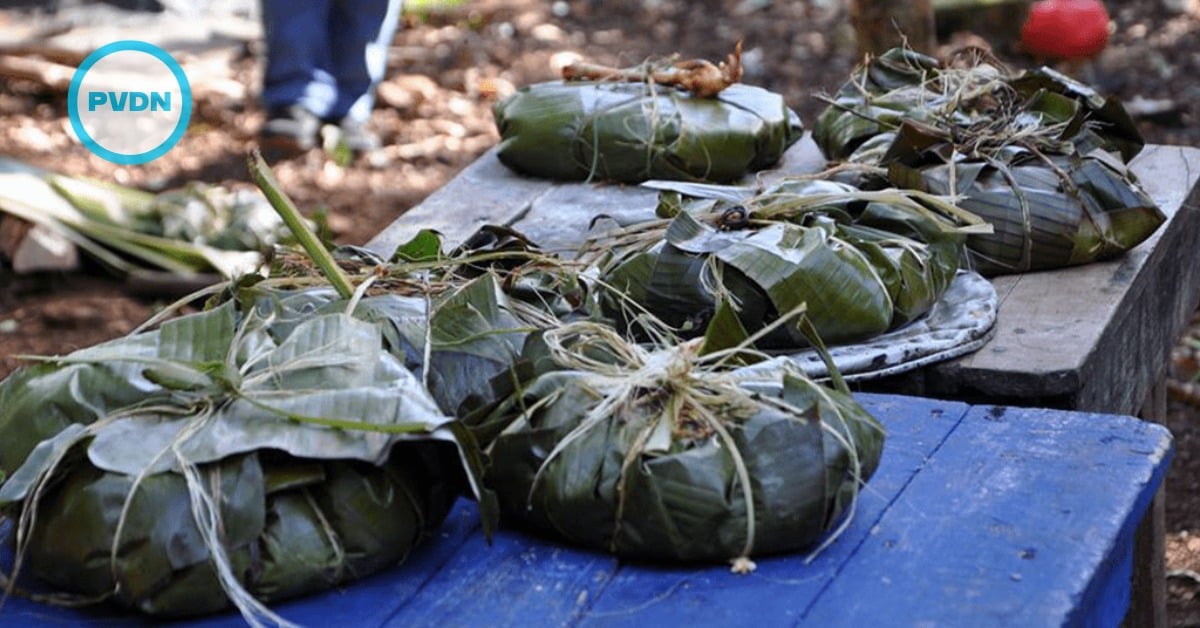
Cancún’s kitchens fired up early this week as Janal Pixán drew families to stock their altars—and their tables—with mucbipollo, the baked “pib” that anchors Day-of-the-Dead traditions across the peninsula. Local eateries say orders jumped as much as 40 percent, with peak demand set for November 1–2. Costs are climbing, but nostalgia is winning: households are trimming where they can and keeping the dish that matters most. Below, why the rush is happening now, what mucbipollo means—and how to make a faithful version at home.
Cancún’s kitchens didn’t wait for the calendar. Several eateries began taking orders as early as October 28 to keep up with Janal Pixán, and many now report up to a 40 percent rise in mucbipollo orders heading into November 1–2. The seasonal spike mirrors what cooks see every year when families assemble altars for the souls they’re welcoming back home.
Mucbipollo sales Cancún
The momentum is cultural before it’s commercial. Janal Pixán—“food of the souls” in Maya—centers on preparing what loved ones enjoyed in life. Mucbipollo, a large, banana-leaf-wrapped, oven- or pit-baked tamal known as “pib,” is the dish most closely tied to these days. It’s made with corn masa, lard, achiote-tinted recaudo, and chicken or pork, then baked for a crisp crust and custardy middle. Yucatán’s official tourism guides and cultural institutions consistently describe mucbipollo as the emblematic food of the season.
Rising ingredient costs are the headwind this year, but families are adapting rather than skipping the centerpiece. In nearby Mérida, price checks this week show complete mucbipollos selling higher than last year and raw inputs—like banana leaf and pork—tracking up. Shoppers told reporters they are shrinking altars but keeping the pib, absorbing price jumps of a few hundred pesos for the dish itself.
Why the rush matters beyond the counter
For cooks, Janal Pixán is a memory you can eat. The surge tells you less about hype and more about continuity—how a community insists on flavor as a form of remembrance. Vendors moved up delivery windows because customers asked; families saved on decorations and spent on the dish that speaks. It’s a familiar pattern across the peninsula: the pib is the altar’s anchor, the smell that fills the house, the bite that says someone you miss is close—context from cultural and culinary references underlines that centrality year after year.