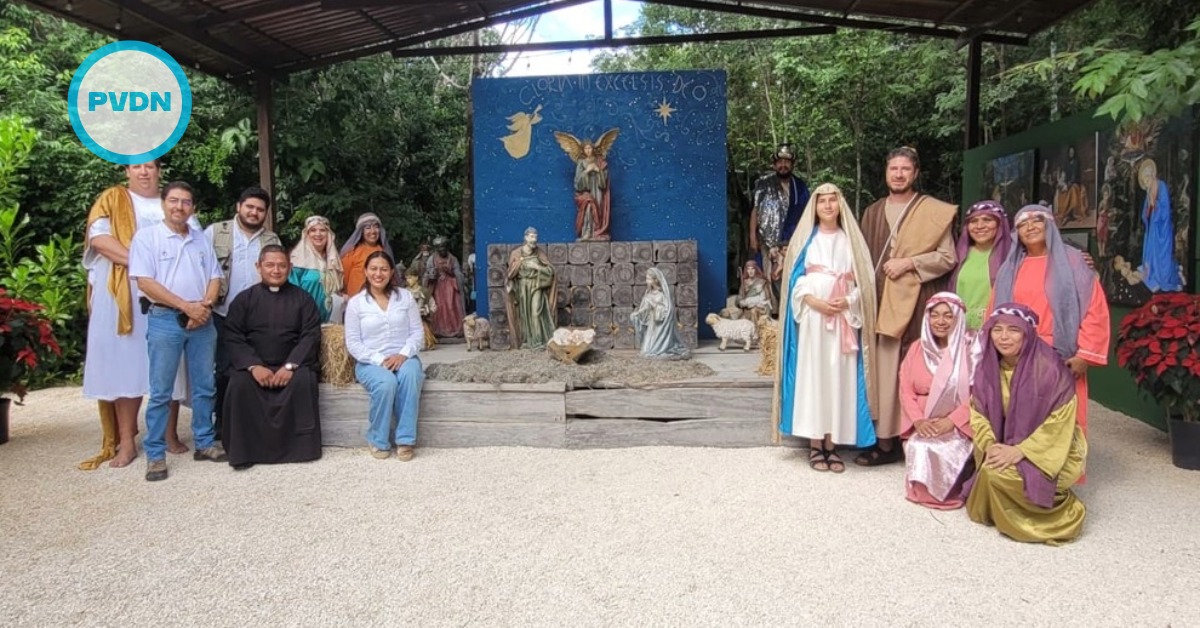
Navidad en la Playa returns to Cancún’s Playa Delfines on December 21 with more than 50 volunteers, free entry and a beachside Nativity drama.
On a December afternoon in Cancún, beach towels and boogie boards will share the sand with shepherds, angels and wise men. On December 21, the public beach of Playa Delfines will host the seventh edition of Navidad en la Playa, an open-air Nativity re-enactment led by the Catholic collective Evangelización Creativa. The performance is scheduled for 4 p.m., is free of charge, and will bring more than 50 volunteer actors to one of the city’s most recognizable stretches of shoreline, drawing both residents and tourists.
Organizers describe the staging as a mix of theater, prayer and community gathering. Families sit on the sand or the terraces above the surf while local students, workers and parishioners step into biblical roles. Over the years, the event has grown from a small parish initiative into a fixture of Cancún’s December calendar, helping to turn a busy tourist beach into a one-night meeting point for faith and vacation crowds alike.
Navidad en la Playa
This year’s edition will again tell the whole Christmas story, from the annunciation to the arrival of the Magi, using narrated scenes, music and simple sets built directly on the sand. Organizers expect between one and two hundred people to be involved on stage and behind the scenes, from actors in period costumes to volunteers handling sound, logistics and hospitality. Children can join the cast as angels, while older participants are invited to fill out the crowds as townspeople, shepherds or innkeepers, blurring the line between audience and cast.
Alongside the drama, the group plans a small beachside chapel where the Blessed Sacrament will be exposed for quiet prayer. Priests from nearby parishes are expected to offer confessions before and after the performance for those seeking a more sacramental moment amid the holiday rush. For Evangelización Creativa, which focuses on using art and theater to share Catholic teaching, the mix of spectacle and silence is part of the goal: to make space for reflection without pulling people away from the coast that defines the city.
Safety has been central to this year’s planning. The Nativity was initially announced for December 14, but the organizers moved it to December 21 after forecasts warned of rough coastal weather, and they opted to prioritize the well-being of participants and audiences. Municipal traffic officers will help manage the steady flow of cars into the hotel zone, while Civil Protection staff and elements of the National Guard are expected to monitor the temporary stages and gathering areas on the sand. The aim is to keep the beach open and welcoming while protecting the volunteers who travel from parishes across the city to take part.
As in past years, organizers expect the audience to number well into the thousands if the weather cooperates. Many attendees arrive in family groups carrying coolers, blankets and beach chairs, treating the Nativity as both an evening out and a moment of worship. For vacationers staying nearby, stumbling upon a live Nativity framed by turquoise water can become an unexpected introduction to the local Catholic community and to Mexican Christmas customs, where public squares and streets often turn into stages for faith stories.
Faith and tourism on Cancún’s shore
Events like Navidad en la Playa are unfolding against a backdrop of rapid religious growth in Cancún. The city’s religious affairs office reports that nearly one hundred new non-Catholic temples opened in 2024, even as the Catholic Church continues to add parishes and chapels to keep pace with expanding housing developments. Church leaders have leaned on large outdoor celebrations such as the Holy Week Via Crucis on the beach and the Christmas Nativity at Playa Delfines to keep a visible Catholic presence in a city better known worldwide for resorts and nightlife.
At the same time, diocesan leaders have begun to frame the beach Nativity as a form of religious tourism. The setting at Playa Delfines, a rare public-access stretch of sand in the hotel zone with its multicolored “Cancún” sign and elevated lookout, makes the event easy to reach for visitors staying in nearby hotels as well as for families arriving by bus or car from inland neighborhoods. Holding the performance on a public beach, rather than inside a parish courtyard, lets passersby pause on the terrace, watch a scene unfold and decide whether to walk down into the sand and stay.
The Nativity re-enactment has also become one of the few recurring local traditions for people who were born and raised in Cancún. Community members involved with Evangelización Creativa often point out that the resort city is young and still building its own calendar of civic and religious celebrations. The growth of the beach Nativity, now in its seventh year and preceded by an earlier sixth edition in 2024, has given many families a December ritual that feels rooted in their own shoreline rather than imported from elsewhere.
For the volunteer actors, the performance is the culmination of months of rehearsals held in parish halls and open spaces around the city. Many juggle practices with school or work, learning lines and choreography after long days in classrooms, offices or hotel jobs. Some, including the teenager chosen to portray Mary this year and the young man who alternates between playing Joseph and narrating the story of Jesus’ birth, have grown up with the production and return to new roles as they get older.
On the night itself, the beach transforms in stages. As the sun drops, the sound of the waves mingles with recorded music and live narration. Families settle into the sand while latecomers line the concrete terraces above, looking down on the makeshift Bethlehem below. By the time the final scene closes and the audience applauds, the performers and organizers hope that people will leave with more than photos and videos: a brief sense of shared hope and the feeling that even a crowded resort city can make room for contemplation.
For anyone planning to attend, organizers recommend arriving well before the 4 p.m. start time to find parking, avoid traffic and watch the staging come together. Admission is free, the dress code is whatever you would typically wear to the beach, and everyone—from practicing Catholics to curious tourists—is invited to sit in the sand, listen to the story and let a familiar Christmas scene unfold in a very unfamiliar setting.