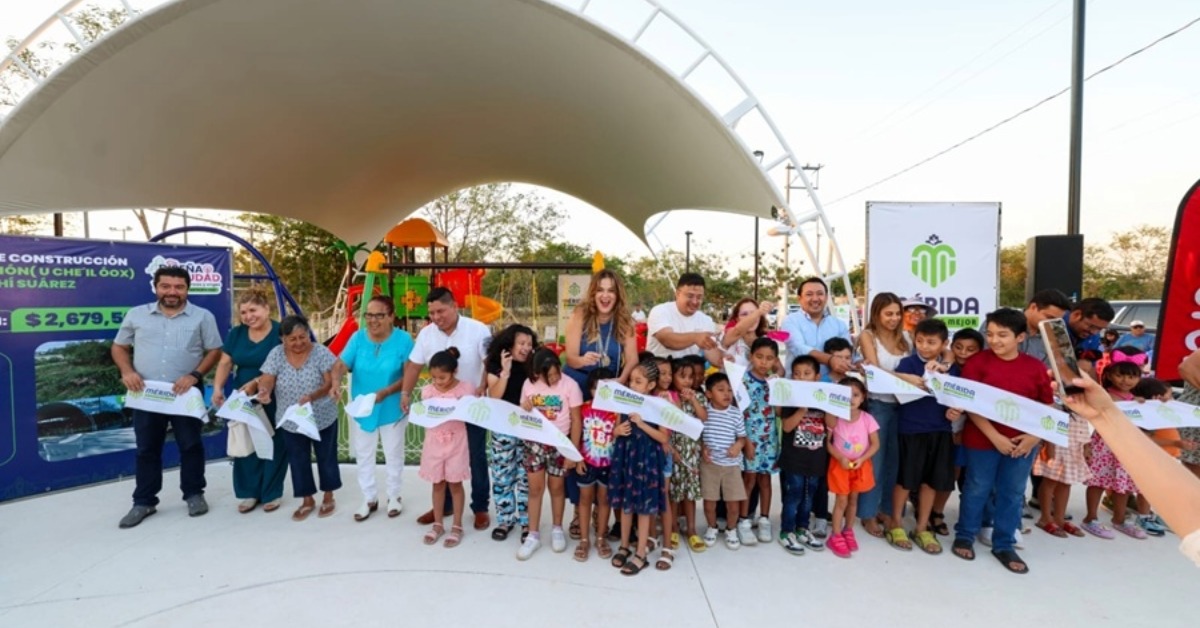
A new park in Chichí Suárez is drawing attention beyond one Mérida neighborhood because of how it was built. Parque Árbol de Ramón was not simply assigned by the city hall. Residents helped design and choose it through a public voting process. The result is a small public space with a larger message about growth, neighborhood needs, and how local voices are shaping Mérida’s next round of public works.
New community-designed park opens in Chichí Suárez
Mérida Mayor Cecilia Patrón Laviada inaugurated Parque Árbol de Ramón in Chichí Suárez, a new public space chosen by residents through the city’s participatory budget program.
The park covers 687.89 square meters and requires an investment of 2,679,506.92 pesos. It is located on Calle 18-B, Tablaje 35138, between Calles 37 and 39, in the comisaría of Chichí Suárez.
The project was selected through Diseña tu Ciudad 2025, Mérida’s citizen-led budgeting process. In that vote, the park placed second in District 9 with 317 votes, making it one of the area’s priority projects.
For longtime residents and newcomers, the project offers a practical look at how Mérida is trying to direct public spending toward neighborhood needs. It also shows how smaller communities around the city are becoming part of Mérida’s wider urban conversation.
Residents helped shape the project
The park was presented as a project that came directly from the community. Residents helped design and choose the proposal, rather than only receiving a finished plan from municipal authorities.
That distinction is important in a growing city like Mérida. Public spaces often reveal what a neighborhood needs most. In some areas, the priority may be shade, playgrounds, lighting, exercise areas, safer walkways, or places where older adults can sit and talk.
In Chichí Suárez, residents pushed for a park that would serve families, children, people with mobility needs, and those seeking a nearby place for recreation.
The name Árbol de Ramón also carries local meaning. The park honors a ramón tree considered part of the community’s identity. The ramón tree, known scientifically as Brosimum alicastrum, is native to tropical areas of southern Mexico and Central America. In Yucatán, it is also known by Maya names, including oox.
What the new park includes
The finished park includes green areas, synthetic grass, an irrigation system, LED lighting, trash bins, and urban furniture. It also includes an accessible plaza with ramps and signage.
The children’s area includes play equipment, a recreational module, a perimeter fence, a shade cover, and safer surfaces. The project also includes exercise equipment, benches, and bicycle parking.
Those details may sound basic, but they affect how a park is used. Lighting can make a space feel more usable in the evening. Benches matter for older residents. Shade is important in Mérida’s heat. Bicycle parking supports short local trips without depending on a car.
For international residents living in Mérida, these projects are also a reminder that quality of life is not only about restaurants, colonial architecture, or safety rankings. Daily life is shaped by sidewalks, parks, shade, lighting, traffic, drainage, and access to public services.
How Mérida’s participatory budget works
Mérida’s Diseña tu Ciudad program allows residents to vote on public works projects for their neighborhoods and comisarías. The program is part of a broader participatory budget model in which residents help decide how part of the municipal budget should be spent.
The 2026 edition included more than 90 million pesos for citizen-backed projects. Municipal information shows 16,618 people participated in the process.
For the first time, the city used a digital voting platform along with 51 in-person voting centers. Residents chose among 129 projects and five special proposals. In total, the city expects 19 interventions to move forward.
The proposals include parks, sports spaces, public-space improvements, green corridors, and mobility projects. These are the types of works that often matter most in fast-growing neighborhoods, especially where residential expansion has outpaced public infrastructure.
Chichí Suárez and Mérida’s growth
Chichí Suárez is a comisaría within the municipality of Mérida. These communities are part of the city’s administrative structure, but they often have a different rhythm from central Mérida.
As Mérida grows, comisarías face a balancing act. They remain rooted in local identity, but they are also affected by urban expansion, traffic, housing demand, and new services. Public works in these areas can help reduce the gap between the city center and outlying communities.
A park of less than 700 square meters will not solve every infrastructure need. Still, it can provide residents with a safer, more organized place for recreation. It can also signal that smaller communities are included in city planning.
That is especially relevant as Mérida continues attracting new residents from other parts of Mexico and abroad. Growth brings investment and services, but it also increases pressure on public spaces, housing, roads, water, and neighborhood identity.
The meaning behind the ramón tree
The park’s name connects the project to a tree with deep regional roots. The ramón tree can grow up to around 30 meters and is part of the natural landscape of the Yucatán Peninsula.
Its seeds have been used as food, and the tree has traditional uses as shade, forage, and a resource for rural communities. In recent years, the ramón has also received renewed attention due to its links to Maya food traditions and local biodiversity.
Using the name for a neighborhood park gives the project a cultural reference point. It ties the new space to something residents already recognize, rather than giving it a generic name.
That kind of detail matters in places where development can make neighborhoods feel less personal. A local name can help preserve memory while still allowing public spaces to change and improve.
More neighborhood projects are expected
The opening of Parque Árbol de Ramón comes as Mérida continues promoting citizen-selected public works across the municipality. Officials have framed the participatory budget as a way to place public money where residents say it is needed most.
The challenge will be follow-through. Voting on a project is only one step. Long-term value depends on maintenance, lighting, cleaning, safety, and whether residents continue using the space after the inauguration.
For Chichí Suárez, the new park gives residents a public area shaped by their own proposal and votes. For Mérida, it adds another example of how neighborhood planning is becoming part of the city’s public works agenda.