The new Mismaloya pier is being presented as a practical upgrade for one of Puerto Vallarta’s most recognized coastal areas. That matters because Mismaloya is not just another beach stop. It is part of the city’s older tourism story and a gateway to the south shore, where road, water, and natural attractions overlap.
For many international readers, that geography is important. Mismaloya sits south of central Puerto Vallarta, near Los Arcos and along the coastal route toward Boca de Tomatlán, Las Ánimas, Quimixto, and Yelapa. Some of those beaches and coves depend heavily on boats. That means a pier is not only a visual improvement. It can affect how people move, how tours operate, and how easily visitors reach the coast beyond the city’s busier urban beaches.
What the project actually includes
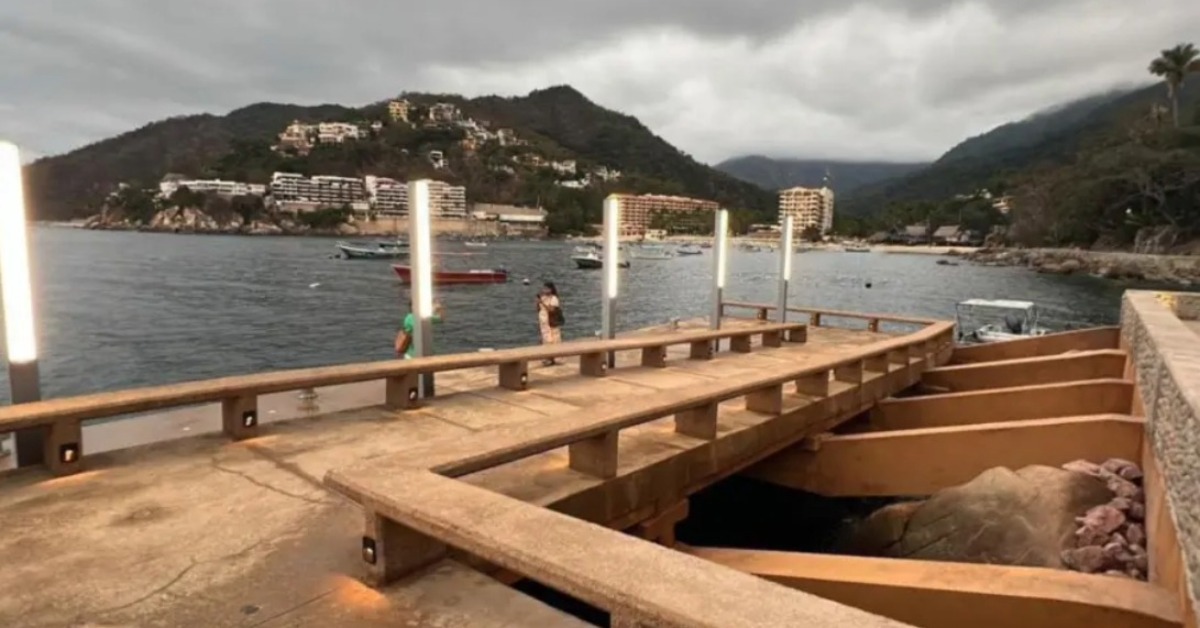
Authorities formally presented the rebuilt pier this month as part of a broader push to improve maritime connectivity on the Jalisco side of Bahía de Banderas. The work involved an investment of about 82 million pesos and included more than the pier itself. The project also added a 350-meter linear park and upgraded public space around the waterfront.
The physical changes matter because this is the kind of infrastructure visitors notice immediately. A cleaner, better-lit, safer circulation, and a more organized shoreline can change how an area functions day to day. Reports on the project also describe a pier designed to handle up to three vessels simultaneously, which could improve boarding and unloading in a zone where small-boat activity is central to both tourism and local work.
Why officials see tourism upside
The argument behind the project is straightforward. Puerto Vallarta’s southern beaches remain one of the destination’s strongest assets, but they are not always the easiest part of the coast to navigate in a simple, orderly way. Boat routes, beach excursions, snorkeling trips, and local transport all depend on reliable waterfront infrastructure.
That is why the new pier is being framed as a tourism tool, not just a construction project. Better maritime access could help move visitors more efficiently between the city and the south shore. It could also make Mismaloya a stronger jumping-off point for short trips to nearby coastal attractions. In practical terms, that can benefit boat operators, fishermen, guides, restaurants, and beach businesses that depend on steady traffic rather than occasional spikes.
There is also a symbolic side to the investment. Mismaloya carries historic weight in Puerto Vallarta’s tourism identity. Long before the city’s modern tourism economy took shape, the area was already tied to Vallarta’s international image. Reinvesting there sends a message that the south shore is still part of the destination’s core, not just its scenic edge.
What the pier will not solve on its own
Still, a new pier does not automatically lead to higher tourism numbers. Infrastructure can improve access, but it does not guarantee that visitors will stay longer, spend more, or move deeper into the local economy. Those results depend on what happens next.
The real value of the South Shore infrastructure will depend on coordination. Transport service must be predictable. Public areas must be maintained. Signage, safety, and traffic flow must work. Local businesses need to be visible and accessible. Promotion also matters, especially if officials want more visitors to see the south shore as part of a broader Vallarta stay instead of a quick half-day outing.
That point matters for Puerto Vallarta because the destination has increasingly faced questions about how tourists move through the city and where spending concentrates. A better pier can help spread activity, but only if the rest of the experience feels organized.
The bigger test ahead
The broader test is whether Mismaloya can become a stronger coastal hub without losing the qualities that make the area attractive in the first place. The south shore draws people because it feels different from the denser hotel and condo zones. It offers smaller beach settings, marine excursions, and a closer link to the landscape.
If the new pier helps improve access while preserving that character, it could become one of the more useful tourism infrastructure projects on this side of Puerto Vallarta. If it is treated only as a ribbon-cutting achievement, its impact may remain limited.
For now, the project gives Puerto Vallarta something tangible: a rebuilt entry point to one of its best-known coastal areas. Whether that turns into broader gains for the south shore will depend less on the concrete and more on how the area is managed from here.