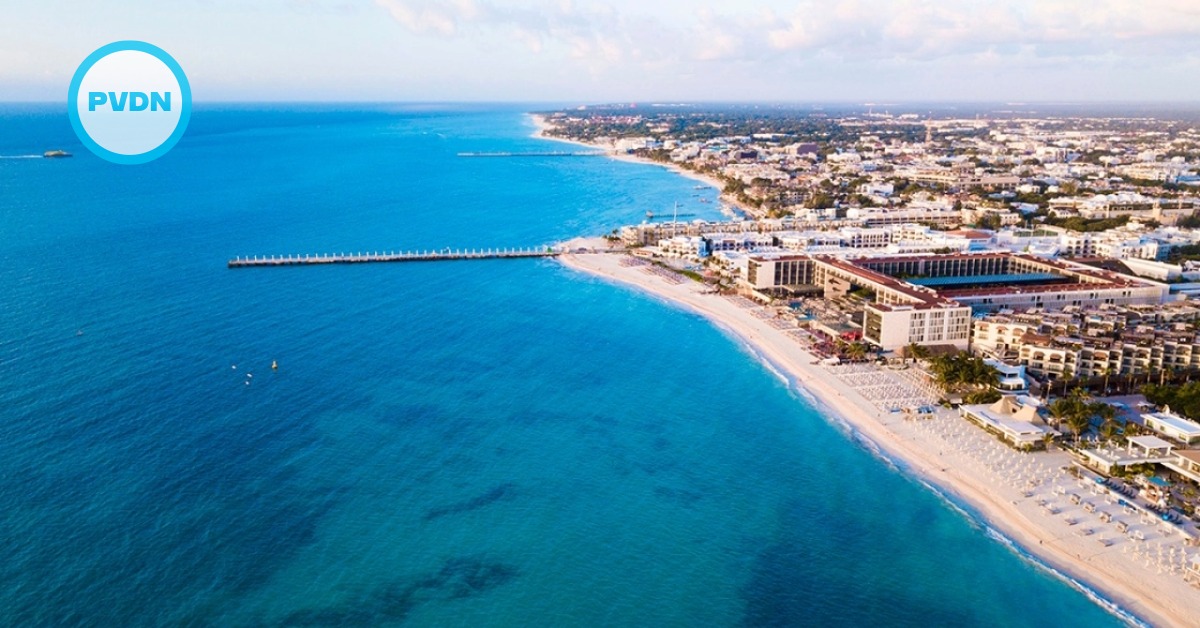
NGOs want Semarnat to demand a new impact study before planned beach works restart across 33.5 km in northern Quintana Roo.
A group of environmental organizations and citizen collectives is asking Mexico’s environment ministry, Semarnat, to require a fresh environmental impact review before major beach rehabilitation moves forward in northern Quintana Roo. Their core argument is about timing and reality. A permit granted in 2009 cannot reflect what the coast looks like now, what the law expects today, or how much bigger the new plan has become.
The groups are urging Semarnat to reject an attempt to expand the old authorization through an administrative modification. They want a new, regional impact assessment that matches the current footprint of the project and the current conditions of the shoreline. They also want the process to be transparent and open to public participation, not handled quietly between agencies and private stakeholders.
At the heart of the dispute is a familiar tension on the Mexican Caribbean. Erosion is visible in the everyday sense. It shows up as narrower beaches, exposed roots, damaged dunes, and waves reaching infrastructure that used to feel safely inland. But “fixing” beaches often involves heavy engineering, sand extraction, and weeks of disruption. The organizations are not saying erosion does not matter. They are saying the cure needs to be examined under today’s rules, with today’s science, and with the public able to see what is planned.
What the state says it wants to do
State environmental officials have described a plan that would cover about 33.5 kilometers of coastline across four municipalities. The proposal includes roughly 12 kilometers in Cancún, 12 in Playa del Carmen, about 7 in Puerto Morelos, and about 2.5 in Cozumel. The work is framed as beach “restoration,” and it is expected to rely on sand placement and related coastal interventions.
Officials have said technical studies have been prepared, including measurements of offshore sand sources, bathymetry, coastal dynamics, and hydrodynamic modeling. But the controversy is that a new impact statement has not been publicly presented as a complete, updated package for review. That matters because the footprint has expanded beyond what was authorized in 2009, and because at least part of the Cancún stretch being discussed today is not the same polygon covered back then.
The timeline is also a major piece of the story. State officials have said they are waiting on Semarnat, and that a decision could come in the first quarter of 2026. That is close enough that residents, business owners, and long-term renters should expect to start hearing more about logistics soon if federal approval is granted, especially around how construction zones would be staged and how beach access would be managed.
Costs are another pressure point. Officials have suggested that just one segment, such as Playa del Carmen, could run into the hundreds of millions of pesos. That sort of spending tends to bring urgency, but it can also bring shortcuts. For people who live in these areas year-round, including many expats, the details matter because the beach is not just scenery. It is part of daily life, local commerce, public space, and property value.
Why environmental groups say the old approval is outdated
The organizations argue that the coast has changed in ways that are not academic. Since 2009, the region has dealt with more frequent and more intense coastal stress, including stronger storms and rising sea levels. The sargassum era also changed the Mexican Caribbean in a lasting way. Even when cleanup is effective, the cycles of arrival and removal reshape beaches, dunes, and nearshore waters. A project designed before these patterns became normal does not automatically fit the present.
There is also the legal and conservation map. Protected areas and management frameworks that shape what is allowed near reefs and sensitive zones have evolved since 2009. That matters when the plan includes Puerto Morelos and stretches near reef systems that support fishing, tourism, and coastal protection. For residents and expats who snorkel, dive, or simply care about water clarity, the link between beach works and reef health is not theoretical. Dredging and sand placement can increase turbidity and sediment stress if not designed and monitored carefully.
The groups also point to reef conditions themselves. Recent regional monitoring has described serious bleaching impacts in 2023 and ongoing stress tied to warming seas and disease. Even small changes in sediment movement and water quality can stack on top of that. In a place where reefs help buffer wave energy, weakening reef health can also circle back into erosion risk over time.
Another concern is accountability for what came before. The 2009–2010 beach rehabilitation effort was expensive and widely promoted as a long-term fix. Yet parts of the coastline continue to erode, and some areas remain highly vulnerable. The organizations argue that any new plan should show what worked, what failed, and what maintenance commitments were met or missed. Without that, residents are being asked to accept disruption now without clear proof that the approach will hold up.
What this means for residents and expats on the coast
If you live in Cancún, Playa del Carmen, Puerto Morelos, or Cozumel, the impact of this debate is not only environmental. It is practical. A large beach project can change beach access for weeks at a time. It can bring noise and heavy equipment near public areas. It can temporarily cloud nearshore waters, which affects swimming, snorkeling, and small-boat activity. And it can influence turtle nesting zones, beach lighting practices, and the way dunes are handled during construction.
Many expats build their routines around the beach, whether that is morning walks, weekend visitors, or a business tied to tourism. It is also common for expats to assume these decisions are made “above” them. But impact evaluations are one of the few formal routes where public input is supposed to matter. When groups push for a new assessment, part of what they are really pushing for is a process where the plan becomes visible enough for residents to respond to it.
There is also a fairness question. Beach protection projects can end up focusing on high-value hotel corridors while leaving other stretches exposed. A regional evaluation can force the conversation to include cumulative effects and public-interest priorities, not only the most profitable beachfronts.
What happens next
Semarnat now faces a choice that will set the tone for how coastal “restoration” is handled in the Mexican Caribbean going forward. One path is to approve a modification that stretches an older authorization into the present. The other is to require a new, regional impact statement that matches the size and location of the proposed works and reflects current environmental conditions.
If a new assessment is required, it likely slows the start date but strengthens the legal footing and the public’s ability to see and question the plan. If a modification is approved instead, the project could move faster, but the legitimacy fight will not disappear. It may simply shift into legal challenges, public protests, or conflict over access to information.
For residents watching from the sand line, the best signal to look for is not a political announcement. It is whether the technical documents become public in a form that regular people can read, and whether there is a meaningful window to comment before machinery shows up on the beach.