Cancún’s long-awaited Nichupté Bridge is moving from ceremony to daily use. The new route is expected to shorten trips between the city and the Hotel Zone, but the first days will come with a learning curve for drivers, cyclists, and public transport users. Authorities say rules on access, exits, a reversible lane, and the bike lane will guide the opening phase as the bridge becomes part of Cancún’s busiest travel pattern. For residents and visitors, the change may reshape how the city moves.
Cancún’s Nichupté Bridge Opens Under New Traffic Rules
The Nichupté Bridge will open to public traffic on Wednesday morning, bringing a new road connection between Cancún’s urban area and the Hotel Zone after years of construction, delays, and public debate.
Quintana Roo Gov. Mara Lezama confirmed the opening after a final review of the bridge’s operating conditions. State officials said the structure has completed its last phase of supervision and is ready to begin carrying vehicles.
The opening will not be treated as a normal road launch. Authorities are preparing rules for access points, exits, a reversible lane, federal traffic controls, and the bridge’s bike lane. Drivers will be expected to follow new signage from the first day.
Nichupté Bridge Opening Nears With Sheinbaum Push
Cancún plans 38 buses for Nichupté hotel zone link
Why Cancún’s Nichupté Bridge Now Costs Twice as Much
A new route into Cancún’s Hotel Zone
The bridge was built to create another connection between mainland Cancún and the Hotel Zone, where traffic often depends on a limited number of access routes. The project crosses the Nichupté Lagoon and links two areas with heavy daily traffic from workers, residents, delivery vehicles, and tourists.
Federal transportation authorities describe the bridge as an 11.2-kilometer project. Its main section over the lagoon measures about 8.8 kilometers, with additional access infrastructure on each end.
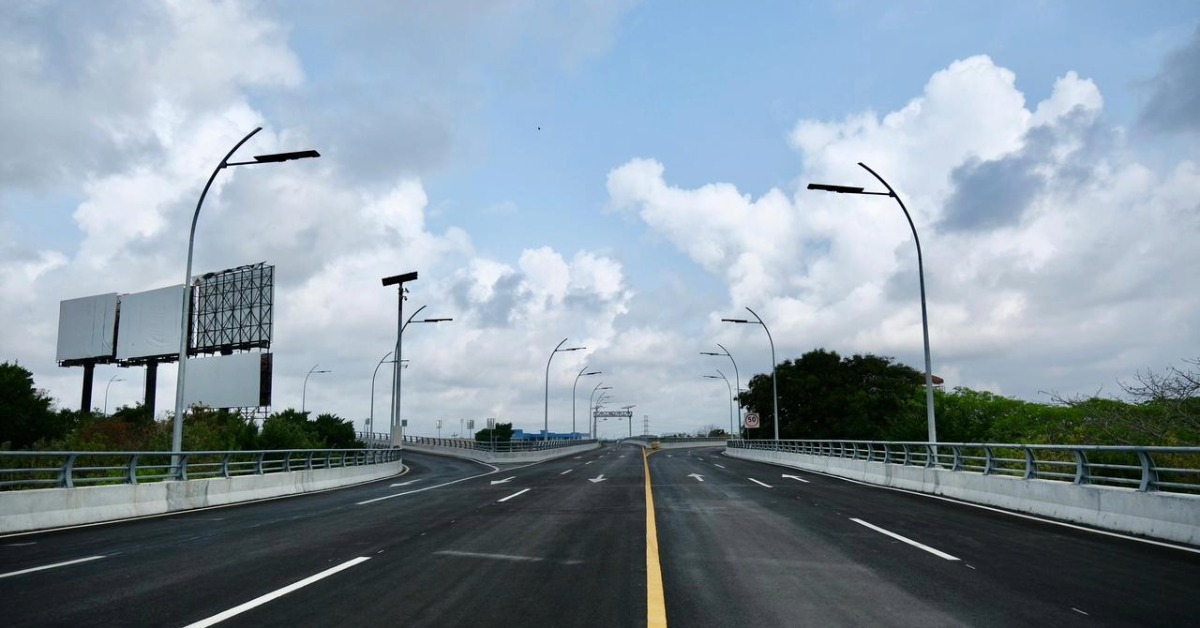
The bridge has three traffic lanes, including one lane in each direction and a reversible lane that can change direction depending on traffic demand. It also includes a bidirectional bike lane, a feature that will require its own operating rules and weather-related caution.
Officials say the route is designed to reduce travel times between the city and the Hotel Zone. The practical effect will depend on how traffic adapts, how the reversible lane is managed, and how quickly drivers learn the new access pattern.
Why the opening was not immediate
The bridge was inaugurated over the weekend, but it did not immediately open to regular traffic. Authorities said final technical and operating checks were still needed before allowing everyday use.
Those checks included tests of traffic lights, signage, lane markers, and the reversible-lane system. Crews also worked on reflective bollards, road buttons, lighting, and other safety elements.
State officials said the bridge’s rules will be federal in nature because the project falls under federal transportation authority. That means drivers should expect enforcement standards tied to federal road rules, not only local traffic habits.
The state government also said the opening will include public guidance on how to enter and exit the bridge. That information will be important because the road is new, and early confusion could create bottlenecks.
How the reversible lane could work
The reversible lane is one of the bridge’s most important features. It is intended to add capacity in the direction with the highest demand.
In practical terms, that could mean more flow toward the Hotel Zone in the morning and more flow back toward the city later in the day. Authorities have said the public will receive guidance on the exact rules before and during the start of operations.
Drivers should not assume the center lane is always available in the same direction. The safest approach is to follow posted signs, lane lights, cones, barriers, and instructions from traffic personnel.
For expats, tourists, and part-time residents who do not drive in Cancún daily, the first weeks may require extra patience. A missed exit or wrong lane choice could cause delays, especially during peak hours.
What cyclists should know
The bridge includes a bike lane, but its use will be regulated. Officials have said bike-lane rules will be part of the public guidance issued for the opening.
Cyclists should pay close attention to access points, wind conditions, and official restrictions. The bridge crosses open lagoon areas, where the weather can change quickly.
Earlier operating discussions included possible restrictions during strong winds or “surada” conditions. Riders should check official municipal and state channels before using the lane, especially during unsettled weather.
The bike lane gives Cancún a new mobility option, but safety will depend on separation, visibility, speed control, and clear behavior from both cyclists and drivers.
A road project with emergency value
The Nichupté Bridge is being presented not only as a traffic project, but also as an evacuation route. That point matters in Cancún, where hurricane season and tropical storm planning are part of local life.
The Hotel Zone sits on a narrow strip between the Caribbean Sea and the lagoon. During major weather events, the ability to move people out more efficiently can affect hotels, workers, residents, and emergency crews.
The bridge adds another route across the lagoon. It does not remove the need for storm planning, but it gives authorities another option when existing corridors become crowded.
For residents who work in the Hotel Zone, the bridge could also affect daily commute planning. Public transport access is expected to be part of the broader operating model, though details may continue to evolve during the first phase.
The unfinished traffic picture
The bridge opening does not mean all related road work is finished. A connected project, the Kukulcán distributor, is still part of the wider traffic plan for the area.
That matters because the bridge’s usefulness depends on how traffic enters and leaves it. If access points are congested, the time savings on the bridge itself could be reduced.
The first weeks will likely show where adjustments are needed. Traffic timing, lane direction, buses, cycling rules, enforcement, and signage may all be fine-tuned after real-world use begins.
Officials have asked drivers to respect the signs and rules from the first day. That request is more than routine. New infrastructure can create risk when people test shortcuts or treat temporary confusion as permission to improvise.
The larger context behind the bridge
The Nichupté Bridge has been one of Cancún’s most-watched infrastructure projects. It has been promoted as a way to improve mobility, support tourism operations, and create a safer route during emergencies.
It has also drawn scrutiny over cost, delays, and environmental impact. The bridge crosses a sensitive lagoon system, and public discussion has included concerns about mangroves, water quality, and long-term pressure on the area.
Federal officials have pointed to mitigation work, including mangrove rehabilitation and environmental monitoring. Critics have argued that the lagoon already faces heavy pressure from urban growth and tourism development.
For readers living in Cancún, the immediate question is more practical. The bridge opens on Wednesday morning, and its first days will be about learning how to use it safely.
Drivers should expect a period of adjustment. The bridge may shorten some trips, but only if motorists follow the new federal rules and use the reversible lane correctly.