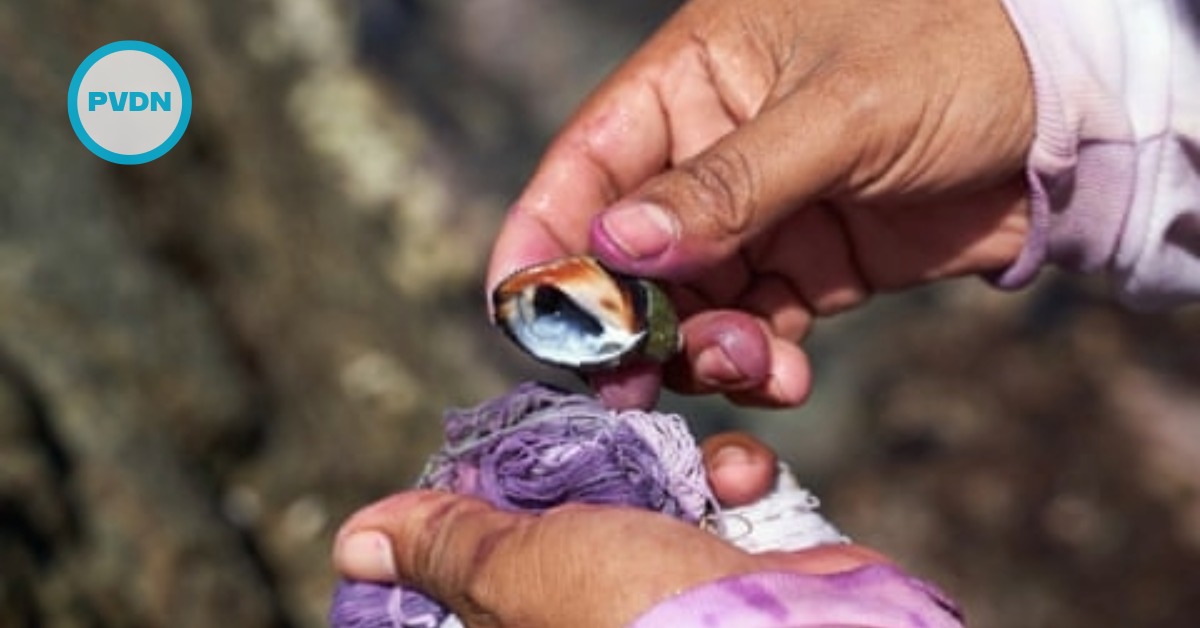
For generations, Mixtec artisans on Oaxaca’s coast have “milked” a rare sea snail to create a brilliant purple dye without harming the creature. Now only a dozen elder dyers remain – and for the first time, Oaxaca has declared a special day to honor them. The long-overdue recognition arrives just as this ancient craft faces new threats to its survival.
On a late January morning in Oaxaca, Mexico, 85-year-old Mauro Habacuc Avendaño holds up a skein of cotton yarn stained a deep violet. This rare purple color comes from the ink of a sea snail, and Avendaño is one of the last people on Earth who knows how to harvest it without killing the animal. For the first time, Oaxaca is officially honoring Avendaño and his fellow snail dyers – Mixtec Indigenous artisans who practice a centuries-old dyeing method. The state’s congress declared January 28 as the “Day of the Purple Snail Dyer,” a new annual observance to recognize these men as living guardians of a unique textile tradition.
At a ceremony inaugurating the day, Avendaño received a special award on behalf of the remaining purple snail dyers of Pinotepa de Don Luis, the only town in Mexico where this craft survives. His community was also symbolically declared Oaxaca’s first “Pueblo Púrpura” (Purple Town) in honor of its heritage. For Avendaño – who began learning the craft as a teenager in 1956 – the public recognition is meaningful validation. He expressed pride that authorities are finally shining a light on what he calls “a struggle to preserve the culture our ancestors left us.” Locally, the snail-dyeing art had long been taken for granted, even as outsiders and researchers sought out Mixtec dyers to learn their secrets. Now, officials hope the new Day of the Snail Dyer will raise awareness and respect for this endangered art, both within Oaxaca and beyond.
A millennia-old dyeing tradition
The practice of shellfish purple dyeing on Mexico’s Pacific coast goes back at least 1,500 years. Anthropologists note that the coastal Mixtec people have used the purpura sea snail for dye since pre-Hispanic times, making it one of the world’s oldest continuously practiced dyeing methods. In ancient Mediterranean civilizations, a similar purple pigment (Tyrian purple) was so coveted that it was reserved for royalty, but obtaining it required killing thousands of murex snails, leading to their near-extinction. By contrast, the Mixtec dyers of Oaxaca developed a sustainable technique that keeps the snails alive. This ancestral knowledge has been passed down through generations of tintoreros (dyers), enabling the tradition to endure where others vanished.
Every year, during the winter dry season when tides ebb low, the Mixtec dyers journey from their highland village to the rocky shores near Huatulco on Oaxaca’s coast. Here lives the Purpura pansa, a thumb-sized marine mollusk also known as the purple snail. The men scale slippery intertidal rocks to gently collect the snails from crevices. In a delicate ritual often described as “milking,” they press or rub the snail’s foot until it releases a few drops of milky white secretion – the precious dye-bearing ink. The snail is not harmed; after “milking,” each one is carefully returned to a shaded cranny on the rocks so it can reattach safely. Sunlight and oxygen transform the snail’s pale ink into vivid hues: initially yellow-green, then deepening into a rich purple (known in Mixtec as tixinda). The purple dye is renowned for its permanence – according to local legend, a garment colored with snail purple will retain its brilliant hue for generations, long after the fabric itself wears out.
The dyed cotton threads are taken back to Pinotepa de Don Luis, where Mixtec women weavers use them on backstrap looms to create traditional textiles. The most iconic is the pozahuanco, a wrap-around skirt with bold purple stripes that signal a woman’s community and status. Purple is a sacred color in Mixtec culture, symbolizing life, death, and fertility. For centuries, having purple snail-dyed garments was a point of pride – brides wore them at weddings; elders were buried in them. This intimate connection between the snail, the dyers, and the weavers has made the craft a cornerstone of the community’s identity.
From abundance to near extinction

Older dyers like Avendaño remember when the purple snails were once plentiful along the Oaxaca coast. “There are few snails now, not like before,” he has lamented, reflecting on the changes over his seventy years in the craft. In his youth, teams of tintoreros could collect hundreds or even thousands of snails in a single trip, yielding ample dye to color many skeins of yarn. But that abundance began to disappear in the late 20th century, due in part to outside exploitation.
In the early 1980s, a foreign textile venture – a Japanese company eager for authentic Tyrian purple – descended on Oaxaca’s shores and started harvesting the purpura snails on an industrial scale. They hired local fishermen to gather snails and extract the dye, but without the care that the Mixtec dyers traditionally used. Snails were overharvested and mishandled – many were pried off the rocks and left to die after being “milked” only once. Within a few years, the snail population crashed alarmingly. By 1985, Mixtec dyers who returned to their customary dyeing sites found far fewer snails, raising the alarm that their livelihoods were in jeopardy.
Mexican authorities responded by stepping in to protect the species. By 1994, the purpura snail (Plicopurpura pansa) was declared a protected species, and the government banned all commercial exploitation. Only the Indigenous dyers of Pinotepa de Don Luis – recognized for their sustainable methods – were permitted to continue gathering the dye. This measure helped curb the rampant overharvesting, allowing snail numbers to slowly recover in the region. However, the damage had been done: the snails never returned to their former abundance on easily accessible beaches. To find enough, the Mixtec tintoreros had to venture to more remote, wave-battered cliffs, often within the federally protected Huatulco National Park.
Even with legal protections, the purple snail remains endangered. Climate change and habitat disturbances have subtly altered the intertidal environment. But the dyers say the snail’s most dangerous enemy is still human greed. In recent years, a troubling trend has emerged in the tourist resorts of Huatulco: local vendors have begun serving purple snails as a delicacy, touting them as a novel seafood cocktail for visitors. What the Mixtecs see as a sacred dye source, some restaurants see as an exotic appetizer. Avendaño and his fellow artisans were horrified. Each snail that ends up in a cocktail glass is one fewer snail left to reproduce – and one more blow to their ancient craft.
“We always have problems,” Avendaño said of the ongoing threats to the snails. “First it was the Japanese; now we have people in Huatulco eating the snail, finishing it off.” The practice of harvesting snails for tourist consumption has grown popular enough to alarm conservationists. The elders report that areas once rich in snails have been picked clean by food collectors. They have pleaded with local authorities in Huatulco to enforce protections and stop the sale of the purple snail for cocktails, pointing out that the species cannot withstand this kind of pressure for long.
Guardians of a fragile tradition
For the dwindling band of Mixtec snail dyers, safeguarding the mollusk is a matter of cultural survival as much as environmental conservation. Only fourteen men are still actively engaged in this craft, all of them already grey-haired. Many, like Avendaño, started as teenagers by accompanying their uncles or fathers on foot across the mountains to the coast – an eight-day trek in the old days. Now they travel by truck, a six-hour drive each way, to reach the hidden coves where purpura snails still cling to the rocks. To dye just a quarter kilogram of cotton (about 9 ounces), they need to find at least 300 snails, milking each one in turn. On some trips, they struggle to meet that quota. The work is physically demanding and can be dangerous – climbing slick rocks above rough surf – but long experience has taught them how to stay safe. “It’s risky, but I know this work well by now, and I avoid the most dangerous spots,” Avendaño said calmly.
The bigger worry is who will carry on the tradition when these elders can no longer do it. The Mixtec dyers typically come from farming families; snail dyeing has never been a high-paying occupation, more a vocation of passion and heritage. Younger generations in Pinotepa de Don Luis often prefer to seek easier livelihoods. The intricate Mixtec weaving and dyeing arts have seen declining interest among youth, who face many modern distractions and opportunities that draw them away from traditional crafts. Avendaño’s own son, Rafael, is one of the few middle-aged men who learned to milk the snails, and he accompanies his father on the expeditions. “Humans are destroying the nature around us… our work is a big example of how we can live in harmony with nature without hurting it,” Rafael observed, hoping that people recognize the value in what the tintoreros do. Despite the challenges, the snail dyers remain committed. They continue to dye small batches of purple yarn each year – sometimes only enough for a few garments – so that the knowledge stays alive and the weavers have genuine purpura threads to work with.
Hope in recognition and revival
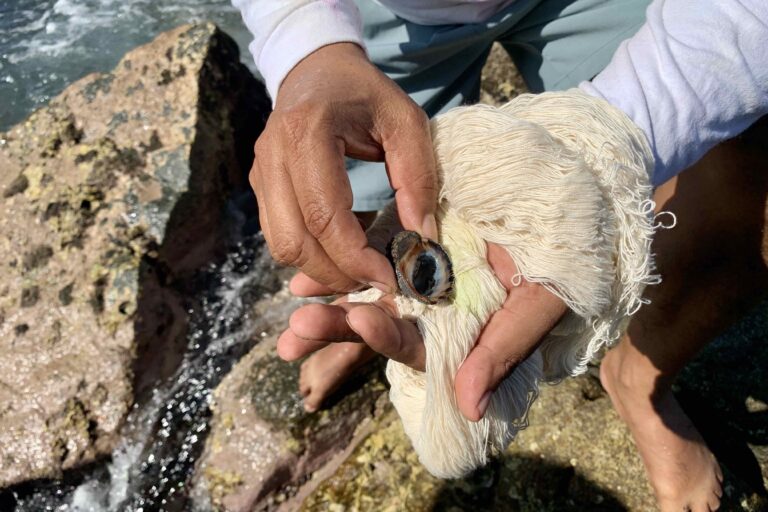
The establishment of an official “Day of the Purple Snail Dyer” in Oaxaca offers a glimmer of hope for the future of this tradition. By institutionalizing the honor, the state government has signaled that these Indigenous artisans and their knowledge are treasures worth protecting. Lawmakers like Congresswoman Karla Clarissa Bornios, who championed the initiative, framed it as part of a broader effort to celebrate Oaxaca’s living heritage. “Recognizing indigenous knowledge means valuing a deep understanding of nature and social organization that ensures sustainability and collective identity,” she said. The legislature’s declaration not only applauds the artistic skill of the snail dyers but also highlights their community’s “profound commitment to defending cultural patrimony.”
Crucially, the recognition helps educate the public. Local officials have noted that in other parts of the world, similar dye-yielding snails were wiped out by indiscriminate exploitation – yet in Oaxaca, the Mixtec dyers’ respectful technique saved their snail from extinction. By telling this success story and raising awareness of the ongoing threats, they hope to garner support for stronger protections. There are calls for better enforcement against poaching and an end to serving the snails as food. The attention has also sparked interest in cultural tourism that benefits the community: visitors and scholars are coming to Pinotepa de Don Luis to learn the snail-dyeing process firsthand, creating income opportunities tied to conservation rather than extraction.
Avendaño believes pride and knowledge are the keys to saving the tradition. “We should feel proud that we still have this and we must defend it, even if we don’t live solely from it,” he urged his neighbors, reminding them that the purple snail has already vanished from other regions. He and the other tintoreros emphasize that their work is not about making money – it’s about keeping a millennial legacy alive. They still identify first as campesinos (farmers), but when the tides and seasons align, they become stewards of the snail and its dye, just as their forefathers were.
In Pinotepa de Don Luis today, the sight of freshly dyed purple yarn drying in the sun has become rarer, but it hasn’t disappeared. As long as men like Mauro Habacuc Avendaño can still climb the seaside rocks with gentle hands and reverence for the snail, that purple thread will continue to weave through the fabric of Oaxaca’s cultural history. Now, with official recognition and renewed efforts to protect the snail, the Mixtec dyers have a stronger chance of passing on their secret of the living purple, ensuring that this ancient textile art survives for generations to come.
With information from La Razón, The Guardian, Mexico News Daily, Mongabay