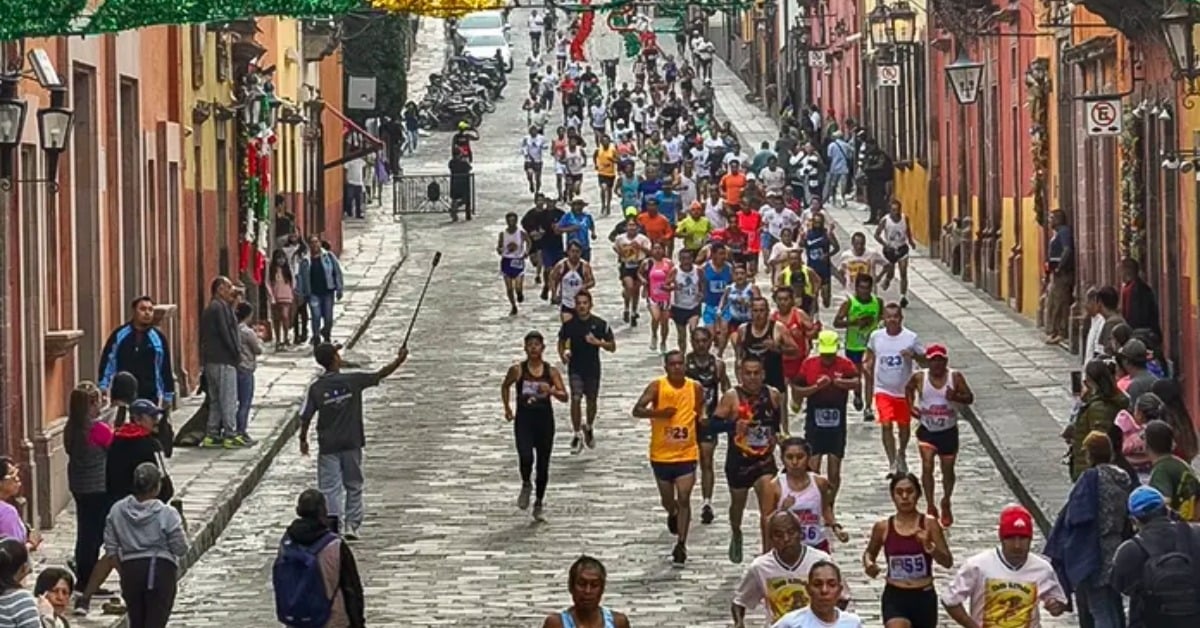
San Miguel’s master runners started the party early. The Old Guard Race San Miguel returned for its 39th edition with more than 200 athletes, a familiar route through the historic center, and a field stacked with community clubs. City sports officials say the event is the unofficial kickoff to the September celebrations. Category champions earned more than medals this year—they punched their ticket to the symbolic relay that carries the fire from Querétaro before the Grito. Here’s who won, why the course matters, and what this tradition says about the city.
San Miguel de Allende’s longest-running masters race reached its 39th year on Sunday, drawing more than 200 runners ages 35 and up. The atmosphere felt equal parts reunion and competition. Streets in the historic center were filled with club singlets, families on sidewalks, and the chatter of volunteers keeping the pack moving.
Old Guard Race San Miguel
Local officials frame the event as the athletic opening act of September’s civic calendar. The city’s sports commission (COMUDE) notes the race predates newer running booms and still centers athletes 35 and older. It is where veterans check fitness, newcomers measure nerves, and the community gathers before the marquee Independence Day runs.
This year’s course followed the same downtown corridors used in the storied Carrera de la Conspiración, keeping the race connected to the city’s Independence-era narrative and making spectating simple for families. That continuity is part of why the field remains loyal year after year.
Winners and pace at the front
In the women’s field, María Guadalupe Mendoza Hernández took first in 16:13, with Angélica Pérez Rivera second and Sonia Palma Caporal third. On the men’s side, Genaro Hernández Rangel won the 35–40 bracket, followed by Raúl Alarcón Segura and Óscar Vázquez. The 41–50 category went to José Antonio Lozada, ahead of Luis Miguel Correa Luna and Eduardo Zapatero. Entre 51 y 60, Manuel Velasco Bustamante lideró a Armando Álvarez Pérez y David Gutiérrez Miranda. In 61+, Alejandro González Carrera topped Bernardino García Ortiz and Arturo Ramírez Capitán.
Those names—and the depth within each bracket—speak to a master’s scene that trains consistently and shows up. For many, the podium is less about a time on the clock than holding a line of tradition that started decades ago.
A tradition that opens Fiestas Patrias
The race is one of three linked September fixtures: the Carrera de la Conspiración, the Carrera Simbólica, and the Old Guard Race. Top finishers in the Conspiración form the city’s relay that carries the Fuego Simbólico from Querétaro ahead of the Grito. COMUDE highlights this as a living ritual—athletics braided with civic memory—rather than a one-off event. The Old Guard keeps that chain intact by centering veteran athletes at the very start of the month.
That framing explains the tone on race morning. It reads like a community roll call: clubs, neighborhoods, and families visible on the route, all with an eye on the celebrations to come.
Why it matters for community sport
Master’s first events are rare in many cities. San Miguel’s choice to spotlight older athletes with categories up to 60-plus sends a message about inclusive sport and long-term health. It also gives younger runners someone to chase—both on the roads and in the way they keep showing up every September.
City support has also been explicit. COMUDE’s leadership points to consistent municipal backing for logistics, safety, and resources. That institutional steadiness helps volunteers focus on execution and athletes on the run. It also keeps the race anchored in the center, where residents and visitors can watch without cars or bus rides.
The road ahead
Forty years is now within reach. With turnout passing the two-hundred mark again, and the route tied to the Conspiración run, the Old Guard looks durable. Expect more friendly rivalries, a few personal bests, and the annual signal that the city’s celebrations have begun—on foot, together.