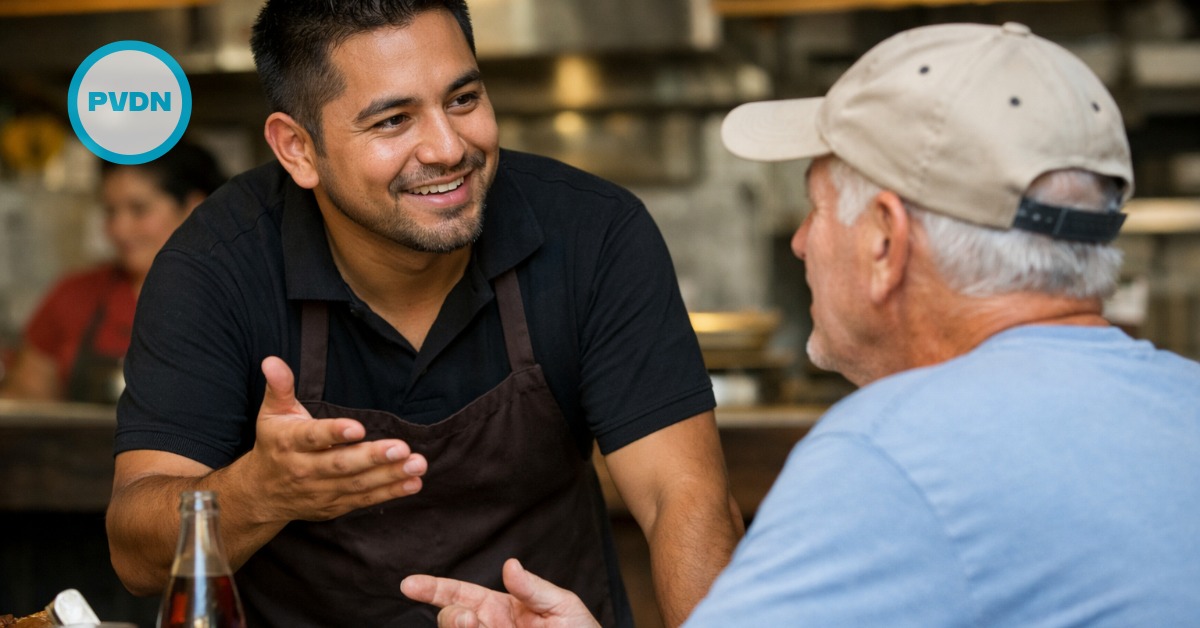
Use small, polite Spanish phrases, steady rhythm, and the right “por favor” to order smoothly and respectfully—no awkward tourist energy.
Ordering in Mexico isn’t about perfect Spanish. It’s about how you enter the moment, how you ask, and how you close. A tiny “buenas” at the right time, a softer verb, and one clean follow-up question can change the whole interaction. In this guide, you’ll learn the handful of phrases that signal respect without sounding like you memorized a script, plus the rhythm locals use when the line is moving fast. You’ll also learn what to do when you freeze.
Order Food in Mexico
The fastest way to stop sounding like a tourist isn’t slang. It’s comfort. Not fake confidence—real comfort built from a few phrases you can actually use every day, in the same order, with the same calm pace. In Mexico, the social part of ordering matters. People notice whether you treat the interaction like a transaction or a shared moment. The good news is you don’t need “perfect” anything. You need a clean opening, a polite ask, and a warm close.
Think of it like stepping onto a moving sidewalk. If you hesitate at the edge, everyone feels it. If you step on smoothly, you’re suddenly part of the flow. Your Spanish can be simple. Your rhythm is what does the heavy lifting.
Start with a greeting that fits the room
In many places, the most “local” move is simply acknowledging the person before the order. Not a dramatic hello. Just a quick buenas or buenos días, matched to the time of day, then you pause half a beat. That pause matters. It gives the other person a chance to meet you where you are.
At a taquería counter, that might look like: Buenas. Eye contact. Small smile. Then your order. At a sit-down restaurant, it might be: Buenas tardes. Then you wait for the greeting back before you ask for anything. That tiny exchange tells people you’re not trying to bulldoze your way through Spanish. You’re showing basic respect.
If you only change one thing, change your opening. Most tourist-sounding Spanish starts with urgency. It comes out sharp, even when you don’t mean it. A greeting softens everything that follows.
The verb choice that instantly sounds more natural
A lot of expats learn “quiero” early. It works, but it can sound blunt when it’s the first thing out of your mouth. You don’t need to ban it. You just need a better default.
Your best all-purpose tool is me da… It’s simple, it’s normal, and it feels like the kind of polite shorthand Mexicans use every day, especially in casual places. Me da un café, por favor. Me da dos tacos al pastor, por favor. It’s not fancy. It’s comfortable.
In slightly more formal settings, me puede traer… or me trae… is a good step up. ¿Me puede traer agua, por favor? The magic here is that you’re not commanding. You’re requesting.
What to avoid is the bare imperative. Even if your accent is great, “dame” can land like you’re snapping your fingers. If you want to sound relaxed, keep your verbs gentle and your tone even.
The rhythm that keeps you from freezing
When you’re nervous, you either rush or you stall. Both read as tourist energy, even if your Spanish words are fine. What works better is a short, predictable rhythm you can reuse in any food situation.
You greet. You order with one clean sentence. Then you stop. You don’t keep talking to fill the silence. That silence is normal. It’s the moment when the person confirms, repeats, or asks a quick follow-up.
If you try to cram the whole order into one long performance, you’ll trip yourself up. Instead, keep it modular. Order the main thing first. Then add the details when you’re prompted, or when there’s a natural opening.
This matters most at street stands, where the line moves fast. If you watch locals, they don’t over-explain. They give a clear base order, then adjust. You can do the same, even with beginner Spanish, as long as you don’t panic-talk.
Asking questions without slowing everything down
There’s a difference between being curious and turning the counter into a language lesson. You can ask questions in a way that respects the pace of the place.
If you need help choosing, ¿Qué me recomienda? works in cafés and restaurants because it’s quick and flattering. If you’re staring at a menu and you don’t understand one item, Perdón, ¿qué es esto? is simple and human. The key word there is perdón. It signals you know you’re taking a second of their time.
If you didn’t catch what they said, don’t pretend. Don’t smile and nod yourself into onions you didn’t want. Use ¿Me lo repite, por favor? or ¿Cómo dice? Both are normal and polite. People repeat themselves all day. What throws them is when someone looks lost but keeps pushing forward anyway.
And if you’re in an ultra-busy spot and you can tell they’re slammed, a small phrase like cuando pueda can be a pressure release. It tells them you’re not demanding a performance. You’re just ordering food.
Special requests that don’t sound demanding
Mexican food culture is flexible, but tone matters. You can ask for changes—just do it like a person asking a favor, not a person issuing instructions.
Instead of stacking commands, frame it softly. ¿Puede ser sin cebolla, por favor? ¿Me lo puede poner aparte? You’ll notice the pattern: puede and por favor keep you friendly, even when you’re being specific.
If you’re ordering tacos and you’re not sure how a place handles toppings, you can ask in a way that doesn’t sound precious. A calm ¿Con todo? usually gets you the answer you need. If you want to opt out, you can say sin picante, por favor, or if you’re okay with some heat but cautious, you can ask ¿pica mucho? and read their face. The facial expression you get is often more useful than the words.
If you mess up—and you will sometimes—your recovery phrase is perdón. Not a dramatic apology. Just a quick perdón and a reset. Most people will meet you with patience when you keep your tone warm.
The close that leaves a good taste
The last ten seconds matter. This is where you stop being “the foreigner who ordered” and become “the person who was pleasant.”
Use gracias more than once, but make it feel natural. You can thank when you receive something and again when you leave. In sit-down places, a simple muchas gracias at the end is enough. If someone goes out of their way for you—splits a dish, explains something, fixes a mistake—qué amable is a nice touch. It’s warm without being over the top.
There’s also a small cultural cue that earns you quiet points: buen provecho. You don’t have to say it to everyone. But if you walk past people eating, or a server drops your plate, it’s a small kindness that reads as “I live here.” It’s not slang. It’s manners.
And when you need to get by someone in a tight space, con permiso is the polite default. It’s one of those phrases that makes daily life smoother, and it fits perfectly into food situations.
The real goal is ease, not disguise
You’re not trying to sound Mexican. You’re trying to sound respectful and relaxed in Mexico. That’s a different thing. The win is when you can order without the adrenaline spike, without the mental rehearsal, without the feeling that everyone is watching you.
Pick a handful of phrases that feel like “you.” Use them every day. Let repetition do the work. Within a couple weeks, your mouth will stop fighting your brain, and the whole interaction will start to feel normal.
That’s when the magic happens. You’re no longer “performing Spanish.” You’re just ordering food.