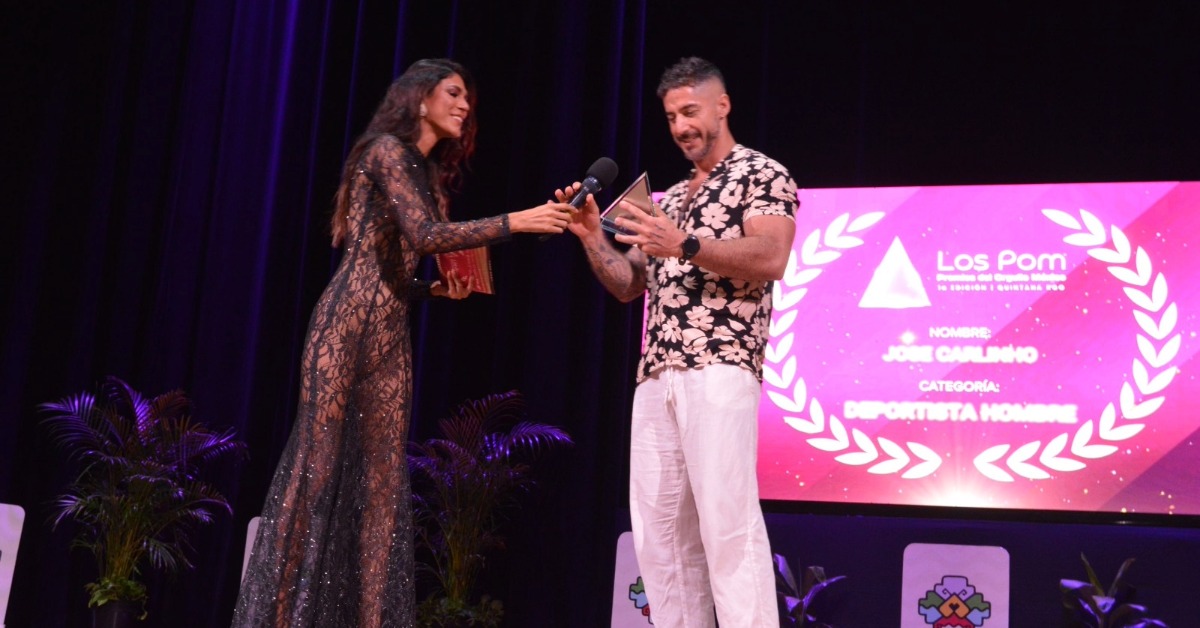
Playa del Carmen hosted the first Orgullo México Awards on Saturday, August 23, drawing local advocates, artists, and community groups to the Teatro de la Ciudad Xaman Há. The evening leaned into something overdue and straightforward: recognition for people who do the slow, often invisible work of making Quintana Roo safer and more welcoming for everyone.
Orgullo México Awards Playa del Carmen
City officials framed the debut as more than a show. On stage, representatives of the Solidaridad government emphasized building an inclusive municipality and observed a minute of silence for those who paved the way. It set a clear tone: visibility with substance, not spectacle.
The awards crossed art, activism, sport, performance, and business—reflecting how change actually happens here.
Among the honorees: cultural promoter Luis Alvarado, activist Daniel Espinosa, influencer Anya Alonso, athlete José Carlinho, and musician Rey Lealtad. Collectives and platforms also earned nods, including Survivors Men’s Project, House of Apocalipstick, and Sur Pride, a reminder that movements are built by networks, not stars.
From stage to community impact
The city’s Directorate of Diversity thanked the awards’ founders for choosing Playa del Carmen as the inaugural host. It was a deliberate pairing: an established venue, municipal support, and a slate of winners who work year-round in shelters, clinics, studios, courtrooms, and online spaces. That mix gave the night weight beyond a red carpet.
Theater, dance, and live music threaded through the program, and the roster of honorees underscored how culture carries rights work into the mainstream. When you champion a ball scene house or a community podcast alongside lawyers and NGOs, you are acknowledging that safety and dignity are cultural projects as much as legal ones.
A signal in the legal and civic landscape
Quintana Roo’s legal footing adds context. The state has recognized same-sex marriage since 2012 and has updated its anti-discrimination framework in recent years. That history doesn’t end the work, but it shapes the expectations: public institutions are now expected to back inclusion with budgets, venues, and consistent policy.
In that light, inaugurating the awards here is as much about governance as celebration. When city officials stand beside local advocates, it reduces the distance between a right on paper and a right lived without fear. It also sets a benchmark for future editions—measured not only by production value but by how much safer and more visible people feel the morning after.
The awards stitched together activists, artists, athletes, and small businesses from across Quintana Roo. If organizers keep the focus on community-level impact and the city continues putting its name and venue behind the night, Playa del Carmen could turn this debut into a standing date on the state’s civic calendar. The measure of success will be simple: more protections enforced, more spaces open, and more young people seeing themselves invited inside.