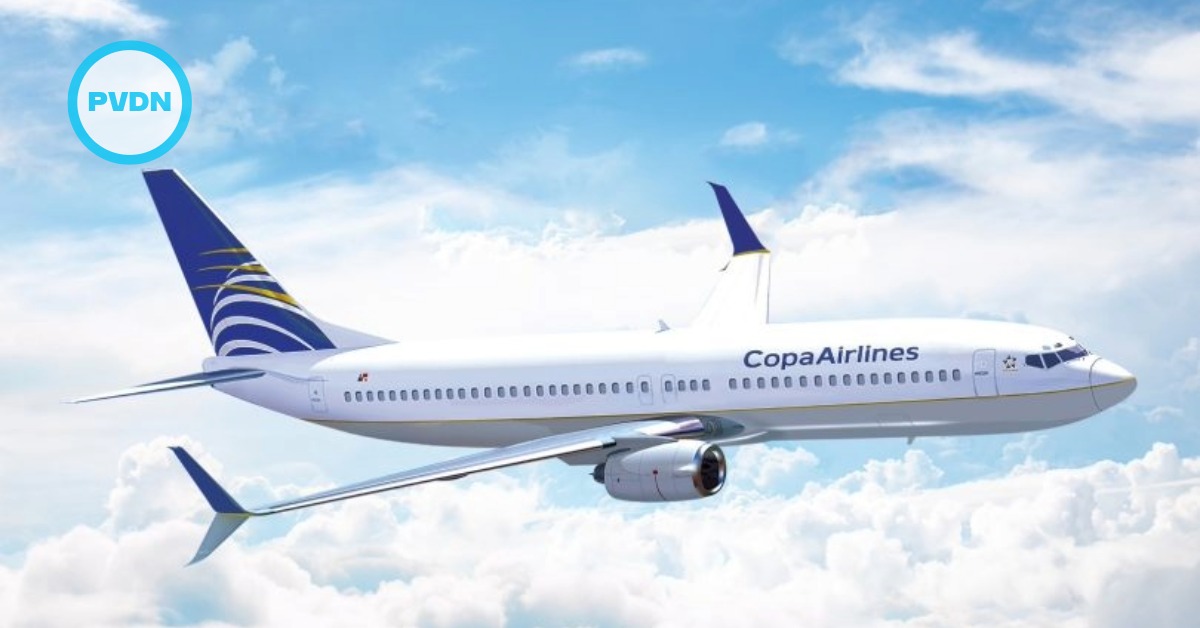
Copa’s new Panama – Los Cabos route will run three times a week from December 4, giving Los Cabos its first nonstop air bridge to Panama’s regional hub.
The basics are clear. From Thursday, December 4, Copa Airlines will operate a nonstop flight between Tocumen International Airport in Panama City and Los Cabos International Airport in San José del Cabo. Official information from Baja California Sur’s tourism and economic authorities confirms three weekly frequencies, on Mondays, Thursdays and Saturdays, on aircraft operated by the Panamanian flag carrier.
The route is the product of a coordinated push by the state’s Secretariat of Tourism and Economy (SETUE) and the Los Cabos Tourism Trust (FITURCA). Officials describe the new link as a “strategic door” designed to diversify tourism, attract investment and deepen commercial ties with a “high-potential” region that, until now, has had to connect through Mexico City, the United States or multiple stops.
This is also Copa’s first nonstop service to Los Cabos, adding the Baja California Sur resort to a Mexican portfolio that already includes Mexico City, Guadalajara, Monterrey, Cancún and Puerto Vallarta. From its Panama hub, the airline sells onward connections to more than 80 cities across the Americas, with a dense network in Central and South America. That means a traveler from Bogotá, Lima or Santiago can now reach San José del Cabo on a single airline, with one coordinated connection rather than a patchwork of carriers.
For Los Cabos, the shift matters because its international market is still overwhelmingly concentrated in the north. Recent data from the Los Cabos Tourism Observatory shows that foreign arrivals by air remain dominated by the United States, with Canada providing most of the remaining share and only a small slice coming from other countries. A direct line into Panama’s regional hub gives local authorities their most concrete tool yet to court visitors from Central and South America rather than relying almost entirely on U.S. and Canadian demand.
The route also plugs into a broader air strategy. SETUE highlights that the Panama service launches just weeks after the second season of the Frankfurt–Los Cabos route with Condor Airlines, which resumed on November 3 with 285 passengers on its first flight and is scheduled to run through April 6. Together, the European seasonal service and the year-round Panama connection form a kind of east-west bridge, linking Los Cabos more directly to both sides of the Atlantic and the southern half of the continent.
What the Panama Los Cabos route means for Los Cabos
State officials are framing the new flights in economic terms as much as touristic ones. In their public remarks, they emphasize that every additional international route expands Baja California Sur’s offer, not just by adding seats but by opening space for new business relationships. The idea is that better air access can help support conferences, trade missions and investment scouting, especially in sectors already active in the state, such as hospitality, real estate and services.
On the tourism side, the impact is likely to show up first in patterns that observers already track closely: passenger arrivals, hotel occupancy and seasonality. Los Cabos has recorded steady growth in air passengers over the past few years, with total arrivals climbing from under 3 million in 2021 to nearly 4 million by 2023, according to industry analyses based on airport data. A fresh stream of visitors from Central and South America could help smooth out peaks and valleys dictated by U.S. and Canadian holiday calendars, especially if the route gains traction with regional carriers and tour operators that package Los Cabos with other Latin American destinations.
The Panama Los Cabos route also has a symbolic weight for local planners. For years, Los Cabos has marketed itself heavily to North American travelers, positioning its luxury resorts and desert-meets-sea landscape as a quick escape from major U.S. and Canadian cities. A direct link to Panama offers a chance to tell a different story to Spanish-speaking travelers from the south, one that does not depend on connecting through U.S. airports or dealing with those visa regimes.
That will not happen automatically. Making full use of the new route will require work on the ground: tailoring marketing campaigns in Central and South America, making sure service staff can switch comfortably between Spanish and other regional languages, and smoothing the experience for first-time visitors who may know Cancún or Mexico City but not yet Los Cabos. Yet the building blocks are there. The flights are on the schedule; the aircraft are assigned; and Panama’s hub already has the connectivity that Los Cabos has been missing.
In that sense, the launch feels like a test. If travelers from Bogotá, Lima, São Paulo or Santiago fill the cabins on Mondays, Thursdays and Saturdays. In that case, it will send a clear signal that Los Cabos can compete for Latin America’s growing middle-class tourism, not just its long-time North American base. If the seats stay empty, the message will be just as clear. For now, though, Baja California Sur is betting that opening a door to Panama will invite the rest of the region to step through.