Activists warn a new CFE submarine cable at Playa 88 could damage mangroves and the Francisco I. Madero Reef threatens protected wildlife.
Playa 88 is not the busiest beach in Playa del Carmen, but it may be the most contested. Behind the white sand and lifeguard tower, a low line of mangroves still separates the sea from the city. Just offshore, about 600 meters into the Caribbean, lies the Francisco I. Madero Reef is a shallow coral formation that draws snorkelers and marine researchers alike.
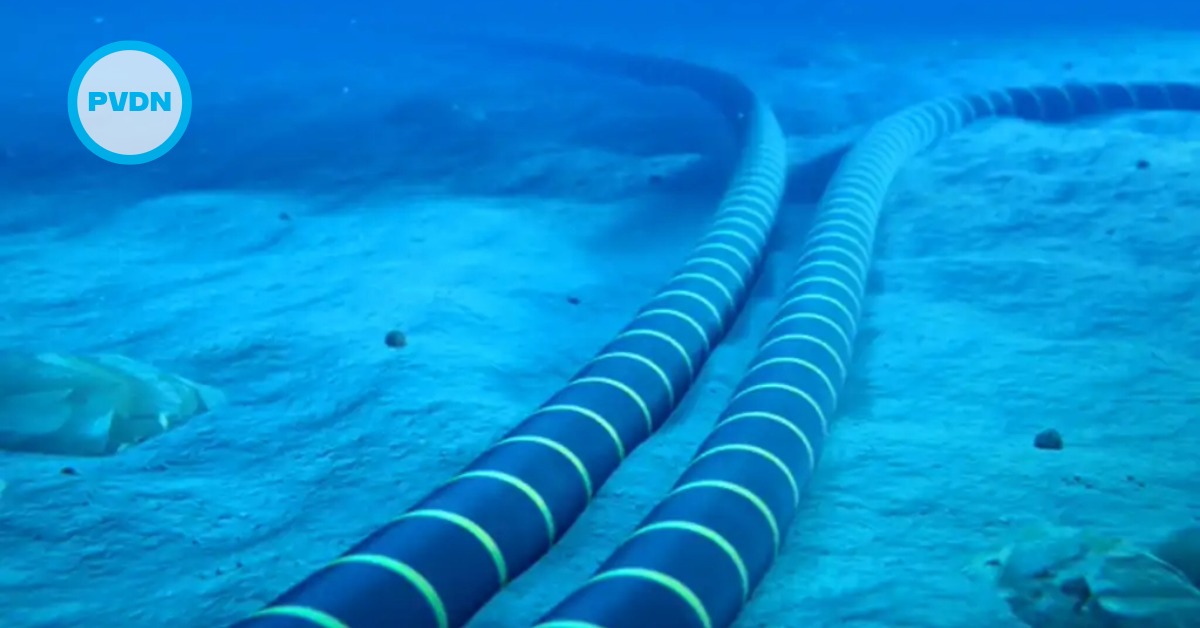
That narrow strip of coast is now the starting point for a new Playa 88 submarine cable that will carry electricity beneath the sea to Cozumel. Surveyors working for the Federal Electricity Commission, or CFE, have begun topographic measurements and marking points along the certified public beach after the federal environment ministry, Semarnat, approved the project’s environmental impact statement.
Local activist Carlos Jiménez Arreola calls the area “the only green lung” left in Playa del Carmen. He warns that trenching through the mangroves to install ducts and a transition substation could fragment the habitat and cut off the ecological link between the coastal wetland and the reef. In recent years, community monitoring efforts have already documented heavy stress on the Francisco I. Madero reef from illegal fishing, coastal pollution and boat traffic.
Jiménez says the mangrove corridor holds more than twenty protected species of flora and fauna. He lists resident mammals such as white-tailed deer, coatis and raccoons, as well as crocodiles, several mangrove species and numerous migratory shorebirds that use the wetland as a stopover. While those numbers come from local surveys rather than a formal government census, they match broader studies that describe mangrove ecosystems in Mexico as high-biodiversity refuges for birds, reptiles and marine life.
Playa 88 submarine cable at the center of a legal and political fight
The tension around Playa 88 has been building for more than two years. In 2022 CFE detailed plans for a roughly 30-kilometer transmission line between Playa del Carmen and Cozumel, starting at Playa 88 and crossing the seabed to the island. The project, known as Playa del Carmen-Chankanaab, aims to reinforce Cozumel’s power supply after years of voltage fluctuations and blackouts.
Semarnat later received and evaluated the project’s environmental impact assessment, which covers both the submarine segment and the underground stretches on land. Municipal officials in Solidaridad, the municipality that includes Playa del Carmen, have repeatedly said they had not yet issued local construction permits even after the federal authorization, arguing that CFE must present a design that does not demolish public access to Playa 88.
The political backdrop shifted again in March 2024, when a decree published in the federal government’s official gazette allocated a 200-square-meter section of the federal maritime zone at the mouth of Calle 88 to CFE Transmisión for the submarine cable works. The municipality, which had promoted Playa 88 as a flagship sustainable tourism beach and secured international Blue Flag and national Playa Platino certifications, objected that the decision was made without local consultation.
Since then, community groups have organized beach gatherings, filed complaints with environmental authorities and explored the possibility of asking for the 80-hectare mangrove and dune system behind Playa 88 to be declared a protected natural area. Jiménez and other activists argue that such a designation would limit heavy infrastructure projects and force any new works to be designed around conservation goals.
CFE has maintained that the Cozumel cable is necessary to guarantee stable electricity for the island’s residents and tourism sector. Company representatives have pointed to the project’s environmental permits and say the route has already been adjusted once to avoid sensitive areas near military and water utility works on the Cozumel side. On land, however, the precise layout of ducts, manholes and transition structures at Playa 88 has not yet been made public in detail, leaving room for speculation and distrust.
Mangroves, law and a reef already under pressure
Behind the immediate dispute over trench locations and work fronts lies a deeper discussion about how Mexico treats its remaining mangroves. National law and technical norms now recognize mangroves as ecosystems that must be preserved as a community, not just as individual trees. Regulations such as NOM-022 and the General Wildlife Law prohibit clearing, filling or fragmenting mangrove stands unless project developers can prove that impacts are reversible and that long-term ecological balance can be restored.
Those rules reflect the role mangroves play along coasts like the one north of Playa del Carmen. They trap sediments and filter pollution coming from land, stabilize dunes, buffer storm surges and provide nursery habitat for many reef-associated fish and invertebrates. Studies of mangroves in Mexico describe them as among the country’s most productive ecosystems, supporting commercial fisheries and migratory bird routes while also storing large amounts of carbon.
For the Francisco I. Madero reef: the concern is not only the immediate excavation associated with the cable but also the cumulative effect of further disturbance. Local environmental groups have previously reported that up to 70 percent of the reef shows damage from years of pollution, illegal fishing and the constant passage of motorized watercraft. They worry that sediment plumes and changes in coastal currents during construction could push the coral community beyond recovery.
Activists say they are preparing legal challenges before environmental and administrative bodies, arguing that authorities failed to fully consider the cumulative impact on the mangrove-reef system when approving the project. They also hope to enlist national and international conservation organizations to pressure CFE and Semarnat to move the landfall point away from Playa 88 or redesign the works with minimal surface disruption.
For now, the conflict remains in an uneasy pause. Survey stakes line the sand. Families still arrive with coolers and umbrellas, and snorkel guides continue to tout the reef that starts just beyond the turquoise shallows. Whether Playa 88 stays a quiet community beach with a living mangrove buffer and reef, or becomes a narrow access point to a strategic power corridor, will depend on decisions taken in the coming months by regulators, engineers and the courts.