Police say a Michoacan-linked crew flew in, rented a safe house, and tried to muscle into drug sales and extortion in Playa del Carmen. Three suspects were picked up in the Cataluna neighborhood after earlier arrests in August and October. Prosecutors say the same cache of rifles links the cases, and a woman called “La Miche” sits at the center of the story. We break down what was seized, who was caught, and what it means for locals and visitors.
Authorities in Quintana Roo say they’ve knocked down a criminal cell that came to Playa del Carmen to carve up drug sales and shake down businesses. The latest Playa del Carmen arrests—three suspects detained in the Cataluna neighborhood—tie into earlier detentions that began in August, according to the state prosecutor.
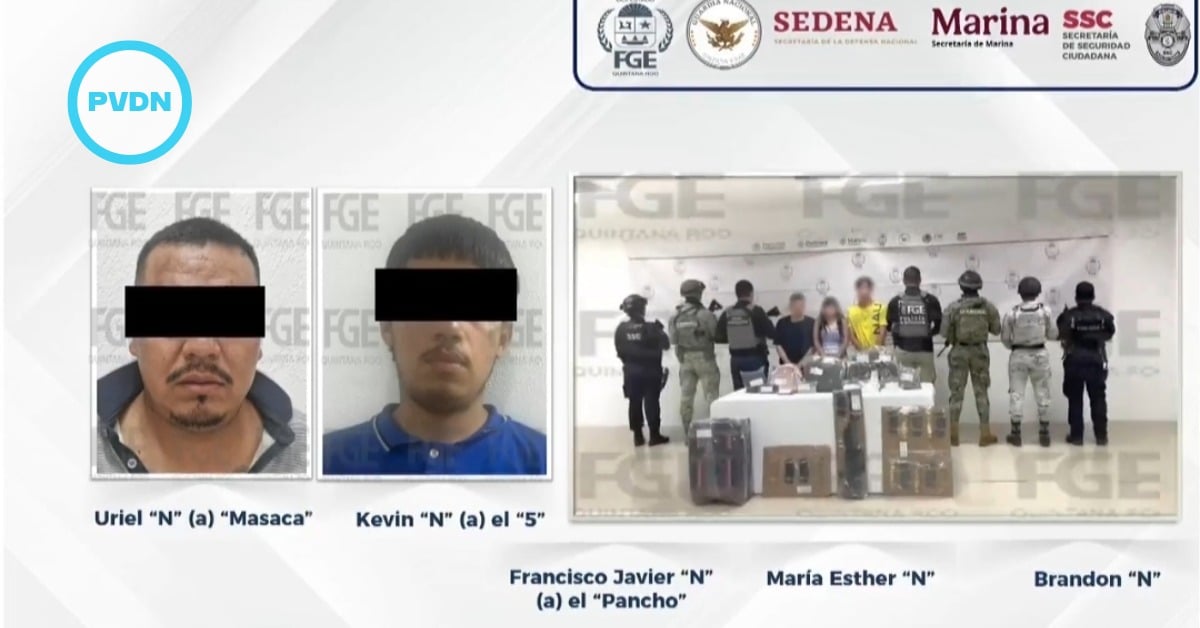
Prosecutors identified the trio as Francisco Javier “N,” María Esther “N,” and Brandon “N,” all from Michoacán. Officers seized an assault rifle chambered for 5.56mm, seven loaded magazines, a green tactical vest, and doses of marijuana and meth, officials said. Investigators allege the group flew in from Guadalajara to the Tulum airport, moved into a safe house, and began probing bars and hotels to sell drugs and watch rivals. A judge has already ordered pretrial detention.
What the Playa del Carmen arrests actually show
The October takedown didn’t happen in a vacuum. On October 5, two men—identified as Uriel “Masaka” and Kevin “El 5”—were arrested in a linked case. Prosecutors say they were stealing vehicles on order for future crimes.
And on August 12–13, eight suspects led by a woman nicknamed “La Miche” were detained with 17 firearms—13 rifles and four handguns—along with drugs. State authorities said that the group sought control of the local retail drug market. Those arrests involved a multi-agency task force with federal and regional support.
In a detail that drew national attention in August, officials alleged the recruits underwent “extreme” training; some reports cited claims of cannibalism tied to that cell. The state prosecutor reiterated that allegation while connecting the August weapons cache to the rifle seized in the new case. Those claims remain allegations, but multiple outlets documented them at the time.
There’s a broader backdrop. The state prosecutor’s office has trumpeted a sharp year-over-year drop in homicides statewide through September. Independent confirmation is limited, but the figure has been repeated across local press. Meanwhile, separate investigations have targeted extortion networks, including one uncovered inside the Playa del Carmen taxi union in September. If accurate, that paints a picture of authorities pressing hardest on crimes that hit residents and small businesses.
What this means for residents and tourists
For locals, the alleged playbook is familiar: out-of-state recruits, a rented base, guns and drugs, and quick attempts to penetrate nightlife and service jobs. Today’s arrests won’t end extortion pressure by themselves, but they interrupt a crew that arrived with a clear mission. Prosecutors say the three detainees were embedded to sell drugs in bars and hotels and to scout rival sellers. The judge granted justified pretrial detention and set a month for additional investigation—timelines that suggest the case will keep moving.
For visitors, the picture is more mixed than sensational. Playa del Carmen remains busy, and law enforcement has scored visible arrests this season. At the same time, state officials themselves link these cases to retail drug sales around nightlife. That’s where bystanders face the most unpredictable risk. The safest approach is the simplest: avoid drug offers, use licensed transport, and follow official guidance during operations.
The formal charges span drug offenses, possession of weapons reserved for the armed forces, and organized crime activity. The prosecutor’s office says the rifle taken this month matches the August lot, a forensic detail that helps stitch the cases together. If that holds in court, it strengthens the argument that this wasn’t a one-off bust but a continuing effort to keep a transplant crew from taking root in one of Mexico’s busiest beach towns.