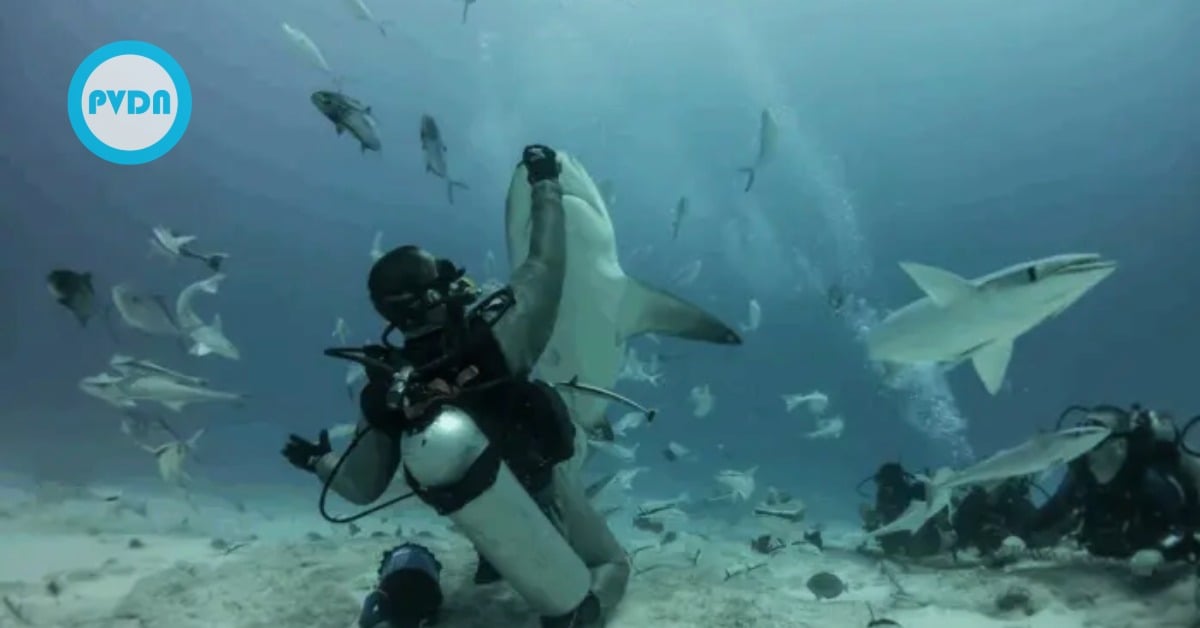
They come back the same time each year, and the town takes notice. Dive crews in Playa del Carmen say the first bull sharks are already gliding past the sandy bottom off the city, a sign that the season is about to begin. Operators are checking gear, reviewing permits, and attending safety briefings, while unions and guides track sightings on a day-to-day basis. If conditions hold, the action will build through November and peak into winter—under rules meant to balance tourism with the sharks’ welfare.
The first fin is often a whisper—just a shape in the blue. This week, dive leaders in Playa del Carmen say sightings have already begun, with more expected as the annual bull shark season ramps up. Local union secretary Francisco Chan told Ruptura 360 that organized operators and permit holders are preparing for an official start in mid-November, and the community expects roughly 12–20 sharks to frequent the area this season.
Playa del Carmen bull sharks
The draw is reliable, although it is never guaranteed. In a typical year, peak activity occurs from mid-November to February, sometimes extending into March, depending on the conditions. Municipal messaging has leaned into the shark’s profile, using it to promote conscious, conservation-minded tourism—right down to this summer’s “Tiburón Toro Fest 2025” backed by the city and conservation groups. Season-end tallies earlier this year also reinforced how central the bull shark window has become for local dive businesses.
Behind the scenes, operators follow a Good Practices Manual for Quintana Roo that outlines how non-extractive shark encounters should be conducted—briefings, limits on group size, the role of “attraction” crews, and protocols intended to reduce stress on the animals and minimize risk to divers. Mexico’s NOM-171-SEMARNAT-2018 also establishes national specifications for the non-extractive use of wildlife (such as observation and attraction), which local permits incorporate. In Playa del Carmen, the union’s recent public updates indicate that only a subset of trained permit-holders are authorized for the attraction work, with more guides focusing exclusively on observation.
What divers should expect this season
Preparation starts with the basics: this is a deep, often stationary dive over sand at roughly 20–27 meters, typically recommended for Advanced Open Water divers with solid buoyancy, and run by shops that specialize in the site. Some businesses market baited encounters; others explicitly avoid feeding and prioritize quiet, non-intrusive viewing. Regardless of style, the best operators conduct detailed briefings, enforce strict positioning, and keep groups small—practices that align with the state manual and protect sharks and divers alike.
So what will determine whether this is a “short” or “long” season? The fish schools the sharks follow—local guides cite changes in prey abundance year to year—as well as currents and visibility. That’s why crews are already out scouting and logging encounters. With early sightings now in hand and a target start around mid-November, the expectation is for a steady build into winter, provided weather and water cooperate.