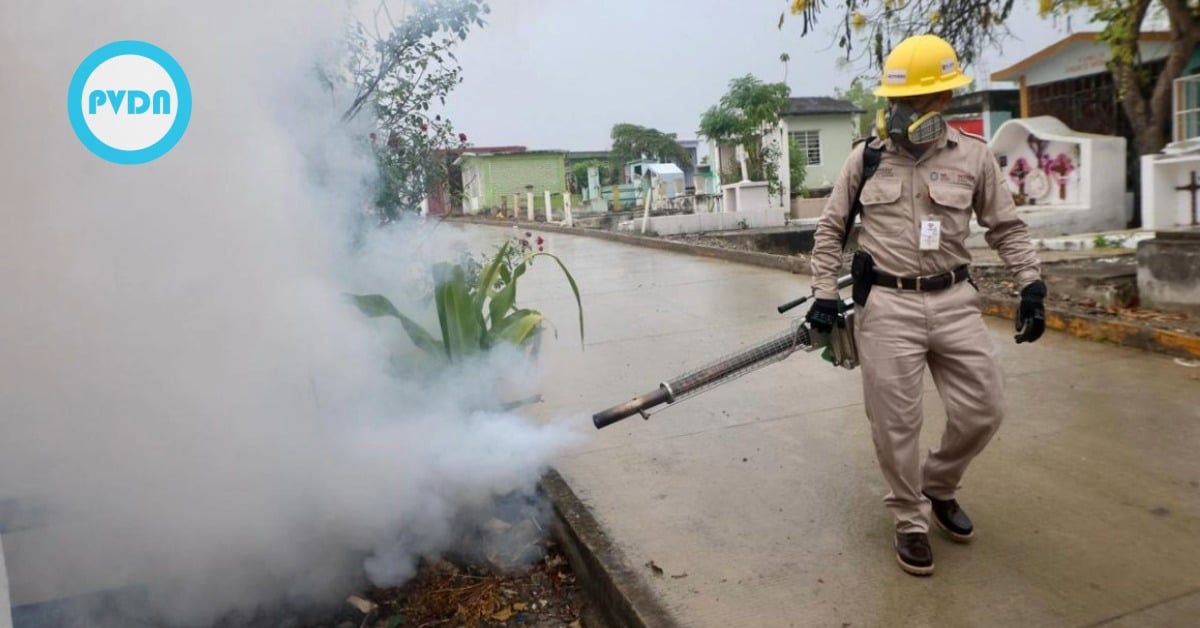
Fogging trucks are back on neighborhood streets, and crews are yanking out rain-catching junk from patios and alleys. City officials say the push is about cutting mosquito breeding before storms set in, not just spraying for show. Residents will see teams at dawn and dusk in several sectors this week, with more dates added if needed. Health authorities insist the most powerful step isn’t the fumigant—it’s clearing standing water at home. What’s planned, and why now? We reviewed the plan and verified the numbers.
City health crews and public works teams have launched an intensified round of fogging and “descacharrización” — junk removal aimed at eliminating water-holding containers — across multiple Playa del Carmen neighborhoods this week. Officials say the operation is designed to shrink mosquito breeding sites and protect families as the rainy stretch begins.
Municipal authorities began the push on October 1 under Mayor Estefanía Mercado’s administration, framing it as a sustained campaign rather than a one-time effort through fogging trucks. The city’s announcement highlighted door-to-door cleanup alongside evening and pre-dawn routes for nebulization in targeted areas.
Playa del Carmen dengue
Independent outlets have reported similar actions on the ground, noting that crews are covering several colonias and that the program combines adult mosquito control with source reduction at the household level. That means spraying for flying mosquitoes while also hauling away tires, buckets, and scrap that collects rain. It’s an approach that public health workers push every season because Aedes aegypti thrives in small, human-made water containers.
A route calendar circulating in local media lists specific passes in Ejido, Forjadores, parts of the Centro and Aviación corridors, and other sectors during evening and early-morning windows. Authorities say the schedule can shift based on weather and trap counts, but the pattern this week focuses on dense residential grids where standing water accumulates after showers.
Residents are being asked to meet crews halfway. Health staff stress that the most effective step is at home: tipping and scrubbing small containers, sealing water tanks, and disposing of trash so it doesn’t turn into a backyard hatchery. The city’s message echoes what field teams repeat block by block every year — fumigation kills adult mosquitoes in the air, but the next generation forms silently in bottle caps and flowerpot saucers.
State health officials report that Quintana Roo’s 2025 dengue levels are lower than last year’s, with 168 cases registered as of the latest epidemiological week — a sharp drop from 2024 and 2023. Even with that improvement, they caution against complacency as the peak mosquito months approach. National surveillance also indicates ongoing transmission in multiple states this season, underscoring the need for local prevention efforts to continue ramping up before heavier rains arrive.
City Hall says the campaign will continue rolling out across neighborhoods in October, with more fogging of windows and junk-removal days added as needed. For families, the ask is simple and urgent: walk your yard after every shower, empty anything that holds water, and call for pickup if there’s bulky waste you can’t move. The goal is a quieter mosquito season — and fewer fevers — built as much in patios and stairwells as on the back of a fogging truck.