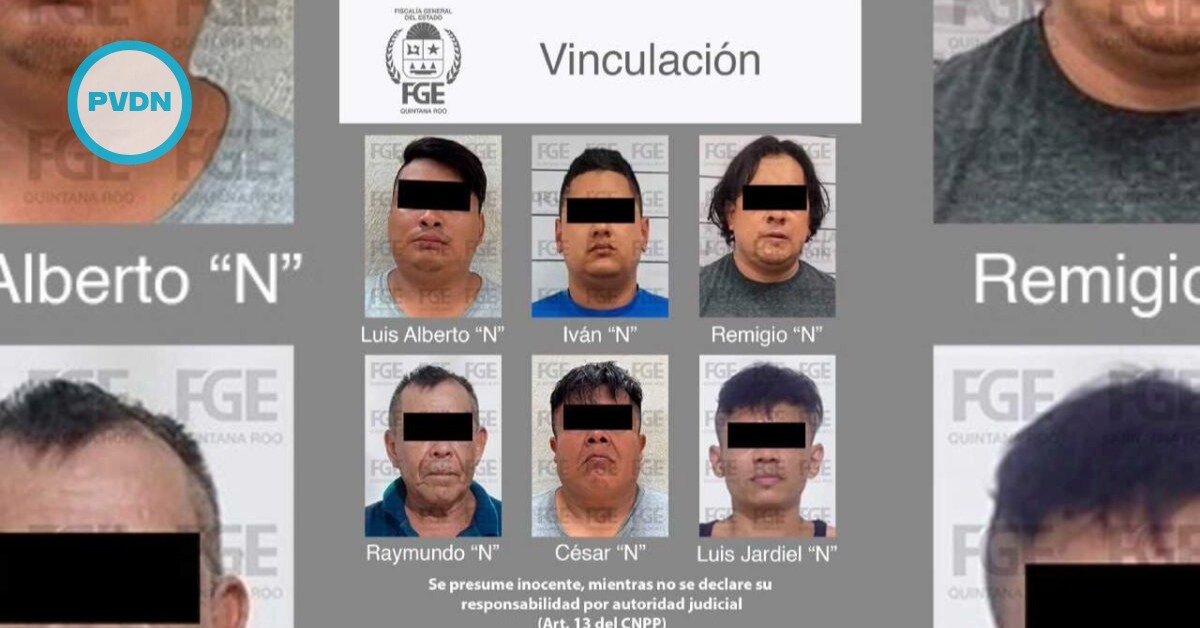
Six detainees were bound over for trial in Playa del Carmen after a string of street-level drug arrests in three neighborhoods, prosecutors said late Wednesday, November 5. The cases, handled in separate hearings, stem from patrol operations and spot checks that police say caught suspects with marijuana, methamphetamine, and MDMA. Judges found enough evidence to open formal proceedings, a step known in Mexico as “vinculación a proceso.”
Authorities outlined three clusters of arrests. In the Luis Donaldo Colosio neighborhood, a judge bound over two men—identified only as Luis Jardiel “N” and Raymundo “N”—after officers reported finding marijuana with one, and methamphetamine and ecstasy with the other. Both were ordered to remain in custody as the investigation continues.
A second hearing centered on two men detained in Las Palmas 1. Prosecutors said a control judge validated the detention and ordered pretrial detention for both after officers reported seizing marijuana at the scene.
The final pair, identified in reports as César “N” and Luis Alberto “N,” were stopped near Avenida 25 Norte and Calle 12 Norte in Gonzalo Guerrero and likewise bound over for drug-related offenses with pretrial detention imposed. The state prosecutor’s office framed the rulings as part of an ongoing push to pressure retail drug activity in Solidaridad, the municipality that includes Playa del Carmen.
What “bound over” means here
If you don’t follow Mexico’s justice system every day, “vinculación a proceso” can sound like a conviction. It’s not. Think of it as a judge’s green light that the case has enough initial support to proceed while investigators flesh out the file. From here, prosecutors have a set period to complete their investigation; judges can adjust precautionary measures as evidence evolves. In these six cases, pretrial detention was granted in multiple hearings, a sign that judges accepted prosecutors’ arguments about flight risk or continued danger to the community. Local outlets that reviewed the same case summaries reached similar conclusions on the neighborhoods, charges, and custody orders.
One lingering question is how much contraband was seized in each stop. Police and prosecutors often cite the type of substance but not quantities in initial briefs, primarily when cases are split across multiple hearings, as happened here. That omission is common and, by itself, doesn’t weaken a case at this early stage. Still, it can become important later when defense attorneys argue proportionality and challenge intent to supply.
The neighborhoods and the bigger picture
Colosio, Las Palmas 1, and Gonzalo Guerrero aren’t random pins on a map. They’re dense, mixed-use areas of Playa del Carmen where nightlife, tourism, and residential streets intersect. Patrols in and around these areas typically spike during festival weeks or when municipal authorities run short-burst “operativos” aimed at retail drug markets—narcomenudeo in Mexican legal language. This week’s detentions mirror that pattern. Several independent reports published on Wednesday and Thursday, November 5–6, identified the exact locations and suspect initials and added that five of the six were transferred to the Centro de Retención Municipal while proceedings advance.
To be clear, none of this establishes guilt. But the synchronized rulings across separate hearings show the courts found enough to keep prosecutors working. It also aligns with a broader, region-wide trend: Quintana Roo’s prosecutor has been trumpeting more “vinculaciones” tied to street-level dealing this fall, including parallel actions in Tulum and Cozumel—part of a strategy to chip away at small cells that feed violence around tourist corridors.
One more note on privacy. You’ll see suspects here identified with first names and “N.” That’s not an attempt to hide details; it’s how Mexican outlets and officials avoid prejudicing a case before trial. Still, the neighborhoods and hearing outcomes offer a rare look at how these arrests move from the street to the courtroom. If prosecutors meet their deadlines and judges maintain the current measures, expect the next milestone to be the closure of the investigation window and, if charges are confirmed, the scheduling of oral trial dates.
For now, the six remain in legal limbo, and the neighborhoods where they were arrested keep living their normal rhythm: workday traffic on 25 Norte, families cutting across Colosio, and weekend crowds drifting through the center. The legal process is slow by design. The aim, at least on paper, is simple: build a case strong enough to stick—without cutting corners.