Playa del Carmen’s council just handed a state arts-and-trades project the land it needs. Called FARO, the hub would bring music, film, carpentry, and job training to a fast-growing neighborhood, with a public plaza built into the plan. The city says the site is 8,778.91 m², and the vote was unanimous. What’s different here is the reversion clause and the state’s existing FARO track record in Cancún. If delivered, it could give teens and families a real third place—not another mall.
Playa del Carmen’s city council voted unanimously to donate a plot of municipal land so Quintana Roo’s Social Welfare Secretariat can build a FARO—short for Fábrica de Artes y Oficios, a social-arts and trades center. The site totals 8,778.91 square meters, with 5,780 m² reserved for the facility itself and 2,998.91 m² for public use. The project is planned along Avenida Alondra in the El Edén area, a growing residential zone on the city’s west side.
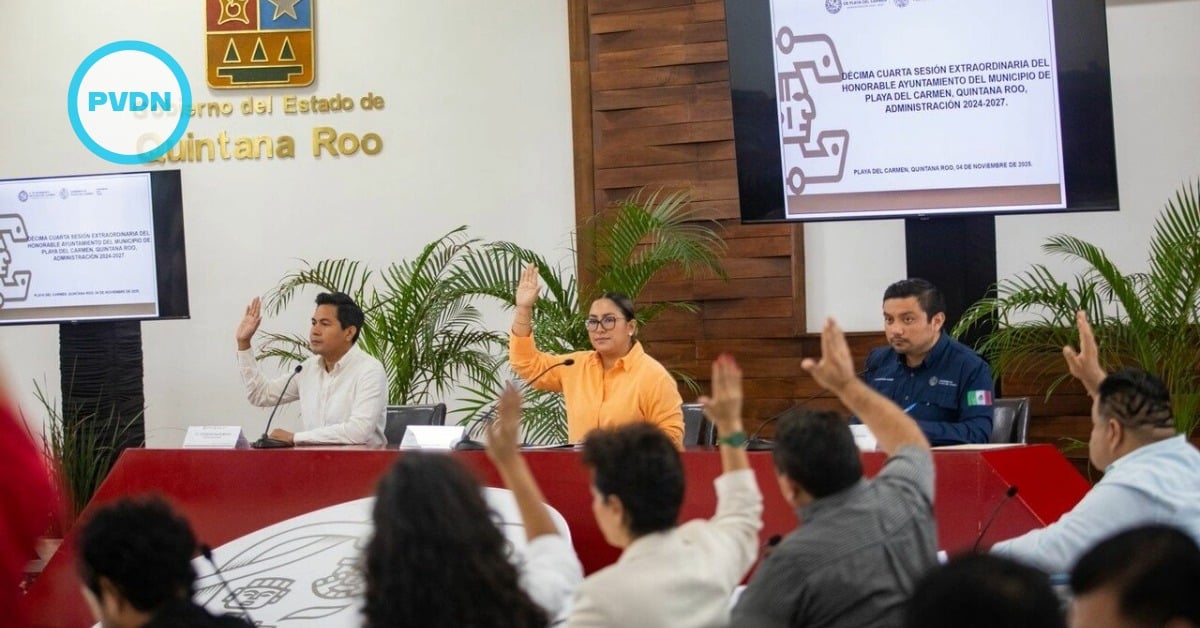
The decision came in the 14th Extraordinary Session of the council and authorizes a no-cost transfer from the municipal government to the state welfare agency to develop the center. Local reports specify the exact lot—Manzana 01, Lote 02, between Chiich and Alondra—and underline that the vote was unanimous.
It also lands in a year when the municipality’s name formally changed from Solidaridad to Playa del Carmen, which is why official documents and local outlets now refer to the “Cabildo de Playa del Carmen.” The change was enacted by Decree 108 and Decree 111, published March 20, 2025, in Quintana Roo’s Periódico Oficial.
Playa del Carmen FARO
What will this center actually do? The FARO model in Quintana Roo is already up and running in other cities. At Villas Otoch Paraíso in Cancún, the state reports more than 100 workshops ranging from guitar, rap, and theater to English, math, and martial arts—programming designed to blend culture with practical skills for teens and adults. The Social Welfare Secretariat’s website lists FARO among its active programs for 2025, with the current registration annexes available online.
Back in Playa, the land agreement includes a strong accountability hook: if the current municipal administration doesn’t start public-use works on the portion designated for open space, that slice automatically reverts to the city’s patrimony. That safeguard aims to keep the plaza piece from stalling while the main facility moves through state procurement and construction.
Officials who led the session—standing in for Mayor Estefanía Mercado—also named the city’s legal and finance officers to sign the instruments and ordered publication of the agreement in the State Official Gazette and the Municipal Gazette, the standard step before site preparation. It’s bureaucratic, but it’s the paper trail that turns a vote into shovels and schedules.
Local coverage frames the FARO as part of a prevention-through-culture strategy, the kind that gives young people after-school options beyond the street or the mall. That’s consistent with how the model has been pitched elsewhere in Mexico and with how Quintana Roo’s program describes its mission on social channels.
From vote to build
So what should residents expect next? Based on similar FARO launches in the state, the early wins tend to be pop-up workshops and small events that arrive before the full complex is finished, often leaning on local artists and instructors while the state bids out construction. In Cancún, that pathway delivered tangible classes months ahead of full build-out and helped the program earn community buy-in. If Playa follows that roadmap, neighbors in El Edén could see programming on-site—or nearby—before the building fully opens.
There’s still no publicly posted construction calendar, budget line items, or contractor list for the Playa del Carmen FARO; those details usually appear after the legal formalities hit the gazette and the state files tender documents. But the essentials are locked: the land is donated, the square-meter breakdown is defined, a reversion clause protects the plaza component, and the program has a track record in Quintana Roo that goes beyond press releases. If the state delivers on that record here, Playa’s west side gets something rare—an everyday cultural space where learning a chord, a camera, or a trade is the whole point.