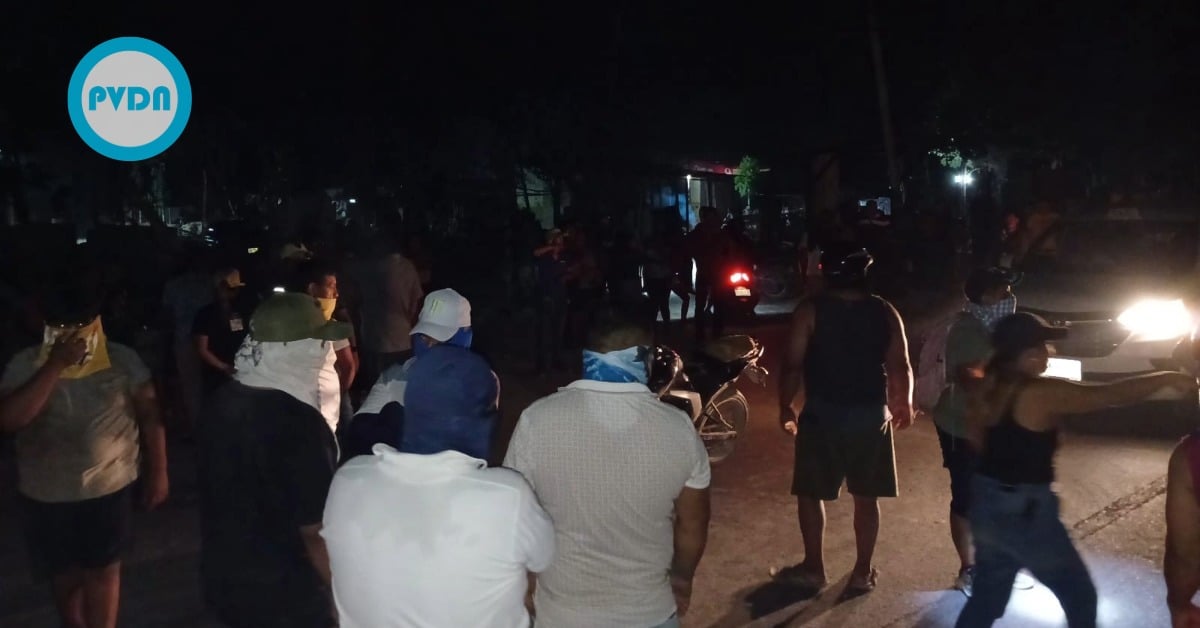
Police and state investigators detained a man locals identify as “Pablo N,” accused of organizing land takeovers in Playa del Carmen. Within hours, a small group gathered on Juárez Avenue by Lilis, waving machetes and threatening to torch patrol cars unless he walked free. No mass clashes followed, but the episode exposed an old wound: irregular settlements, political promises, and families caught between fraud and eviction. We verified the arrest reports and spoke with public records to explain what happened, why it matters, and what could change next.
Residents in Playa del Carmen woke to reports that state investigators and municipal police arrested Pablo “N”, a man described by authorities and neighbors as a ringleader of recent land “invasions.” The detention happened at his home, according to outlets that cited investigative sources.
Hours later, about a dozen supporters blocked traffic on Avenida Juárez near Lilis, some with machetes, warning they would burn patrol cars. Police held a perimeter until the crowd dispersed around midnight; no mass arrests were reported.
What we know about the arrest
Local outlets report the detainee was already facing proceedings and is now being investigated for using land seizures as a cover for other crimes, a claim authorities will have to prove in court. Officials have also labeled him a “generator of violence,” language common in Quintana Roo security briefings. We are not naming him beyond the initial used by authorities, consistent with Mexican legal norms.
While the weekend protest was small, its location matters. The Lilis area and nearby irregular colonies have seen repeated tensions this year, including blockades over rumors of evictions and disputes linked to ejido land.
Playa del Carmen invasions
Beyond one arrest, the underlying problem is sprawling. In August, the state housing ministry (SEDETUS) warned about a new, irregular push to parcel out roughly 400 hectares of national lands on the edge of Playa del Carmen, urging residents not to fall for sales without permits. Authorities linked the scheme to previous attempts at illegal settlement.
Municipal officials have also flagged city-owned plots taken over for private use—even parks—promising coordinated action to recover public space. Deadly violence has bled into some invasion zones this summer, underscoring why police now treat these disputes as a public-safety issue, not only a property fight.
How land invasions work in Quintana Roo
“Invasión” is not a term of art in federal law, but despojo—occupying another’s property by force, threats, or deception—is. The federal penal code sets three months to five years in prison for despojo and adds one to six years for those who direct an invasion by a group larger than five people. States also prosecute related offenses under their own codes.
The legal picture collides with on-the-ground reality. Playa del Carmen’s urban plan is strained by rapid growth and irregular settlements that spread without services, environmental safeguards, or legal titles. City officials this year called invasions the top challenge to updating the Urban Development Plan.
What comes next
For residents living in irregular colonies, due process and straightforward information matter most. The state has moved on parallel tracks: regularization, where viable—such as long-running efforts in Colonia Colosio—and enforcement, where new invasions and sales appear. That means some families may gain legal certainty over time, while others could face removals if landowners prevail in court.
For investors and would-be buyers, the lesson is simple: don’t buy promises. Before paying a peso, verify the land’s status with the cadastral office, the INSUS/SEDATU system for national lands, and the municipality’s planning office. Recent alerts show that organized groups are again trying to market lots without permits—leaving families broke and unprotected when authorities act.
As for Saturday night’s show of force on Juárez, it may prove to be a brief flare. But if authorities can link the detainee to a broader pattern of organized despojo, the case could mark a turn in how Quintana Roo pursues the people who direct invasions, not only those who end up living in them. For a beach city balancing growth, safety, and dignity, that distinction is the point.