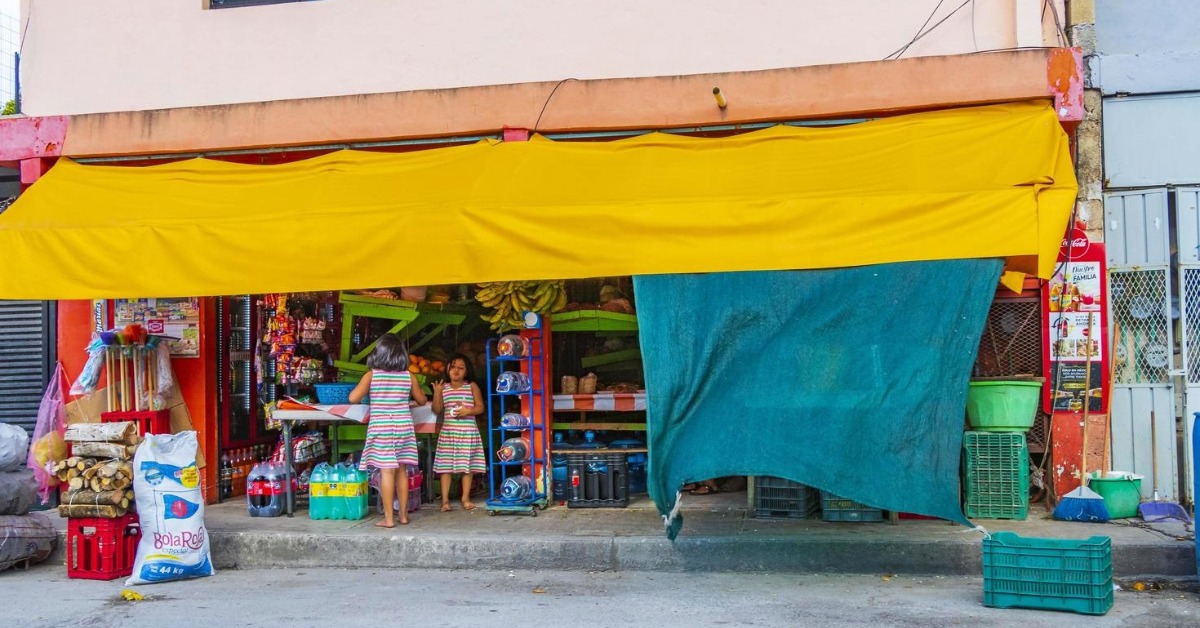
Merchants in Playa del Carmen say Civil Protection inspectors are demanding money over minor irregularities and threatening suspension to force payment. The complaints describe visits tied to small compliance issues, early license deadlines, and warnings that businesses could be closed if they did not cooperate.
The allegations are serious, but they remain allegations. No formal ruling or public finding has established wrongdoing. What makes the story important is that Protección Civil does hold real inspection power, which means the line between legitimate enforcement and abuse of authority matters for every formal business in the city.
That is why the complaint lands differently than a routine dispute over fines. When an inspector has the power to stop operations, even a small threat can carry major weight. For a restaurant, shop, or service business, a closure order can mean immediate losses, damaged reputation, and another obstacle in a season that already feels weak.
Why this matters for business owners
For many international readers, Protección Civil may sound like an emergency agency only. In practice, it is also part of the compliance structure for doing business. Playa del Carmen’s published procedures show that opening a low- or medium-risk business requires a Civil Protection review, and that inspections are part of that process. The city also requires Civil Protection sign-off before a municipal operating license can be issued or renewed.
That legal framework exists for obvious reasons. Businesses need fire safety, emergency exits, extinguishers, signage, and basic risk controls. Few merchants would argue against that. The problem begins when routine checks are perceived as unpredictable, selective, or tied to informal payments rather than to clear written procedures.
This is why the merchants’ account has broader relevance than a single local dispute. If inspectors are simply enforcing the rules, the city should be able to show that through files, notices, deadlines, and formal sanctions. If, instead, the process is used to pressure businesses to pay off the books, that becomes a governance problem as much as a public safety issue.
Why anonymous complaints still matter
Some readers will notice that the merchants quoted in the reports were not fully identified. That weakens the complaint in one sense, because anonymity limits outside verification. But it also fits a pattern seen across Mexico, where businesses often avoid filing complaints when they fear retaliation or believe nothing will happen afterward.
That reluctance is not anecdotal. INEGI’s 2024 business victimization survey found that extortion was the most frequent crime affecting businesses in 2023. It also found that only a small share of crimes against businesses were reported. That helps explain why so many local cases first surface through anonymous testimony, trade groups, or civic organizations rather than through formal case files.
In that sense, the Playa del Carmen complaint is not only about one set of inspectors. It reflects a broader climate in which business owners often calculate that silence is safer than confrontation. That does not prove the allegations. It does explain why they can spread quickly and why they are difficult to test in public.
The timing adds pressure
The complaint also arrives at a difficult moment for the local economy. Small hotel operators in Playa del Carmen recently said they failed to reach expected Easter occupancy levels and warned that the coming low season could be more difficult than usual. When tourism softens, even briefly, pressure moves quickly through the local economy.
That matters because the merchants raising the alarm are part of the formal business sector that cities say they want to protect. These are the establishments that pay rent, taxes, payroll, permits, and compliance costs. When they say enforcement feels punitive rather than transparent, the concern goes beyond a single inspection. It becomes a question about whether local policy is helping legitimate businesses survive or making a slower season worse.
The timing is also awkward because local authorities recently promoted anti-extortion prevention efforts aimed at businesses. That creates a contradiction that the city will eventually need to resolve. A government cannot ask merchants to trust public institutions while allowing doubts to build around the conduct of officials who show up at their doors.
What would move this story forward
At this stage, the most important next step is evidence. That means written inspection notices, dates, names, photographs of suspension seals, official receipts, and any audio or video that can confirm how the visits were handled. Without that, the complaint may remain politically explosive but procedurally weak.
The city also has little room to ignore the issue. If the allegations are false, officials should be able to rebut them with documentation and process. If the allegations are true, then the case points to a deeper failure in municipal oversight and anti-corruption controls.
For readers who live or do business in Mexico, that is the larger takeaway. This story is not just about one shopping area or one group of inspectors. It is about the everyday power that local enforcement agencies hold over small businesses, and how quickly trust breaks down when that power stops looking transparent.